
Uses of Math in Everyday Life: Practical Examples and Benefits
You probably use math more often than you realize—whether you’re shopping, cooking, planning a trip, or checking your workout stats. Math skills help you compare prices, follow recipes, set a budget, and plan your time so there’s less guesswork and more control.
Just knowing a few basic math tools can make daily choices quicker and way less stressful.

This article dives into how core math ideas pop up in everyday life and even in bigger systems—think healthcare, technology, or city planning. You’ll get practical examples that make math feel useful, not just some abstract thing from school.
Curious? Keep reading for easy ways to spot math in your routine and pick up habits that can make life a bit smoother.
Fundamental Uses of Math in Daily Activities
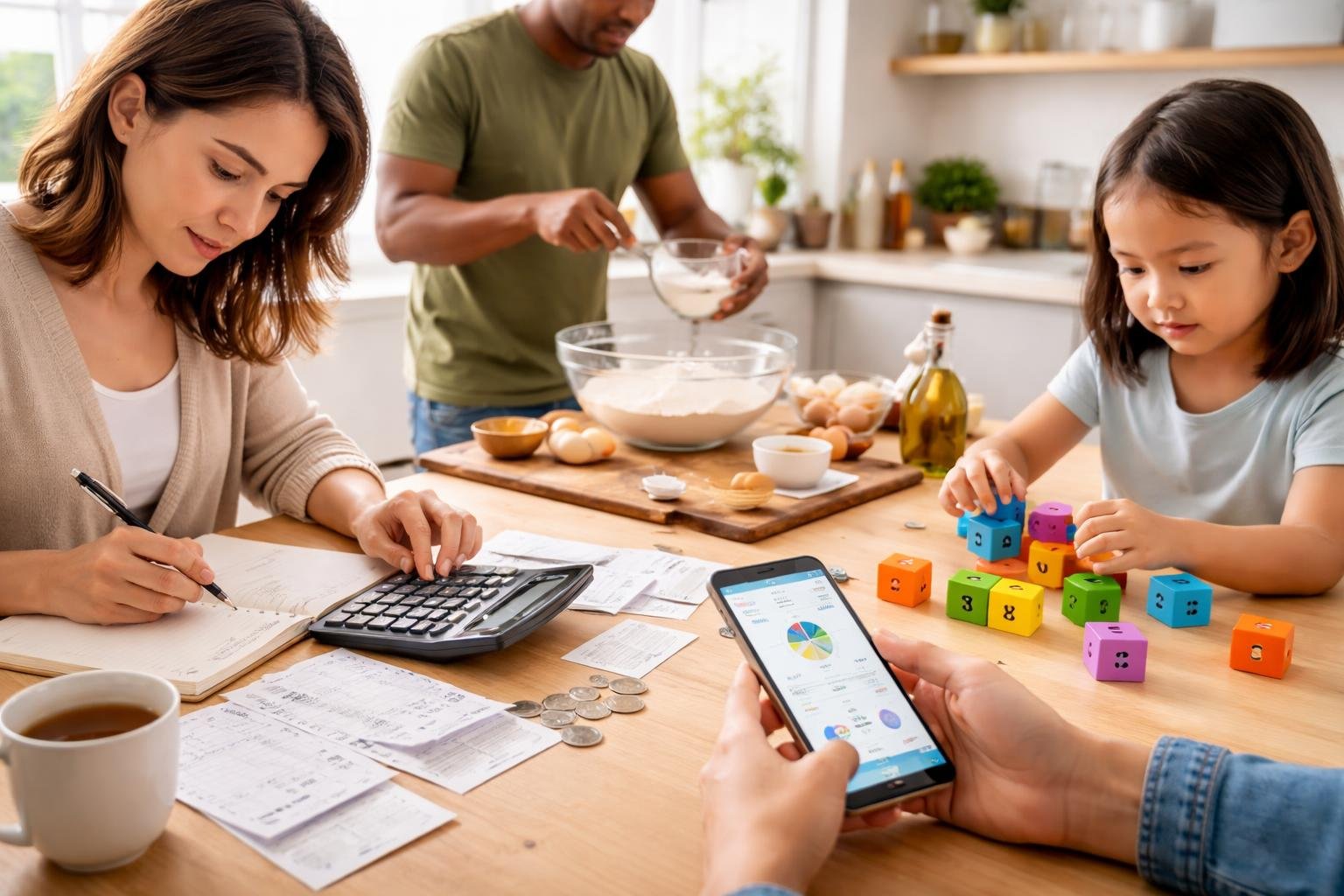
Math helps you make better choices with money, time, and materials. You use arithmetic, percentages, fractions, and basic geometry to plan, compare, and measure in all sorts of daily tasks.
Personal Finance and Budgeting
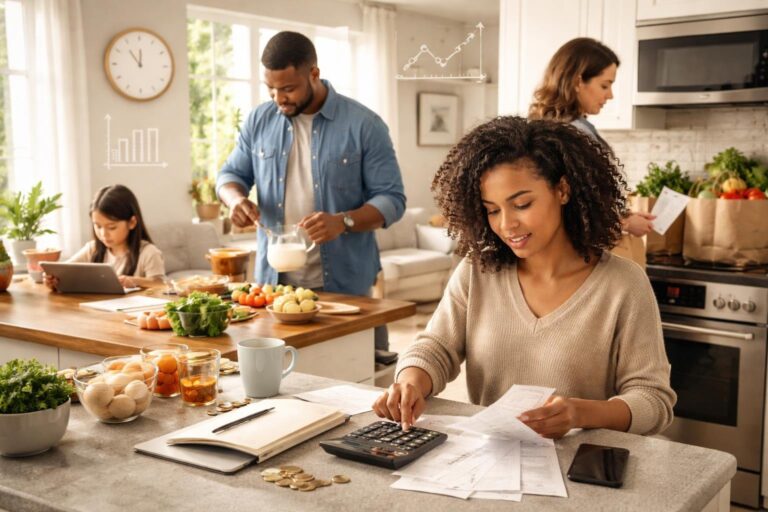
Every month, you track your income and expenses using basic arithmetic. Start by listing your fixed bills—like rent and utilities—and your variable costs, such as food and transport.
Subtract those totals from your income to see what’s left to save or invest. Percentages matter a lot for interest rates. When you check out a loan or savings account, you calculate annual interest to figure out what you’ll gain or owe.
If you’re dealing with credit card debt, multiply the monthly rate by your balance to estimate charges. Try to pay more than the minimum if you can.
Ratios and fractions come in handy when splitting shared costs or setting saving goals. Maybe you put 20% of your income into savings, 50% toward essentials, and 30% for wants.
Track your progress with simple addition and subtraction each paycheck. Basic algebra helps when you plan big purchases. For example, you can solve for monthly payments: payment = (price − down payment) ÷ months.
That way, you avoid overcommitting and can decide if buying or renting is smarter.
Cooking and Baking
Measuring and converting units is just daily math in the kitchen. Recipes throw grams, cups, tablespoons, and milliliters at you. If you change serving sizes, you convert proportions: new amount = original × (desired servings ÷ original servings).
You work with fractions when halving or doubling recipes. If a recipe calls for 3/4 cup and you halve it, you’ll need 3/8 cup.
Temperature and time matter in baking. Small changes can really affect the outcome, so adjust baking time if you change pan size—use the same temperature, but start checking a bit earlier.
Ratios help with mixtures and sauces. A 2:1 flour-to-liquid ratio gives you a certain batter thickness. Consistent measuring keeps your results predictable, which is honestly more important in baking than in casual cooking.
Shopping and Discounts
You use percentages to figure out sale prices and compare unit costs. For a 30% discount on a $60 jacket, just multiply: $60 × (1 − 0.30) = $42.
If you see layered discounts, remember to apply one after the other, not just add the percentages. Compare unit price to find the best deal—divide price by weight or volume to see the real value when package sizes differ.
That way, you can spot when the bigger pack actually saves you money. Sales tax and coupons also change the final price. Calculate tax by multiplying the price by the tax rate.
If you have a $10 coupon, subtract it before or after tax depending on the store’s rules. Use quick mental math or a calculator to avoid impulse buys.
Set a budget for each shopping trip and stick to it. That helps you save for bigger goals.
Home Improvement and Renovations
Measure carefully before you buy materials. Use a tape measure to get length, width, and height. For paint, calculate wall area: area = height × width for each wall, then add them up and subtract windows and doors.
Flooring needs you to measure area and add a waste factor. Multiply room length by width for square meters, then add 5–10% extra for cuts and mistakes.
Match tile or plank size to your layout to minimize waste. Geometry helps with angles and fits. For trim or mitre joints, measure angles with a protractor or use basic trigonometry for slopes.
If you have odd shapes, break areas into rectangles and triangles to find the total area. Estimate material cost with unit price × quantity.
For example: tiles needed = ceiling(area ÷ tile area), and cost = tiles needed × price per tile. Algebra comes in handy when you need to figure out how many boxes will cover a floor, given box coverage.
Broader Applications of Math in Modern Life
Math helps you make choices, plan time, and work with data in everyday tasks. You see it when you schedule your day, plan a trip, track health numbers, or use apps that sort and predict information.
Time Management and Scheduling
You break your day into tasks, estimate how long each will take, and set realistic deadlines. Simple addition and subtraction help you add up minutes.
Percentages and proportions help you divide an hour between study, work, or rest. Try writing a schedule in blocks of 15 or 30 minutes.
It’s easier to adjust if one task runs long. Logical reasoning and basic stats let you check past timings and predict how long similar tasks usually take.
Calendars and time-tracking apps use algorithms to suggest good work blocks and spot productivity patterns. You can use probability to plan for delays—add a buffer of 10–20% extra time for travel or meetings.
These quick calculations help lower stress and make deadlines easier to hit.
Travel and Transportation
Math helps you plan routes, estimate travel time, and compare transport costs. You use distance and speed to figure out travel time: time = distance ÷ speed.
When you pick between driving or public transport, you compare fare per mile, fuel costs, and total travel time. Maps and GPS rely on trigonometry and algorithms to find the shortest or fastest route.
Traffic prediction models use statistics and probability to guess at delays. For longer trips, you budget for lodging, fuel, and food with addition and multiplication.
You can also plan stops—use simple ratios to space breaks every few hours or miles. These little calculations make travel smoother and usually cheaper.
Health and Fitness Tracking
You count, use percentages, and basic stats to track calories, steps, and workouts. Calories in versus calories out uses subtraction and addition to guide weight goals.
Heart rate zones use percentages of your max heart rate to set how hard you train. Wearables crunch averages, trends, and variability to show your progress.
That data comes from algorithms that filter out noise and highlight what matters. Medicine and dosage calculations need careful multiplication and unit conversions to get the right dose based on weight or age.
Statistical analysis and probability help with risk assessments and screening decisions. These uses of math help you train smarter, take medicine safely, and measure health improvements.
Technology and Data Analysis
Apps, search engines, and entertainment platforms all run on math-driven algorithms. They sort your photos, suggest videos, and even try to guess when your battery might die—it’s all computing, linear algebra, and probability at work.
You bump into these systems every time you search, stream, or shop online. Honestly, it’s almost impossible to avoid them.
Data analysis takes raw numbers and turns them into something you can actually use, like charts, averages, or trends. With statistics and probability, you get to decide if a trend is legit or just random noise.
Maybe you mess around with spreadsheets or write a quick script here and there. In those moments, you’re using formulas, regression, and filters to find answers.
Architects and gardeners? They lean on geometry and trigonometry when planning out spaces or garden beds. These tools really do help you make smarter, evidence-based choices in all sorts of daily situations.