Repeating Patterns in Nature: Types, Reasons, and Examples
You can spot repeating patterns everywhere—from the spiral of a shell to the branching of a tree. These patterns tend to follow simple rules, which makes them predictable and, honestly, super useful.
Let’s look at which pattern types show up most and why those same designs keep popping up all over plants, animals, and landscapes.
Math, physics, and biology all play a part in making these patterns repeat. I’ll walk through examples that tie each idea to things you probably already recognize.
You’ll get short, visual explanations of spirals, fractals, symmetry, and the natural mechanisms that create them.
Fundamental Types of Repeating Patterns in Nature
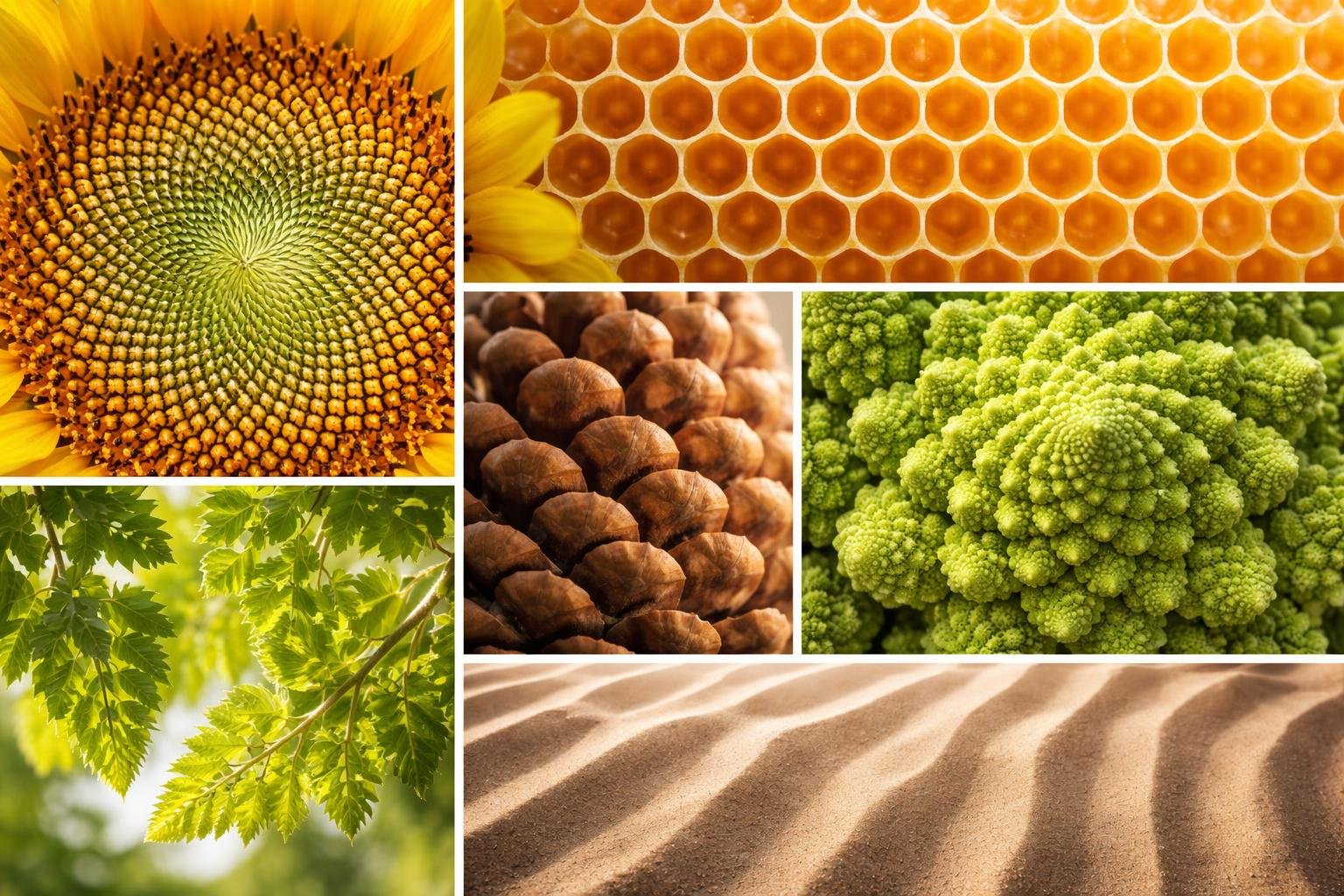
Certain pattern types show up again and again because they solve physical or biological problems. Each type links form with function—think growth, transport, strength, or packing.
Spiral and Fibonacci Patterns
Spiral patterns often follow the Fibonacci sequence. Each number adds the two before it.
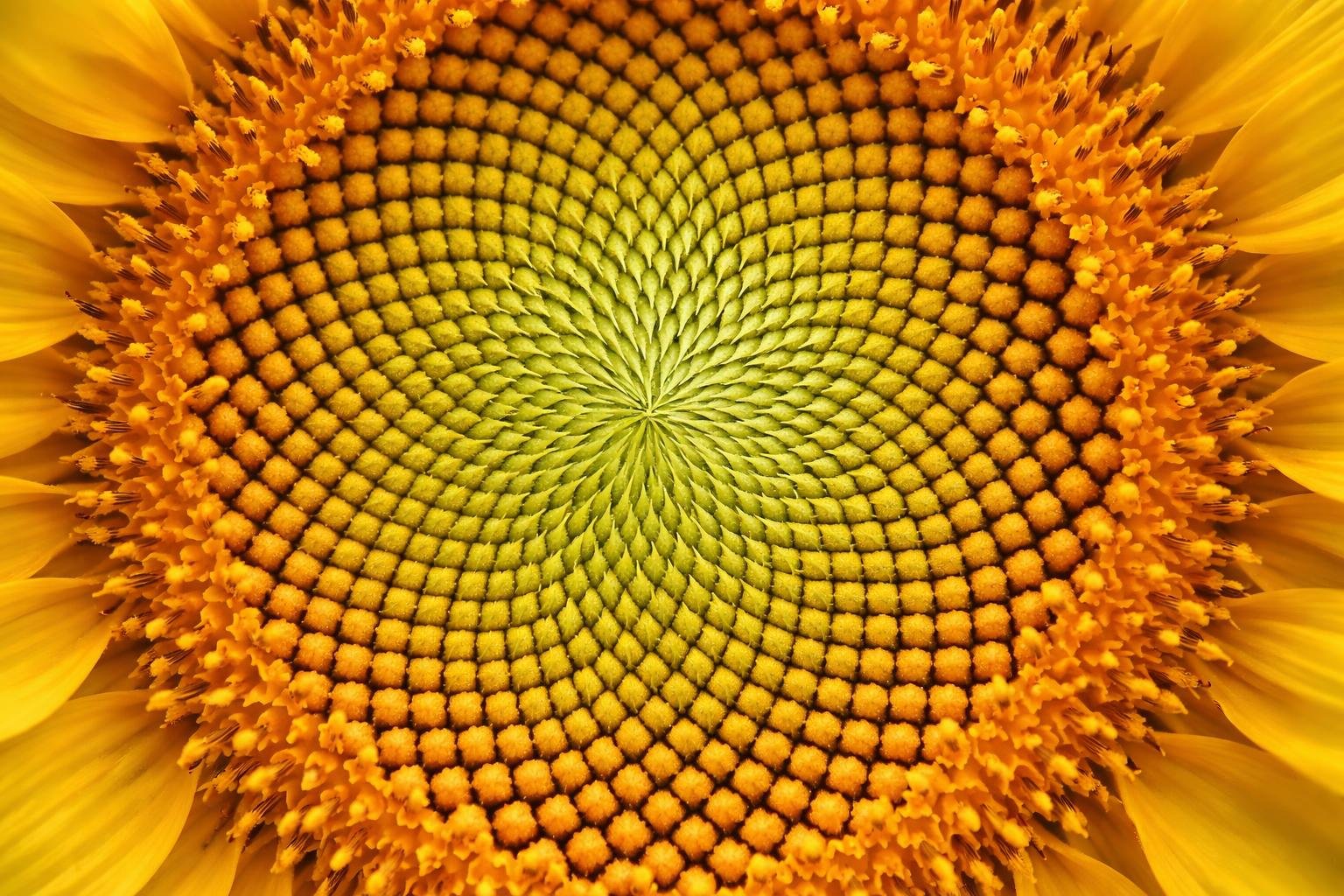
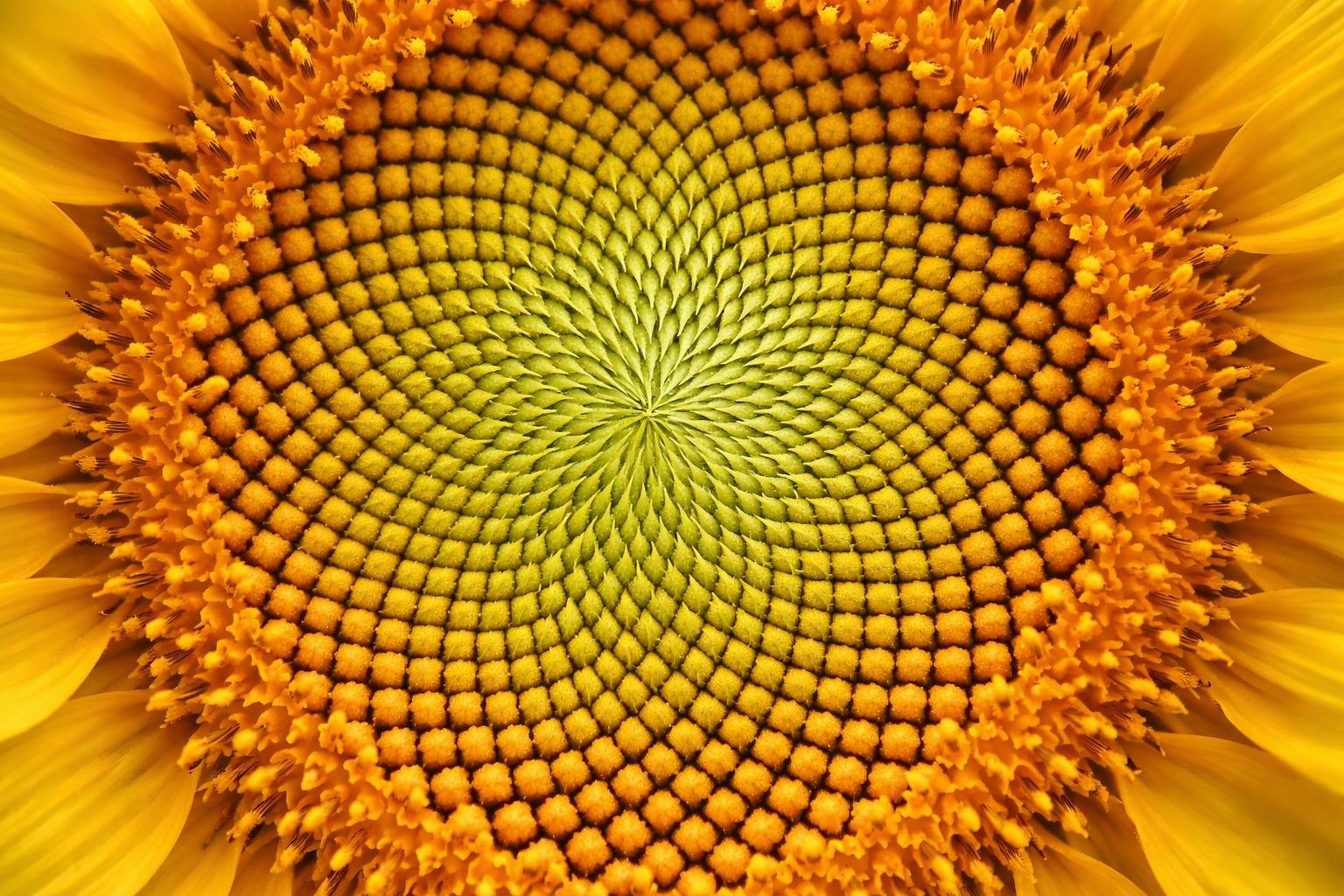
You’ll spot this in sunflower seed rows, pinecone scales, and the way some shells coil. These arrangements let seeds or scales pack tightly and help growth follow simple rules—no overlap, just efficiency.
Many natural spirals come close to the golden spiral, a logarithmic spiral tied to the golden ratio (phi). The spiral widens at a steady rate as it moves outward.
You’ll find spirals at wildly different scales—from the tiny whorls of shells to sprawling spiral galaxies. The same mathematical rule seems to fit all sorts of growth or rotation processes.
When you study spirals, check how each unit lines up with its neighbor and where the spiral’s center sits. These details can hint at whether the pattern grew from a plant or spun out from fluid dynamics like hurricanes or whirlpools.
Branching and Fractal Structures
Branching patterns split a main channel into lots of smaller ones. You’ll see them in tree limbs, river networks, blood vessels, and even fungal mycelium.
Branching helps move water, nutrients, or signals across space while using minimal material. It’s all about optimizing delivery.
Fractals describe shapes that repeat at different scales. You’ll find self-similarity in ferns, cauliflower, and coastlines.
Recursive rules—like those in L-systems (named after Aristid Lindenmayer)—generate these patterns by repeating simple steps. Fractal geometry also models feedback loops where growth at one scale influences another.
When you look at branching, pay attention to the angles, branch length ratios, and how many splits there are. Those numbers can reveal the trade-offs that shaped the pattern.
Symmetry: Radial and Bilateral
Symmetry splits an object into balanced parts. Bilateral symmetry divides left and right; you’ll see it in most animals, including us.
It helps with streamlined movement and focused sensing. Radial symmetry arranges parts around a center—think starfish, flowers, or jellyfish.
Radial forms suit organisms that interact with their environment from all sides. Concentric rings, like those in tree trunks or shells, show radial symmetry too.
Symmetry often reflects development rules or genetic constraints. If you compare symmetric forms, look for near-symmetry or broken symmetry. Tiny asymmetries can hint at growth stress or special functions.
Tessellations and Geometric Arrangements
Tessellations tile a surface with repeating shapes—no gaps, no overlaps. Bees build hexagonal honeycomb cells because hexagons pack a plane efficiently and use the least material.
You’ll also spot tiling patterns in fish scales, turtle shells, and crystal lattices where geometry decides the packing.
Geometric patterns show up as regular polygons, rings, or even those odd Widmanstätten patterns in meteorites or cooled metals. Physical constraints—surface tension, crystal growth, or stress relief—drive these shapes.
When you examine tessellations, check the repeating unit’s shape, how the pieces meet at the edges, and whether the pattern adapts to curves. Those details explain why one tiling works better than another for a specific biological or physical need.
How and Why Patterns Repeat: Mechanisms and Examples
Let’s dig into which physical and chemical processes create repeating forms. We’ll see how living systems use those processes to make spots, stripes, and spirals, and where engineers or scientists put these ideas to work.
Mathematical and Physical Processes
Simple math and physics drive many repeating patterns. Logarithmic growth creates spirals in shells and sunflower heads by adding units at a constant angle.
Hexagonal tiling, like in basalt columns, happens because cooling and contraction crack material where stresses meet at almost-equal angles.
Reaction-diffusion systems explain a huge range of shapes. Imagine two chemicals spreading and reacting: one activates, the other inhibits.
Alan Turing proposed this idea in 1952, and later researchers produced Turing patterns in lab gels. These processes make spots, stripes, and periodic waves, all without a central controller.
Network patterns pop up when local connections repeat across a field. River networks, leaf veins, and foam cells follow rules that minimize energy or transport cost.
These rules often create similar designs at wildly different scales. That’s why you see the same mathematical patterns in so many places.
Patterns in Animals and Plants
Repeating designs show up across species because genetics often encodes simple developmental rules. In animals, reaction-diffusion plus cell movement makes leopard spots, zebra stripes, and fish scale layouts.
Stripe width or spot size links to growth rates and diffusion distances during embryo development.
Plants use logarithmic and fractal rules too. Sunflower seed arrangements follow a Fibonacci angle to pack seeds efficiently.
Tree branching and leaf veins use network rules to optimize light capture and fluid flow. Pollen grains and shells show repeating motifs shaped by material properties and growth limits.
Biology labs and books from University of Chicago Press document a ton of these examples. If you compare species, you’ll notice how small changes—growth speed, chemical rates, geometry—can shift a pattern from spots to stripes or from loose spirals to tight ones.
Real-World Applications and Case Studies
Engineers often look to nature for inspiration, borrowing its repeating rules through biomimicry. Architects lean on hexagonal and honeycomb layouts because they’re strong yet surprisingly light.
Materials scientists get creative by tuning reaction-diffusion analogs, designing self-assembling surfaces that repel water or cut down on glare. It’s a clever trick, honestly.
Case studies highlight some practical wins. Coastal planners, for example, model river network patterns to help reduce flooding.
Robotics teams take cues from pattern formation, using swarm rules to coordinate a bunch of simple agents. In medicine, researchers dive into reaction-diffusion to explain tissue patterning—and maybe, just maybe, to guide regenerative therapies one day.
If you’re curious, you’ll find reproducible experiments where researchers create Turing patterns in chemical baths. They watch spots turn into stripes just by tweaking reagent concentrations.
These studies connect precise lab control to what happens out in the real world. It’s fascinating to see mathematical patterns shaping both design and discovery.