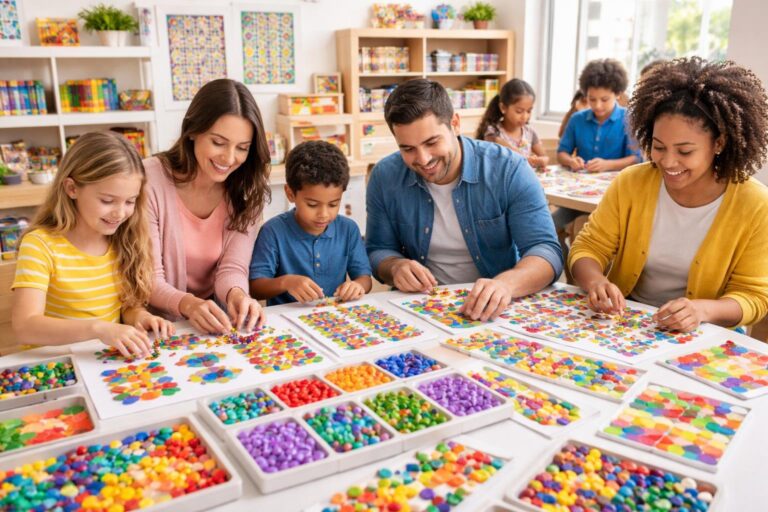
Patterning Activities: Creative Ways to Teach and Learn Patterns
Let’s get into some hands-on, easy ways to teach patterning that make math feel like play. Pattern activities help young kids spot repeating parts, predict what comes next, and build number sense they’ll use for years. These activities use games, books, movement, and everyday stuff so learning actually feels fun and real.
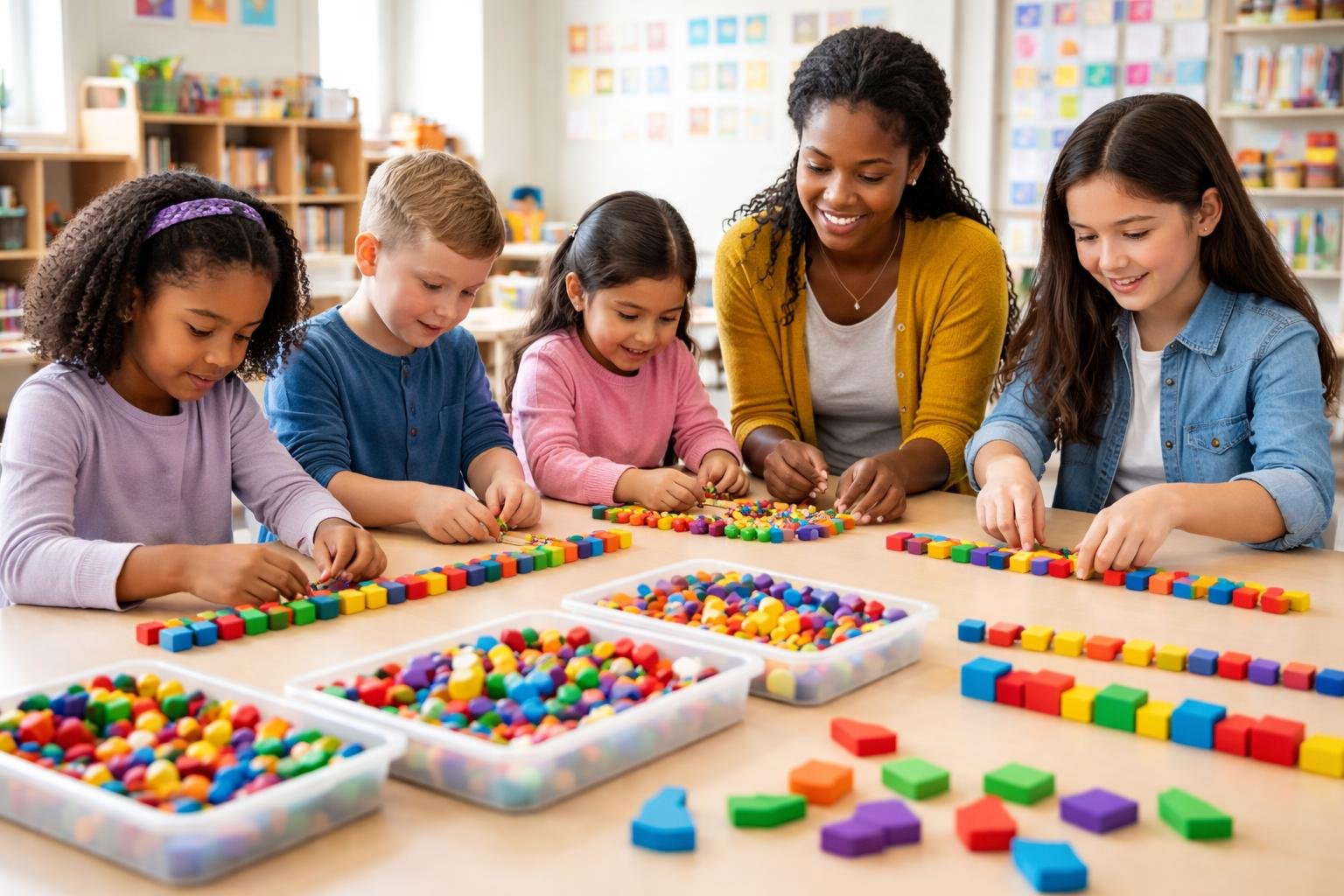
You’ll pick up the key ideas behind patterns and get simple steps to try at home or in class. Expect practical examples—stickers, blocks, songs, stories—that keep kids interested and thinking critically.
Core Concepts and Benefits of Patterning Activities
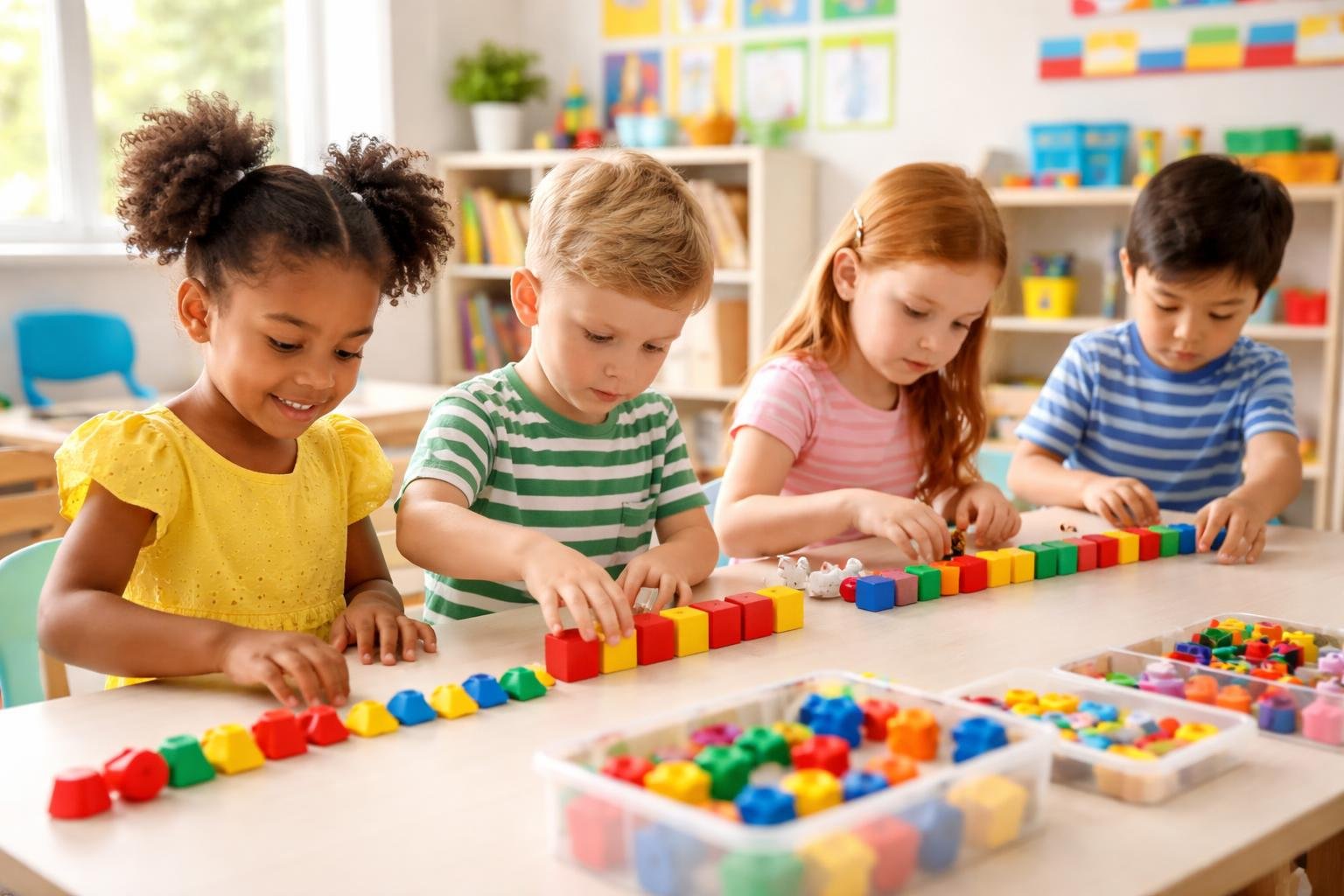
Patterning activities help you spot repeated units, talk about rules, and guess what comes next. They build skills you’ll use in counting, problem solving, and even algebra down the road.
What Are Patterning Activities?
Patterning activities give you real ways to see and use repeating parts. You might grab beads, stickers, blocks, or just move your body to make a sequence like red–blue–red–blue.
Tasks ask you to find the rule, keep the sequence going, or invent your own pattern.
These activities focus on four things: recognize (find the repeat), describe (say the rule), extend (add the next part), and create (make a new pattern). They usually use hands-on stuff, so you can match what you see to a rule.
That makes abstract ideas a lot easier to get.
The Importance of Pattern Recognition in Early Math Skills
Pattern recognition connects directly to the early math skills you’ll need later. When you spot repeating units, you practice watching closely, thinking logically, and guessing what’s next—skills you’ll use in addition, subtraction, and number sense.
Research even shows early pattern skills can predict later math success.
Teaching pattern recognition helps you shift from just counting to thinking about relationships and rules. You also build language skills when you explain a pattern rule, which helps in class discussions and writing.
These abilities make later topics—like equations and functions—way less intimidating.
Types of Patterns: AB, ABC, and Beyond
Start simple with repeating patterns: AB (red, blue, red, blue) and ABC (circle, square, triangle, circle). AB patterns have two-part cores; ABC patterns use three. Both help you spot the smallest repeating unit, or pattern core.
Once you’ve got AB and ABC down, try AAB, ABB, growing patterns, and spatial patterns. Growing patterns change by rule—like adding one more dot each time. Spatial patterns focus on shape or position instead of color.
Trying out different types builds flexible pattern recognition and sets you up for more complex math ideas.
Engaging Patterning Activities for Preschoolers
You’ll find hands-on ways to teach repeating and growing patterns. These activities use blocks, beads, shapes, colors, cards, and quick teacher moves you can repeat and stretch.
Hands-On Pattern Activities with Blocks, Beads, and Shapes
Grab some colored blocks, wooden beads, or paper shapes to build AB, AAB, and ABC patterns. Give each kid a tray with 12–20 pieces and show a short pattern, like red block, blue block, red block.
Ask them to copy it and then keep it going for the next two items.
Try bead-stringing for fine motor practice and pattern copying. Use pipe cleaners or shoelaces and mix bead colors and sizes.
Challenge kids to make block towers with patterns—stack red, yellow, red, yellow, then try AABB (red, red, blue, blue).
Switch up materials every week so kids see shape patterns (circle, square, triangle) and size patterns (small, large). Keep sets labeled so lesson plans are easy to repeat during centers.
Exploring Color and Shape Patterns
Set up trays with three colors of chips and invite kids to sort and make a repeating strip. Start with AB color patterns, then move to ABC by adding a third color.
Crayons or even snack pieces work great for this and don’t cost much.
For shape patterns, print or cut out shapes and let kids glue them in rows: circle, square, circle, square. Mix things up—try color and shape together—so they learn compound pattern rules (red circle, blue square).
Questions like “What comes next?” or “How could you change this pattern?” get kids thinking.
Jot down a child’s pattern on a small chart so you can track progress and plan the next lesson to stretch patterns into longer sequences or add more parts.
Using Pattern Cards, Worksheets, and Printables
Pattern cards offer structure for practice and quick checks. Use cards with a 3–4 item sequence and a blank at the end—kids can place a matching block or shape.
Keep sets for AB, AAB, ABB, and ABC patterns.
Worksheets can reinforce classwork at home. Pick printables with familiar images—animals, fruit, toys—to keep things concrete. Limit each sheet to 6–8 items so kids don’t get overwhelmed.
Sort cards by difficulty and store them in bins labeled by pattern type. That way, you can grab exactly what you need for a lesson.
Quick checks with cards help you see which students can keep patterns going and who could use a little more practice.
Strategies for Teaching and Extending Patterns
Start by modeling a pattern yourself. Show it to the group and let them copy what you did.
After that, let kids pair up and create their own patterns. Sometimes, it helps to keep the language simple—just name the pattern, like “red, blue, red,” and ask the kids to describe what they see.
When you want to extend patterns, ask students to add a couple more steps. Try suggesting they change one thing, like the color or shape.
You can also encourage them to combine two patterns into a longer one. Throw out prompts like, “Can you make it twice as long?” or “How could you turn this AB into AAB?”
Bring pattern lessons into everyday stuff—lining up, snack time, or even during music. Kids start to notice patterns everywhere, and that’s kind of the point, isn’t it?
Jot down quick notes about how each child is doing. If you notice they’re getting the hang of it, try introducing more complex block or shape patterns next time.