Fun Pattern Activities: Creative Ways to Teach Patterns
Looking for easy, playful ways to teach patterns? Here are some ideas that fit any schedule and use stuff you probably have around. These activities let kids spot, extend, and create patterns with toys, stickers, movement, and everyday objects—so learning actually feels like play, not work.
Mix up hands-on games, printable practice, and pattern-making projects. That way, kids build strong number sense and observation skills pretty quickly.
This post shares practical strategies and easy activities you can try right away. You’ll find everything from quick games for centers to creative projects that stretch thinking a bit.
Expect clear examples for teaching, practicing, and making patterns with things you already have on hand.
Essential Pattern Activities and Strategies
You’ll pick up simple steps for teaching patterns, plus tips on showing AB and ABC patterns in a way that actually makes sense to kids. Try hands-on tools like pattern cards and manipulatives—kids usually love those.
These ideas stick to concrete practice, quick checks, and ways to make learning patterns visible (and repeatable).
Pattern Recognition Fundamentals
Start by pointing out repeating features in real objects so your child or student can spot the rule. Notice color, shape, sound, or movement that repeats.
Keep your language short and clear: “red, blue, red, blue — what comes next?” Ask them to copy or continue the sequence.
Give several quick examples using different senses—like beads for visual, clapping for auditory, and jumping for movement. Change just one thing at a time so they know what to look for.
Ask questions like “Which repeats?” and “How many parts repeat?” to build their vocabulary and thinking.
Try a simple checklist to see how they’re doing:
- Can they copy a pattern?
- Can they keep it going?
- Can they invent their own?
Jot down one success a day to track growth. When they’re ready, try harder patterns.
AB and ABC Pattern Examples
Teach AB patterns with two items, like red and blue beads or clap and stomp. Make a short chain (red, blue, red, blue), then ask the learner to add the next two pieces.
Switch it up—show blue, red, blue, and let them continue. Keep it short at first.
Once AB feels easy, move to ABC patterns. Use three different things, like triangle, circle, square.
Show a full cycle (triangle, circle, square) and repeat it twice. Ask, “What comes after circle?” Practice both visual and movement-based ABC patterns so they really get the rule.
Make things trickier by changing item sizes, sounds, or steps (two small steps, one big step). Try “missing piece” tasks—take something out and see if they can fill the gap.
Using Manipulatives and Pattern Cards
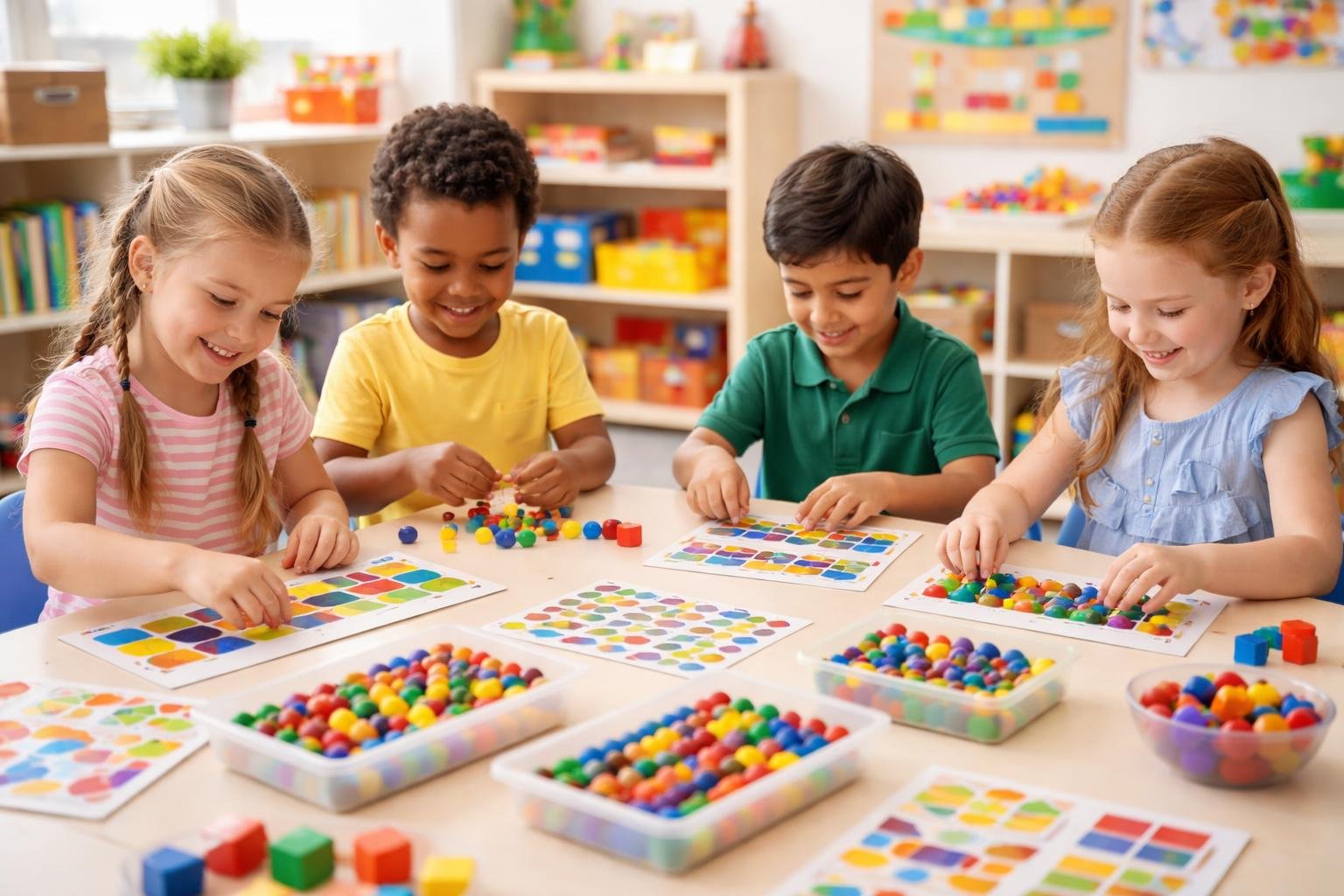
Pick manipulatives that are easy to grab, like colored beads, buttons, blocks, or toy animals. Give each child just two or three types to keep things simple.
Lay out a tray, string, or mat so the pattern stays neat. Pattern cards are great for quick drills and independent work.
Create cards with AB and ABC rows, leaving a blank space for the learner to add a matching manipulative. Use one set for matching, another for copying, and a third for “finish the pattern” challenges.
A few tips:
- Change up materials each week to keep things fresh.
- Mix cards with music or movement for a multisensory boost.
- Use a simple rubric: copy, continue, create—then decide when to move on.
Creative and Hands-On Pattern Experiences
Try these activities for teaching patterns with blocks, movement, art, and games. Each one connects to early math skills, and you can tweak them for different ages or materials.
Block and Shape Patterns
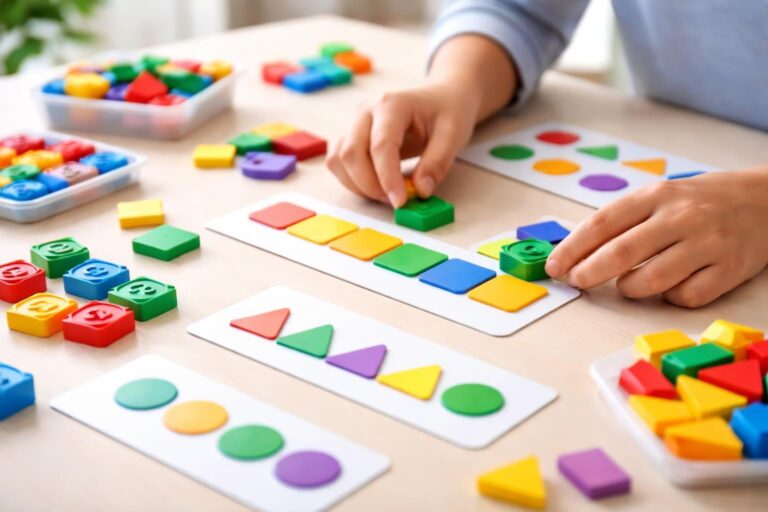
Use building blocks and loose shapes to make repeating or growing sequences. Start with a basic ABAB pattern using two colors or shapes, then let your child continue it.
Move to more complex patterns like AAB or ABC by adding changes in size or shape—maybe small square, small square, large circle.
Set up a sorting tray with blocks, buttons, and felt shapes. Ask your child to sort by color, then make a color-shape pattern on a baseplate.
Use pattern cards with pictures to copy, or let your child invent their own pattern towers.
These activities build shape recognition and spatial thinking. They also help with fine motor skills and sequencing—big wins for early math.
You can jot down patterns on a simple chart or snap photos to track how things are going.
Movement and Music Patterns
Turn patterns into physical play to teach rhythm and sequence. Try clap-clap-pause, step-step-jump, or march-wiggle-clap—model and repeat these patterns.
Grab a small drum or tambourine to make sound patterns and have your child echo them.
Make a movement board with picture prompts: hop, spin, touch head. Arrange the cards into patterns and let your child follow along.
Use songs and pattern books with repeated refrains to reinforce auditory patterns and memory.
Movement patterns help kinesthetic learners connect action to sequence. They also build listening skills and boost attention span.
Keep sessions short and energetic—repeat patterns three to five times, then switch things up.
Art and Fingerprint Patterns
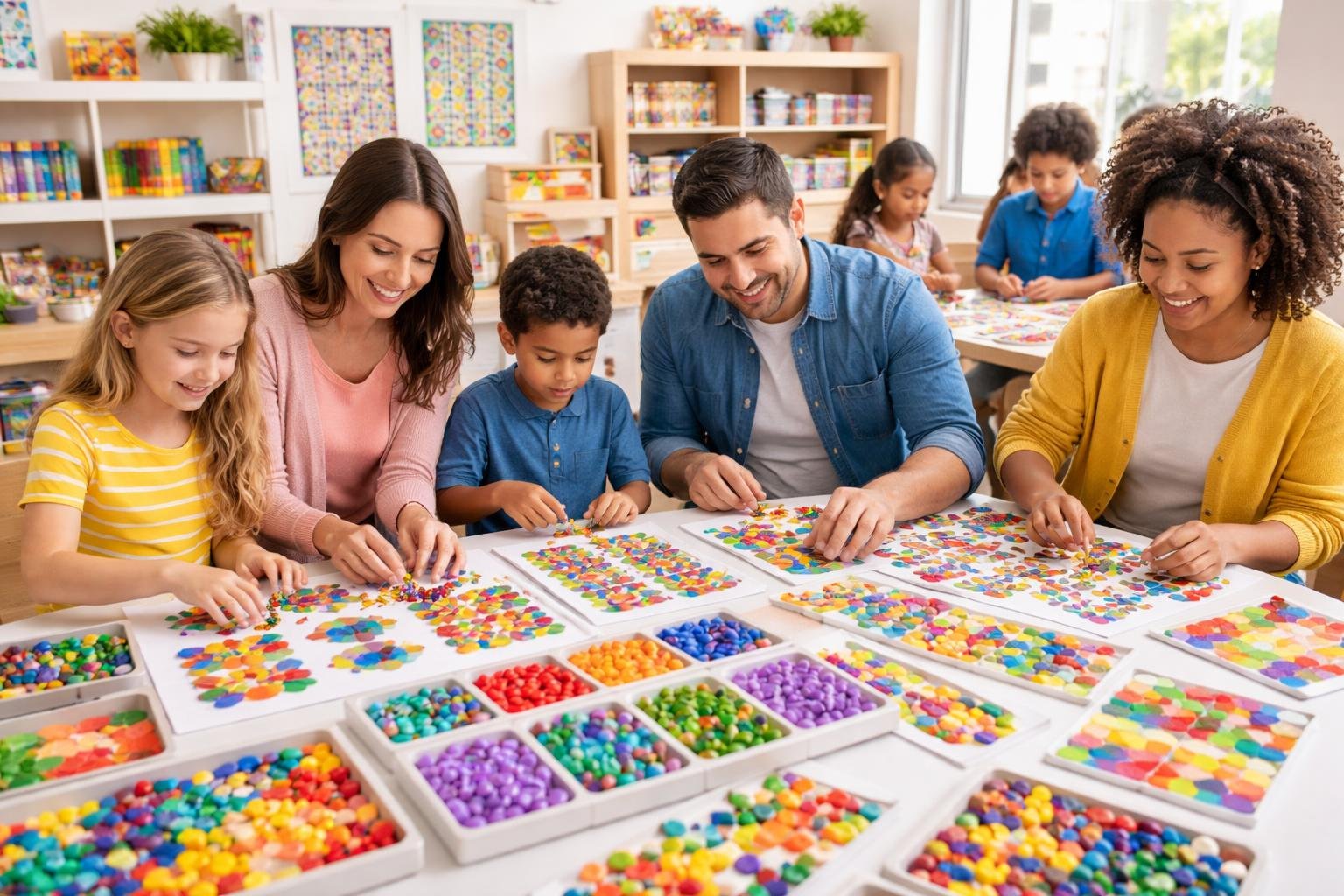
Try paint, stickers, or stamps to make visual patterns. Fingerprint patterns are quick and hands-on: dip a finger in paint and press colors in an ABAB or AABB sequence on paper.
Make a fingerprint caterpillar where each segment follows a color or size pattern. Offer dot stickers, crayons, and colored paper strips.
Invite your child to create patterned collages, symmetrical designs, or repeating motifs on a long strip of paper.
Label each section with the pattern rule (color, shape, or size) so the art connects to written ideas.
Art-based patterns spark creativity while teaching sequence rules. They help with fine motor skills and introduce words like repeat, next, and rule.
Keep art sessions short and offer different materials to keep things interesting.
Games, Worksheets, and Lesson Plans
Try out games and simple worksheets to help kids practice pattern skills. You might make matching cards, set up pattern bingo, or create a “what comes next?” worksheet with pictures of shapes and colorful beads.
For activity centers, switch things up. Set one table for blocks, another for movement, and a third for fingerprint art.
Keep your lesson plan short and to the point. Start with an objective, then a quick pattern game to warm up, followed by guided practice with worksheets. Wrap up with a hands-on center activity.
Grab a pattern book during transitions. It’s a great way to show examples and model the language.
Pay attention to what you see. If kids breeze through, try adding more steps or throw in something new, like size or texture.
Games and lesson plans help you see how everyone’s doing. Plus, they give you a chance to teach pattern words and move from simple to trickier patterns at a pace that actually works.