Easy Symmetrical Patterns: Simple Designs and How to Create Them
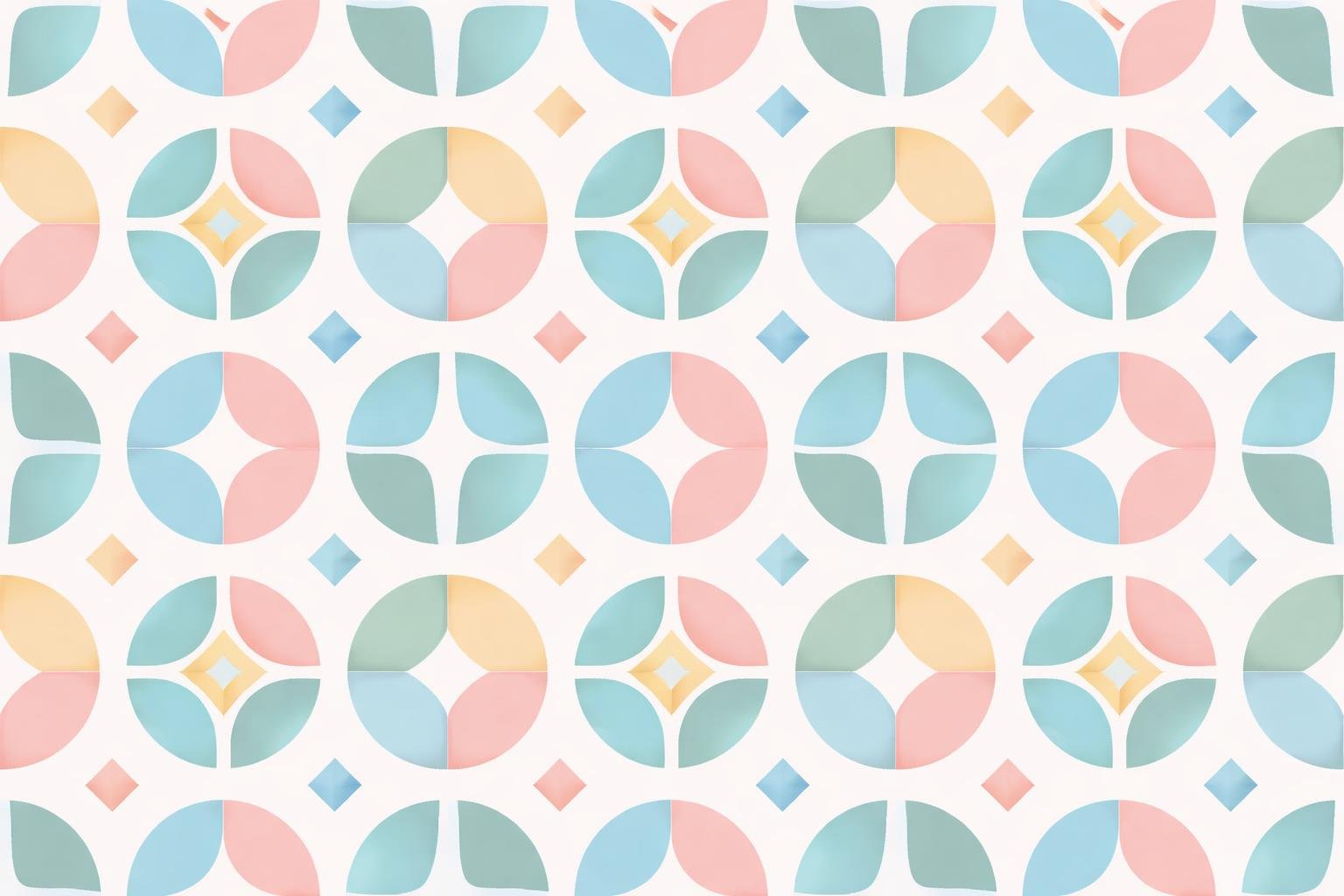
Let’s walk through some simple steps to spot and make symmetrical patterns that look impressive but stay easy to create.
You’ll see symmetry everywhere—in nature, art, and math. You can copy those patterns using folding, mirrors, or a grid for perfect results every time.
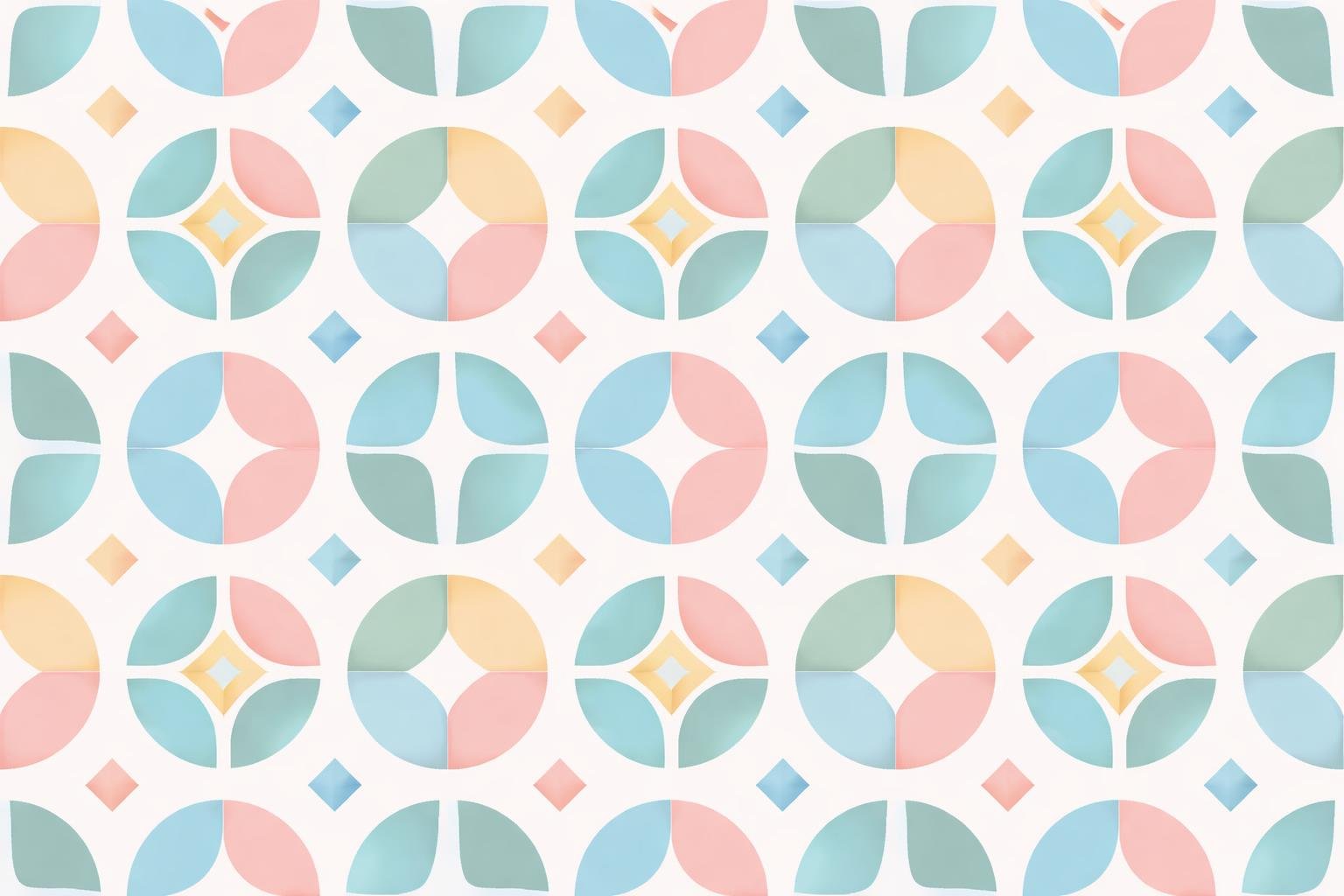
Try a few quick exercises and you’ll build the skills to finish half-drawn designs, draw mirrored shapes, and make repeating patterns for crafts or classroom projects.
The next sections break down what symmetry means in plain terms and offer hands-on ways to create and use these patterns.
Understanding Easy Symmetrical Patterns
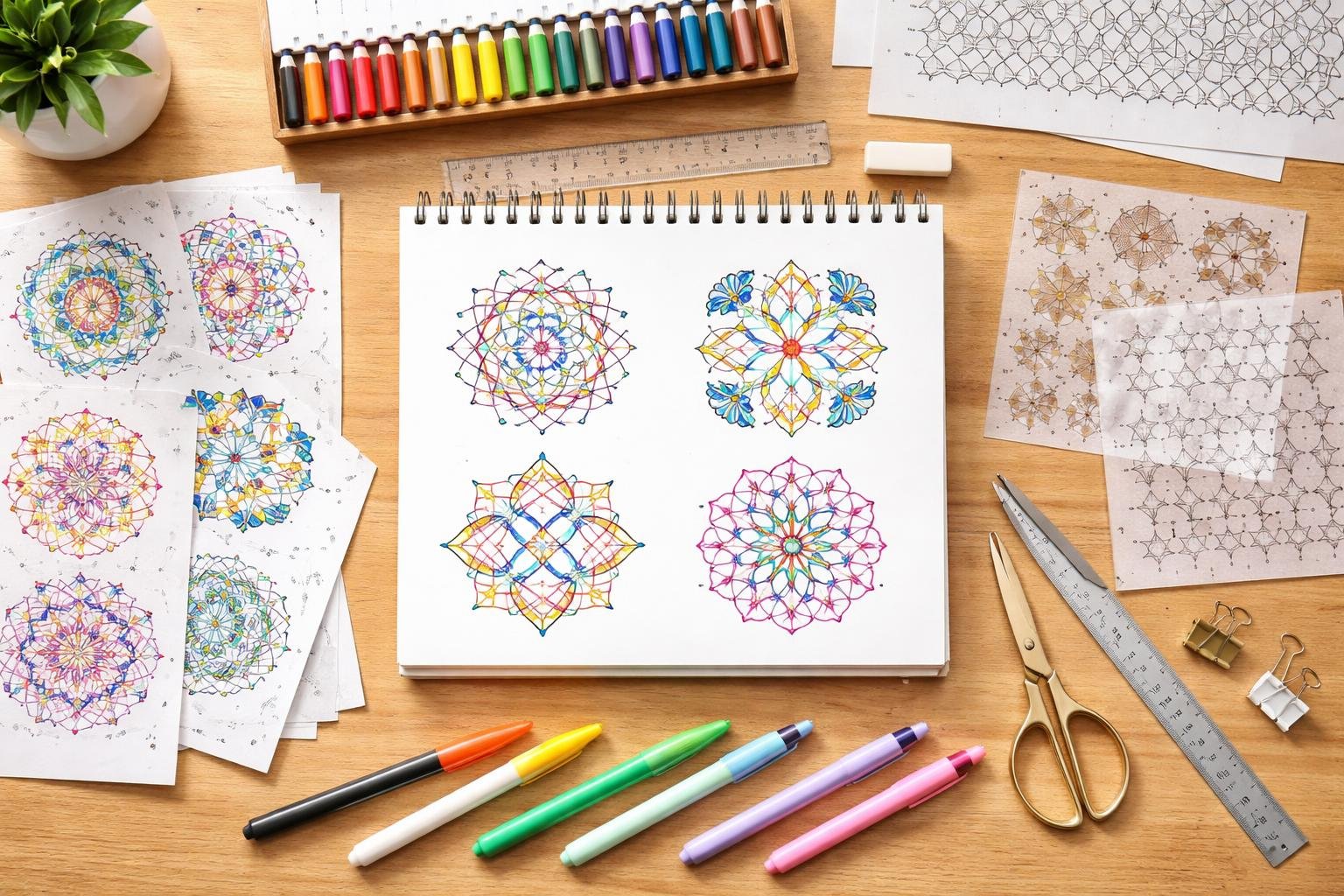
You’ll see what makes a pattern symmetrical, the two basic symmetry types you can try, and how to spot symmetry in things around you.
We’ll focus on clear rules you can use when drawing or checking patterns.
What Are Symmetrical Patterns
A symmetrical pattern matches its parts when you move them in a certain way.
You can test this by folding paper or using a mirror. If one half lines up with the other, you’ve got symmetry.
These patterns often repeat shapes, colors, or motifs in a regular way.
For example, a row of triangles that mirror each other across a center line makes a clear, simple pattern.
When you make patterns, pick easy elements—dots, stripes, or basic shapes—to keep things matching.
Try tools like grid paper or tracing paper to keep shapes consistent. This helps you spot the rule linking each repeat.
Once you get the hang of small repeats, mix them into bigger designs that still follow the same symmetry rule.
Types of Symmetry: Line and Rotational
Line symmetry (or mirror symmetry) pops up when one side of a pattern reflects the other across a straight line called the line of symmetry.
Set a mirror on that line and both halves look whole. You’ll see this in letters like A, M, or T, and in simple drawings—think butterflies.
Rotational symmetry happens when a pattern looks the same after you turn it around a center point.
A square, for example, repeats every 90°—that’s order 4 rotational symmetry. Count how many times the pattern matches during a full turn to figure out its order.
You can even combine both types in a single design.
For practice, draw half a motif and either reflect it across a vertical line or rotate it around a dot—see how each method changes the pattern.
Lines of Symmetry in Everyday Objects
You’ll spot lines of symmetry in so many everyday things.
A closed book has a vertical line of symmetry along its spine.
A clock face shows radial symmetry, with repeated numbers and hands around the center.
Nature’s full of examples too.
Fold a leaf along its central vein and you’ll see line symmetry.
Flowers often show rotational symmetry—count the petals to check the order.
Try this quick checklist: 1) Draw an imaginary line, 2) Fold or use a mirror, 3) See if the halves match.
Use it with household items, logos, and letters to build a better sense of how symmetry creates balanced, easy patterns.
How to Create and Use Easy Symmetrical Patterns
Here’s how you can make symmetrical designs, use simple tools, and turn activities into learning moments.
The steps cover pattern blocks, hands-on projects, symmetry puzzles, and exercises that build spatial reasoning.
Creating Patterns with Pattern Blocks
Grab a basic set of pattern blocks—triangles, squares, hexagons, trapezoids—and start building mirror and rotational designs.
Place one block as the center or axis, then add matching shapes on each side for reflection symmetry.
For rotational symmetry, arrange blocks around a central point and repeat the same cluster at regular angles.
Try this: make a design with exactly one line of symmetry, or a pattern that repeats three times around a center.
Take photos of finished patterns to share with colleagues or students.
If you post images online, check your site’s cookie policy and privacy policy before you enable content sharing features.
Save patterns as PNGs for easy reuse in lessons and worksheets.
Tips:
- Put grid paper under blocks to keep lines straight.
- Ask students to guess the next block before placing it.
- Challenge them to copy a pattern from a photo.
Hands-On Symmetry Activities
Cut and fold paper to make mirror-image shapes in no time.
Fold a square in half, cut along the fold, and unfold to reveal reflection symmetry.
Use mirrors to check if a design really matches on both sides—instant feedback.
Grab natural objects—leaves, flowers, shells—and ask students to sort them by type of symmetry.
Set up a station with mirrors, scissors, glue, and templates.
Label bins for “mirror symmetry,” “rotational symmetry,” and “no symmetry.”
While students work, remind them about classroom tech: enable image upload only with parental consent and explain any essential cookies used on class sites so families know why data might be stored.
Activity ideas:
- Try half-a-drawing exercises.
- Make symmetry collages with household items.
- Use small mirrors to turn half-patterns into full ones.
Using Symmetry Puzzles for Learning
Symmetry puzzles like tangrams, pentominoes, and cut-and-complete cards help teach pattern rules and careful thinking.
Hand students a puzzle piece set and a target shape; ask them to find all placements that keep symmetry.
This builds problem-solving and patience.
Create puzzle worksheets: one side shows half a shape, and the task is to draw or place pieces to finish it.
Track time and accuracy to see progress.
Share results in a classroom folder or private online gallery.
If you use a website for uploads, limit content sharing and make sure your cookie policy and privacy policy are visible.
Limit nonessential cookies when collecting student images.
Use levels:
- Beginner: complete simple mirror shapes.
- Intermediate: try rotational symmetry targets.
- Advanced: design symmetric tilings with pentominoes.
Enhancing Spatial Reasoning with Patterns
Try asking students to guess how shapes will look after they flip, turn, or slide. Give them a quick mental rotation drill: show a shape, cover it, and then ask which rotated version looks the same.
These little exercises really help students build up their mental visualization skills, which is honestly a huge part of spatial reasoning.
Mix in pattern block tasks and ask out loud, “Rotate this cluster 90° clockwise; which block ends up on top?” Let students use geoboards to make symmetric polygons, then measure the angles together.
Compare their first tries on symmetry puzzles with later ones to see how much they’ve improved. If you’re using digital tools, just turn on the features you actually need, and be upfront with families about cookies or privacy before collecting any data.
Practice routines:
- Try a daily rotation challenge for just 2–3 minutes.
- Run quick, timed rounds where students build symmetrical shapes.
- Have groups talk about the strategies they used for each pattern.