Math Patterns in Real Life: Nature, Sequences, and Everyday Uses
You start seeing patterns everywhere once you pay attention—spirals in shells, tiled floors, the beat in your favorite song, or even the way your savings pile up. These repeating rules help you predict, solve problems, and spot connections between nature, technology, and daily life.
Math patterns pop up in nature, design, and machines, giving you surprisingly simple rules to make sense of complicated stuff. Keep your eyes open as you move through the world—you might catch more patterns than you expect.
Recognizing Patterns in the World Around Us
You can spot repeating shapes, number rules, and growth patterns in everyday things—sometimes even without trying. These ideas help you guess what’s coming next and solve math problems with less stress.
Understanding Patterns and Their Importance
A pattern shows a rule that repeats or changes in a way you can predict. If you figure out that rule, you can guess the next items, catch errors, or just make a problem easier.
Say you notice buses arrive every 15 minutes. You know when to leave your house, right? In math class, spotting a pattern can turn a tricky problem into a breeze.
Patterns build your reasoning skills, too. You get to test ideas and explain why a rule makes sense. That skill comes in handy everywhere—from science labs to coding projects.
Try looking for repeated shapes, repeated steps in a process, or number changes that keep happening the same way. Those clues usually mean there’s a pattern hiding in plain sight.
Types of Patterns: Repeating, Growing, and Shrinking
Repeating patterns just copy the same chunk again and again. Think about tile floors or bead bracelets: A-B-A-B is a classic. You can sum it up with a quick rule, like “red, blue, red, blue.”
Growing patterns get bigger by following a rule. If a plant adds two leaves every week, that’s a growing pattern. Sometimes numbers increase by the same amount, or they multiply each time.
Shrinking patterns work the same way but get smaller. Maybe a model shrinks to half its size each time—that’s a shrinking pattern. You can keep track with simple math: add, subtract, multiply, or divide.
Try checking the first few steps, write down the differences, and see if a rule sticks. That quick test usually tells you if it’s repeating, growing, or shrinking.
Mathematical Sequences: Arithmetic, Geometric, and Fibonacci
Arithmetic sequences change by adding or subtracting the same number every time. Like 4, 7, 10, 13—you just add 3 each step. There’s a formula for it: term = first + (position − 1) × change.
Geometric sequences multiply by the same number each step. For example: 2, 6, 18, 54 (you multiply by 3). The formula goes: term = first × ratio^(position − 1). You’ll see these in interest rates and population growth.
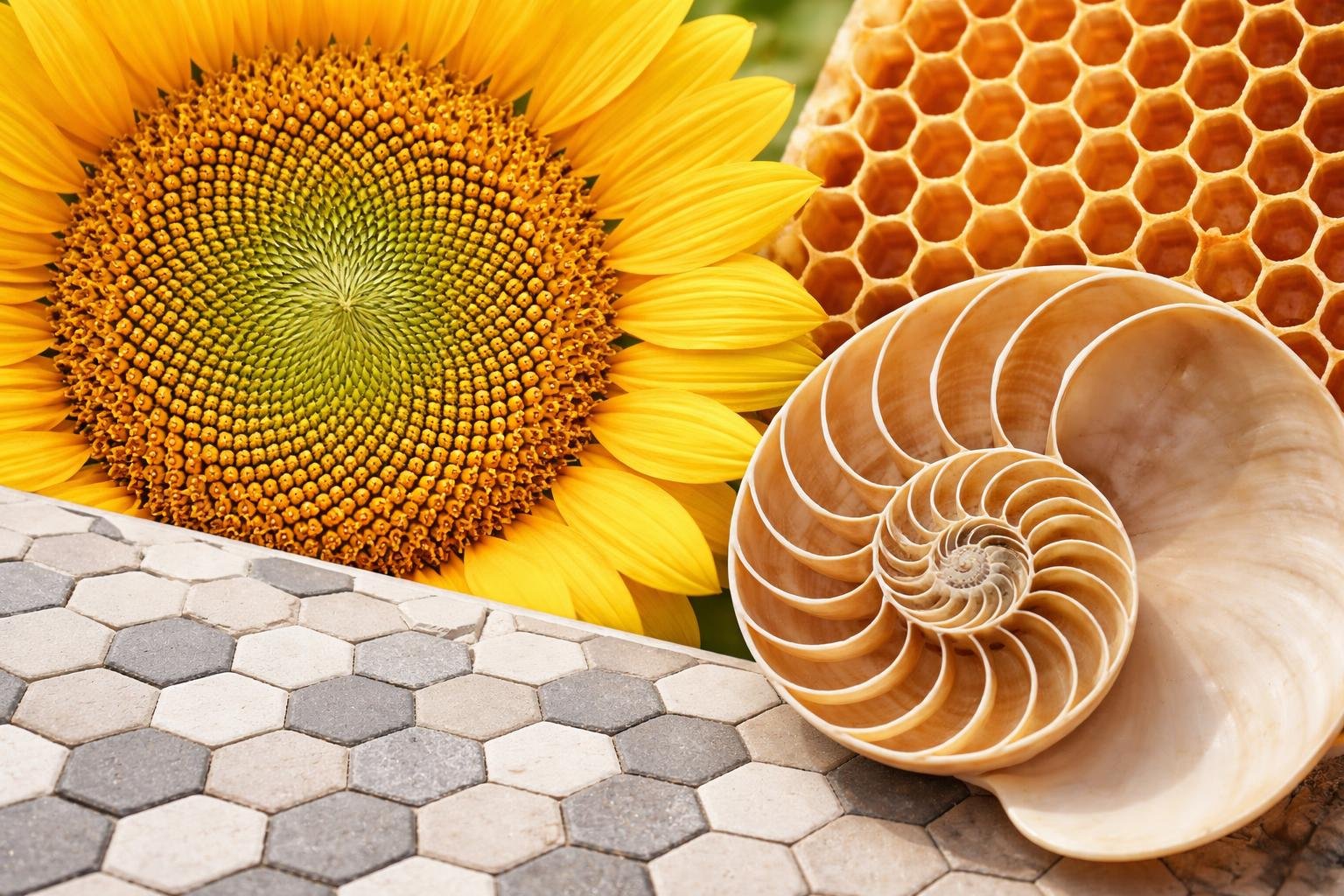
The Fibonacci sequence adds the two numbers before it: 1, 1, 2, 3, 5, 8… You find it in shells, flower petals, and branching trees. The numbers get close to the golden ratio, which pops up in art and design.
Check which rule fits by looking at the differences (arithmetic), ratios (geometric), or if each term comes from adding the two before it (Fibonacci).
Numerical and Geometric Patterns in Daily Life
You’ll bump into numerical patterns in schedules, money, and measurements. Pay stubs, bus schedules, and savings with fixed interest all use arithmetic or geometric rules. If you know the rule, you can check totals or plan your budget.
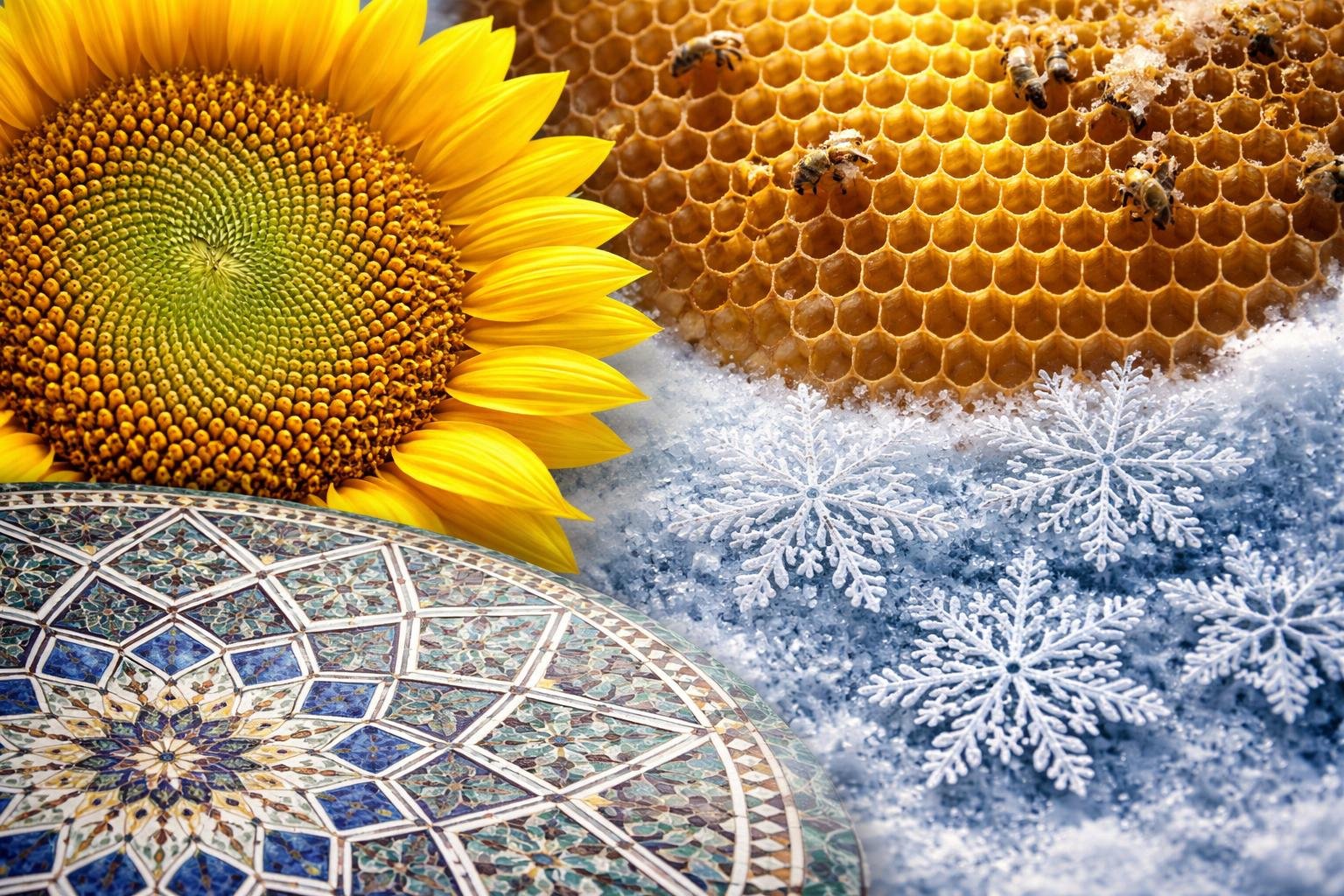
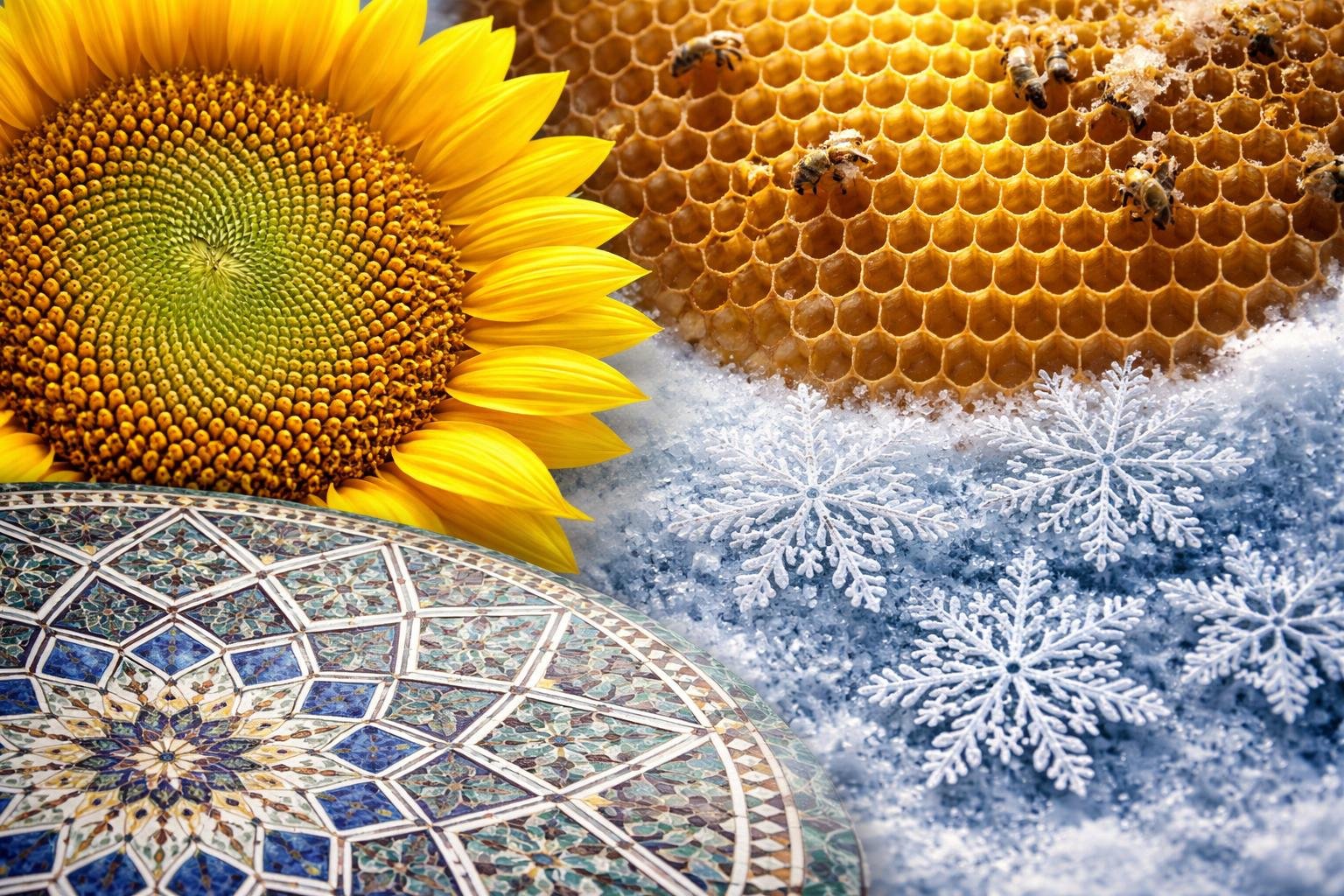
Geometric patterns show up in tiles, honeycombs, and buildings. Hexagons in a honeycomb pack space like nothing else. Shell spirals follow growth rules that feel a lot like Fibonacci.
Here’s a quick checklist to spot patterns:
- Are the numbers changing by the same amount? (arithmetic)
- Do they change by the same factor? (geometric)
- Does each number depend on the two before it? (Fibonacci)
Spotting these patterns helps you predict, design, and explain how things work in real life.
How Math Patterns Shape Nature, Technology, and Everyday Living
You use math patterns every day, even if you don’t realize it. They show up in plants, in your gadgets, and in simple stuff like shopping or cooking.
Patterns in Nature: Fibonacci, Fractals, and Symmetry
You’ll notice the Fibonacci sequence in sunflower seed spirals and pinecone scales. Usually, you see two sets of spirals, and their counts are always consecutive Fibonacci numbers. The ratio of these numbers gets close to the golden ratio (~1.618), which turns up in lots of plant growth.
Fractals repeat similar shapes at different sizes. Take a look at tree branches, Romanesco broccoli, or river networks. The small parts look like the whole, letting nature cram in more surface area. Fractal ideas help us model coastlines and blood vessels, too.
Symmetry lives in leaves, flowers, and animals. Reflective symmetry makes wings and faces match up. Rotational symmetry shows up in flowers and shells. These patterns can affect survival, pollination, and even how animals move.
Real-Life Applications: Measurements, Money, and Decision-Making
You use percentages and probability rules when you’re shopping or figuring out a budget. Calculating discounts is just percent math: sale price = original × (1 − discount%). Budgeting mixes percentages and sums to keep your spending in check.
Interest and loans run on exponential and compound-growth formulas. Even a tiny change in rate or time can make a big difference, so knowing a bit about exponential growth helps you compare offers and avoid nasty surprises.
Cooking and baking? That’s all about measurements and ratios. Doubling a recipe uses multiplication; cutting one in half uses division. You check percentages on nutrition labels and weigh probability when you’re planning for things like weather at a picnic.
Mathematical Patterns in Technology and Data Analysis
Technology leans on patterns to tackle everyday problems. Cryptography, for example, uses modular arithmetic and prime numbers to keep your data safe.
Algorithms pick out geometric patterns, tessellations, and repeating motifs in images. It’s honestly kind of fascinating how they spot things you might miss.
Data analysis digs for trends using models and statistics. When you read charts or try to make sense of data, you probably rely on probability and percent-change too.
Machine learning jumps in with exponential functions and pattern recognition. It tries to predict behavior or catch fraud, though it’s not always perfect.
Engineers love geometric patterns and tessellations when they’re designing strong, efficient structures. And when it comes to scheduling or routing, algorithms chase down patterns to save time and money.
If you get the basics of these math tools, you’ll have an easier time evaluating tech claims—and maybe even make smarter choices.