
Patterns in the Real World: Nature, Design, and Everyday Insights
You spot patterns all the time—in the veins of a leaf, the streets of a city, or the spiral of a shell. These patterns help you make sense of things and tackle everyday problems.
Spirals, fractals, and hexagons show up everywhere, both in nature and in what people build. Why? They save energy, pack things in tightly, and help guide movement.
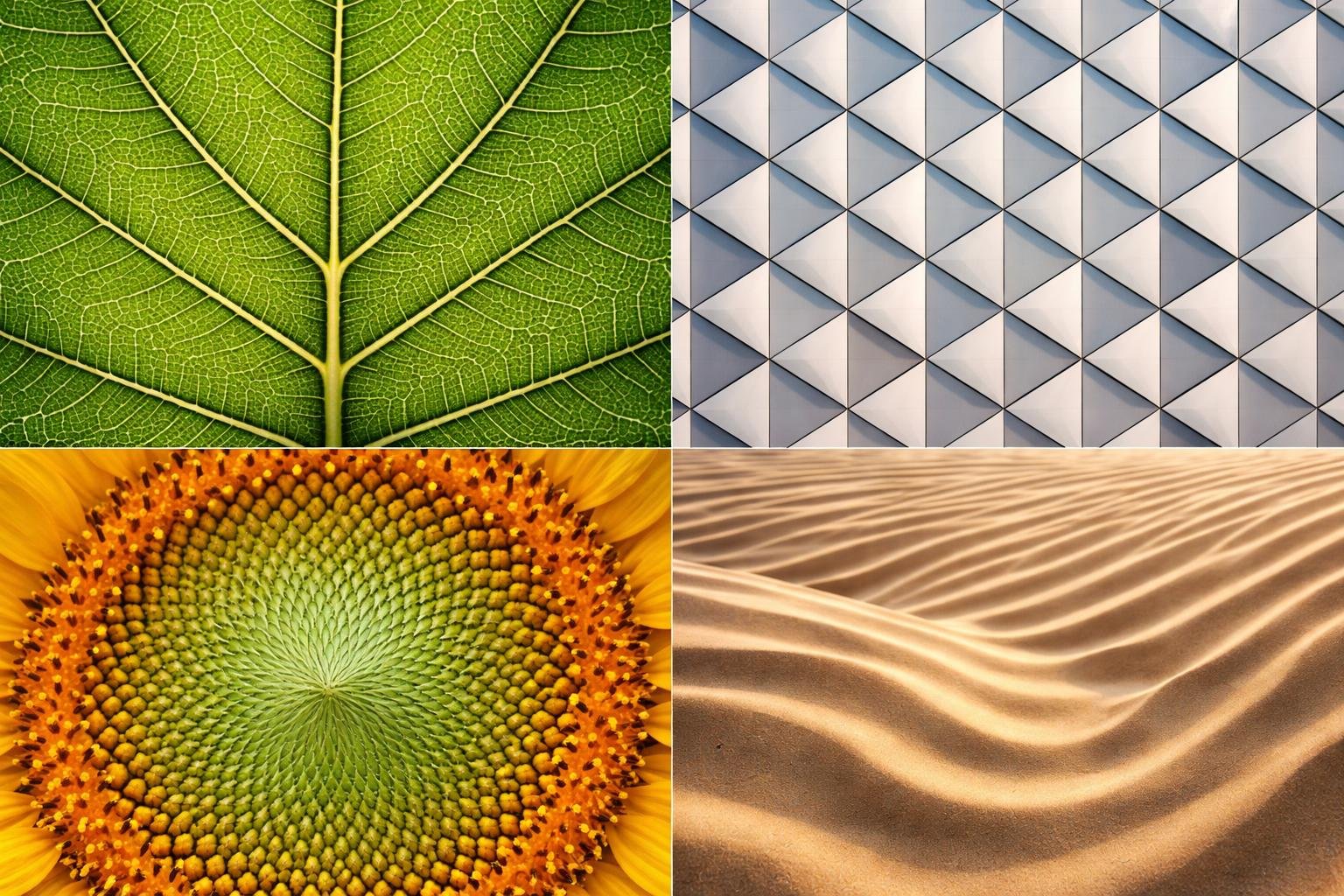
As you go through this article, you’ll dive into core patterns that shape the world around you—both in living things and in what humans create.
You’ll see clear examples showing how these patterns work and how you might notice or use them in your own projects.
Fundamental Patterns in the Real World
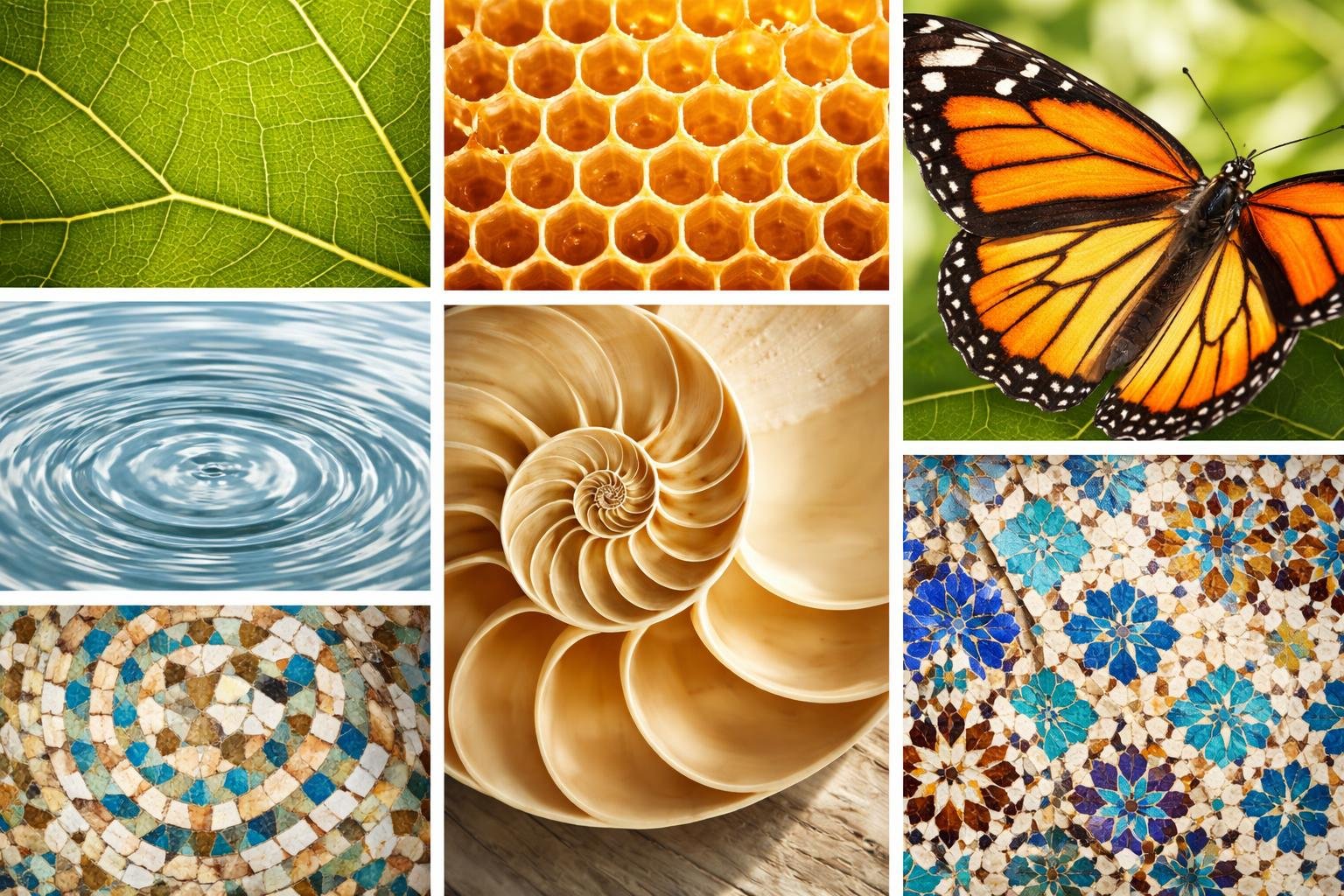
Patterns repeat at different sizes, pack space neatly, or split paths to move stuff around. They explain how things grow, how forces shape the world, and how living systems stay efficient.
Fractals and Self-Similarity
Fractals repeat the same kind of shape at different scales. You see this in ferns, lightning bolts, and coastlines.
Zoom in on a fern branch, and it looks a lot like the whole plant. That’s self-similarity.
Fractal patterns help things cover more area with less material. For example, lung airways and blood vessels branch out in fractal ways to move air and blood deep into tissue.
Fractals pop up in math too, where simple rules make surprisingly complex edges. If you try to measure a coastline or a snowflake, you’ll notice the length changes depending on how close you look—fractal thinking explains that.
Spirals and the Fibonacci Sequence
Spirals show up in shells, sunflowers, hurricanes, and even galaxies. Many natural spirals follow numbers close to the Fibonacci sequence—where each number is the sum of the two before it (1, 1, 2, 3, 5, 8…).
That sequence connects to the golden ratio, which sets a steady growth angle in spirals.
Plants use spirals to pack leaves or seeds tightly so they don’t block each other’s light. Look at a sunflower head—two sets of spirals curve in opposite directions, and if you count them, you’ll often get Fibonacci numbers.
The logarithmic spiral is a shape that keeps its form as it grows—each turn looks just like the last. You can use this math to model growth or design compact layouts.
Branching Patterns and Structures
Branching splits one path into many. You see this in trees, river networks, roots, and blood vessels.
Branching helps reach more area and move stuff efficiently. Your veins and arteries branch out to deliver blood with the least resistance and material.
Designers copy branching rules—like fixed angles and shrinking widths—in network layouts and heat exchangers. Rivers branch based on the land’s slope and soil, making drainage patterns that look almost fractal.
When you look at branching, watch for repeated splits, shrinking diameters, and how the pattern changes with size.
Hexagonal Grids and Tessellations
Hexagons fill a flat space without gaps and use material really well. You find hexagonal patterns in honeycombs, basalt columns, and clusters of bubbles.
Bees build hexagonal cells to store honey while using less wax, since hexagons have the smallest perimeter for a given area.
Tessellations use repeating shapes to cover surfaces. Hexagons matter when you need uniform packing and strength.
Engineers use hexagonal grids in lightweight panels and heat exchangers. In nature, frog skin or plant cells sometimes form hexagonal tiling when forces push cells into tight, repeating spaces.
Patterns in Living Systems and Human Design
You’ll notice repeating forms that solve real problems. Animals use markings to hide or signal; architects borrow natural geometry for strong, light structures; and artists echo these patterns in fabrics or everyday stuff.
Spots, Stripes, and Camouflage in Animals
Patterns help animals survive in all sorts of ways. Zebra stripes break up the outline of a body, making it harder for predators to pick out one animal from the herd.
Leopard and jaguar spots mimic the dappled light in forests, letting them vanish into shadows and leaves.
Peacock feathers show off bright, concentric “eye” patterns to attract mates—those patterns signal health and genetic strength.
Camouflage works by matching color, texture, or pattern to the background—or by breaking up an animal’s shape. Some animals even change patterns with the seasons or their mood. Think of the arctic hare turning white in winter.
People study these patterns to design better concealment, signaling, or displays for human uses.
Architectural and Technological Patterns
Designers and engineers borrow patterns from nature for buildings and machines. Geodesic domes use repeating triangles, kind of like radiating shells, to make wide, strong, lightweight roofs.
Engineers copy branching patterns—like tree limbs or blood vessels—to design piping and wiring that move fluids or data efficiently.
Nature’s patterns also inspire material choices. Surfaces modeled on shark skin can cut down drag, and honeycomb layouts save material while staying strong.
In tech, algorithms mimic swarming or growth rules to optimize routes, schedules, and layouts. Fascinating, right?
Patterns in Art, Culture, and Daily Life
People use nature-inspired patterns all over the place—fabrics, tattoos, even in public spaces.
You’ll notice spot and stripe motifs on clothing and wallpaper. They draw the eye and, honestly, they’re easy to print over and over.
Artists often borrow peacock-like symmetry or those wild, colorful rings. These details pull your attention right to the center of a painting or installation.
Patterns carry cultural weight, too. Stripes might hint at authority or maybe even danger. Spots? They usually feel playful.
You’ll find pattern rules tucked into logos, websites, and user interfaces. Repetition makes things recognizable and easier to use.
Using these patterns just makes stuff feel right—familiar, comfortable, and actually practical in real life.