Number Patterns in Daily Life: Understanding Real-World Sequences
You probably use number patterns way more than you realize—checking the time, planning workouts, stacking chairs, or even just tracking your savings. You can spot simple arithmetic and repeating patterns in these daily tasks and use them to make smarter choices, whether it’s planning your time, money, or chores.
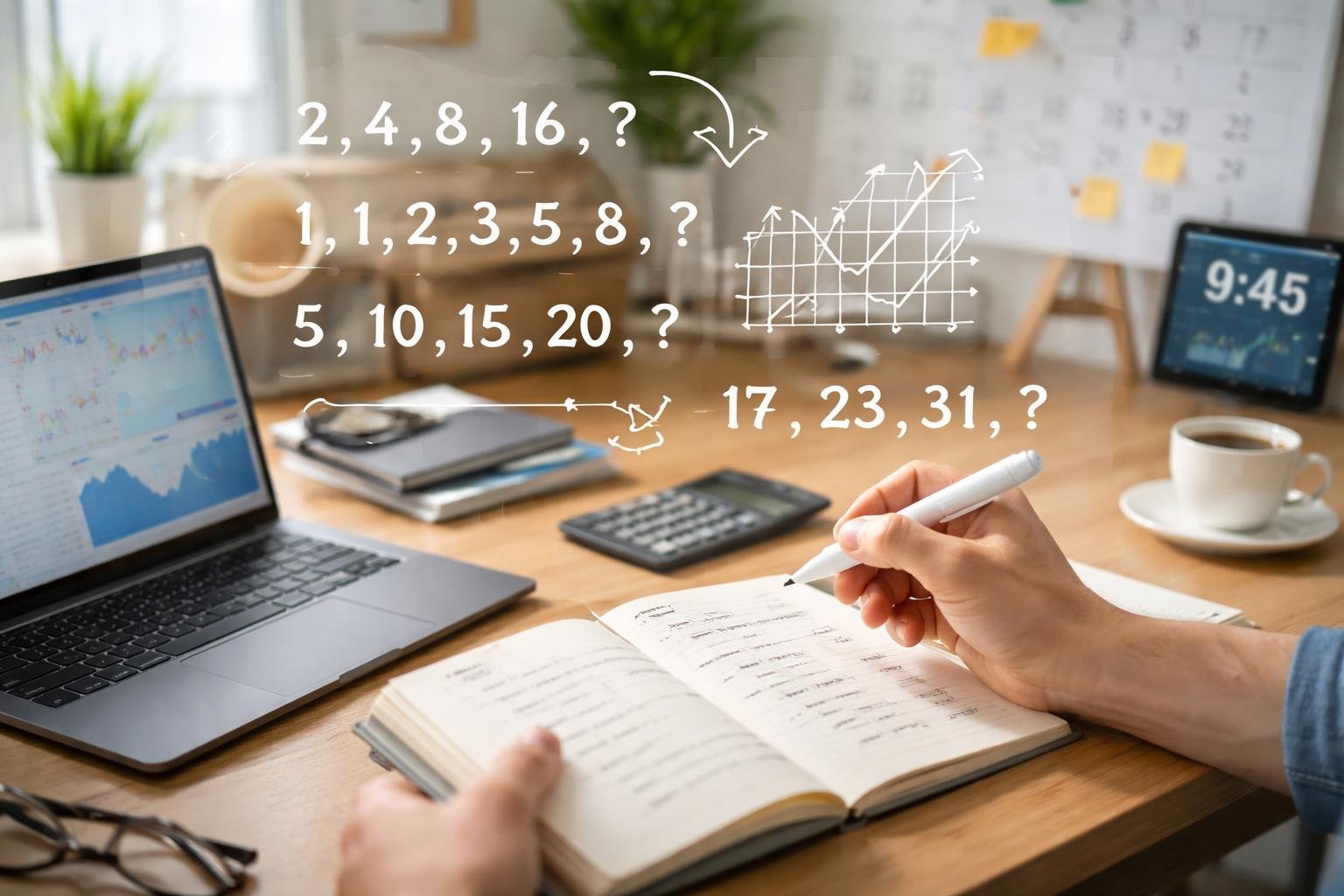
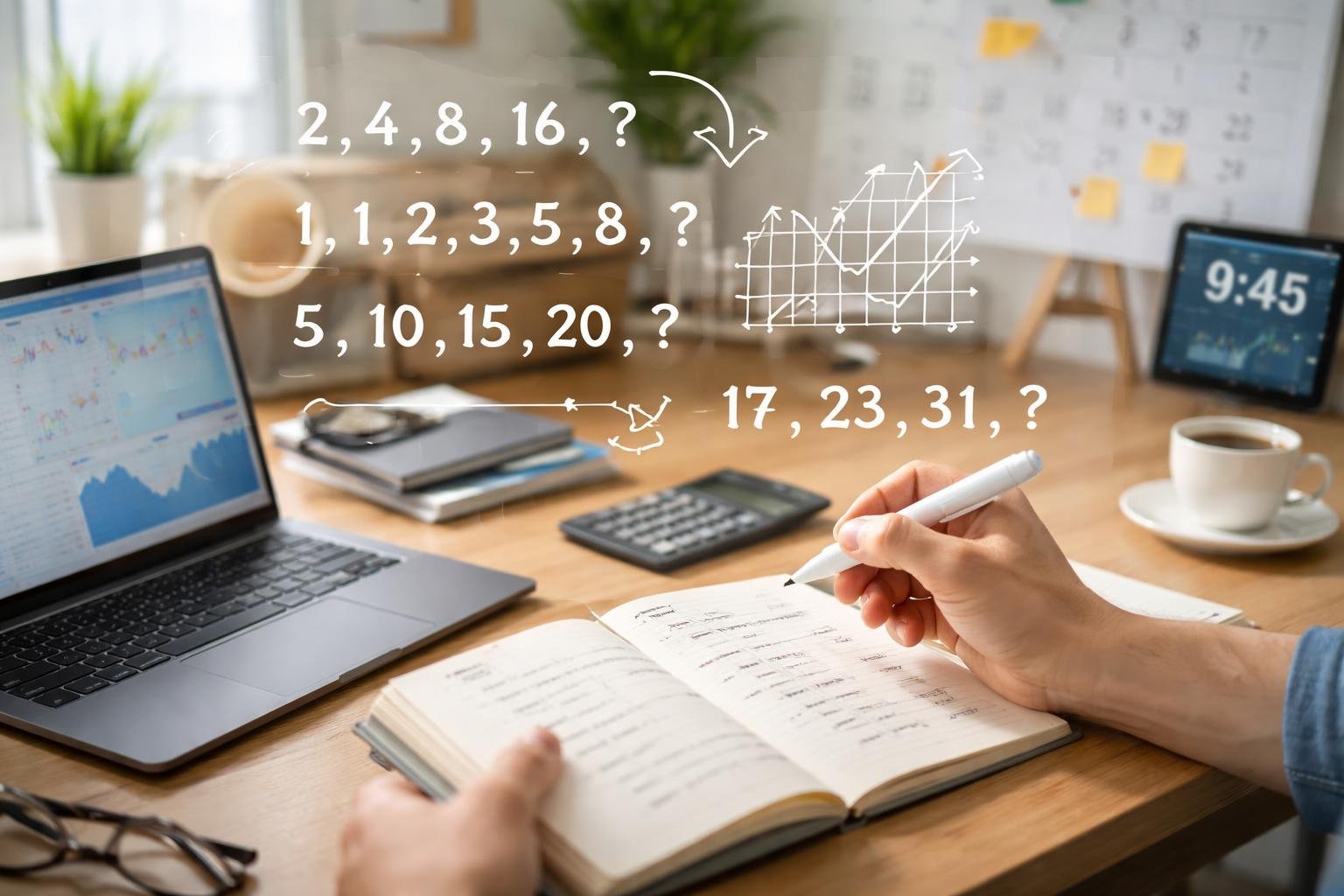
Let’s look at some common patterns you see every day, with clear examples you can actually try. I’ll keep it short and practical—just some ideas to connect the math you already do to useful stuff in your life.
Core Number Patterns in Daily Life
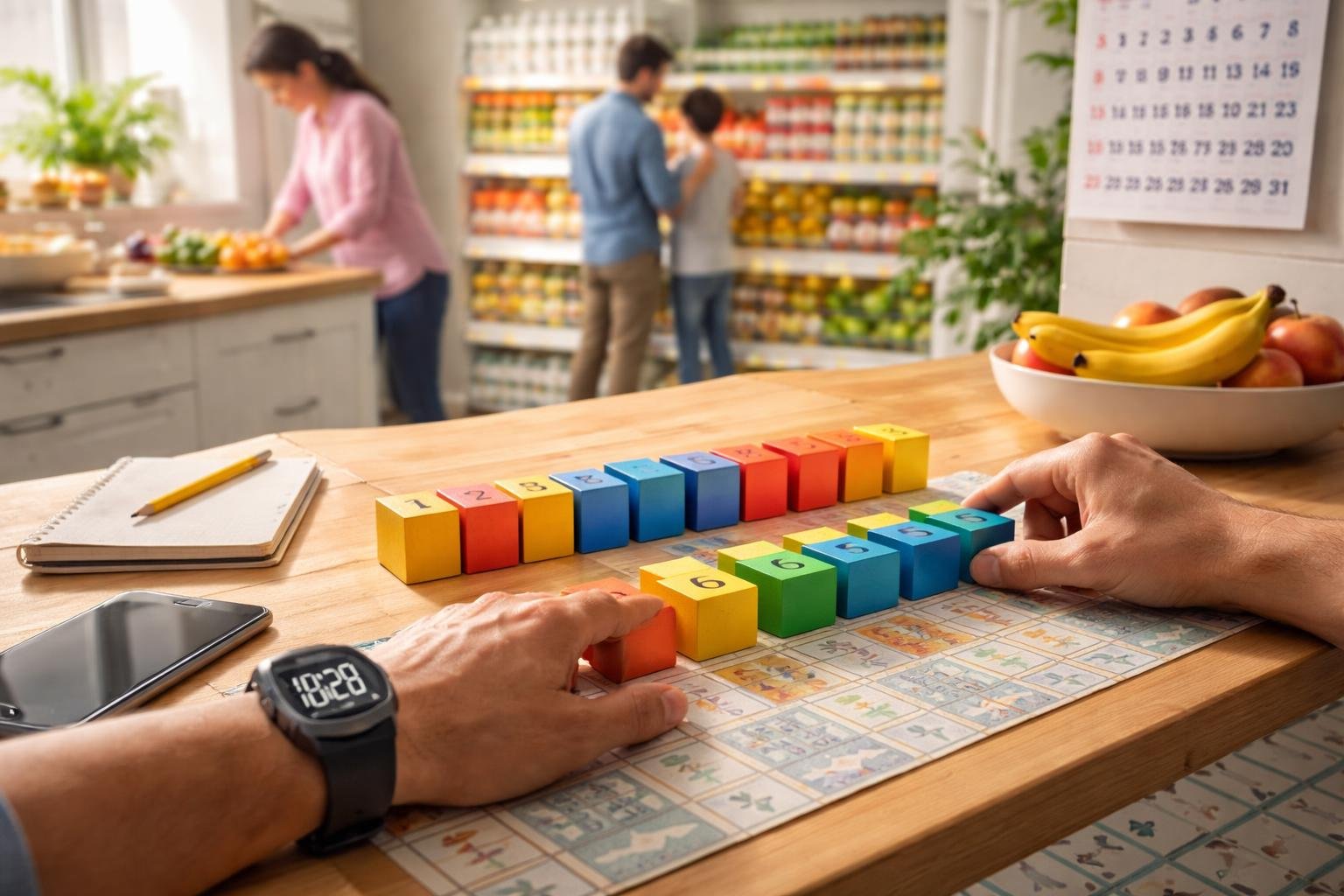
Number patterns show up everywhere, from how things increase to the repeated digits you keep noticing. These patterns usually follow rules you can test, and you can use them to guess what’s coming next.
Arithmetic Sequences in Everyday Situations
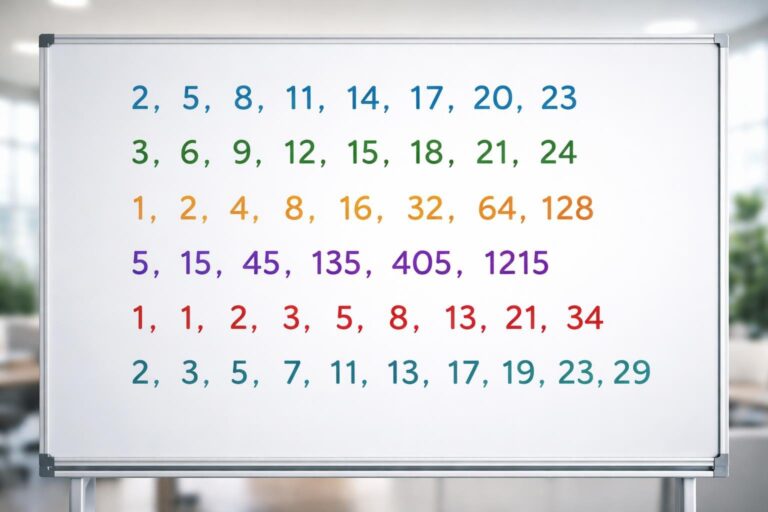
An arithmetic sequence just adds the same amount each time. You see this when you save $5 every week or count even numbers (2, 4, 6…). The rule is the common difference, usually called d.
Let’s say your first term is a1 and d = 3. The sequence would be a1, a1+3, a1+6, and so on.
You can use arithmetic sequences to plan stuff. If you need 50 units and you gain 4 per day, just divide 50 by 4 to estimate the days you’ll need.
You can also write the nth term as a1 + (n−1)d to predict totals. This works for simple budgets, too.
Geometric Sequences and Exponential Growth
A geometric sequence multiplies by the same factor each step. That factor is called the common ratio (r).
You’ll see geometric growth with compounded interest, cell counts that double, or a recipe that doubles every round (2, 4, 8…).
The nth term is a1 × r^(n−1). If r is bigger than 1, things grow fast. If r is between 0 and 1, things shrink.
Comparing geometric and arithmetic patterns can be eye-opening. Doubling every month versus adding 10 each month leads to very different results over time.
Special Number Patterns: Fibonacci, Triangular, Square, and Cube Numbers
Certain patterns just keep popping up in nature and design. Fibonacci numbers start with 0, 1, 1, 2, 3, 5…—each term is the sum of the two before it. You’ll find these in leaf arrangements and spirals.
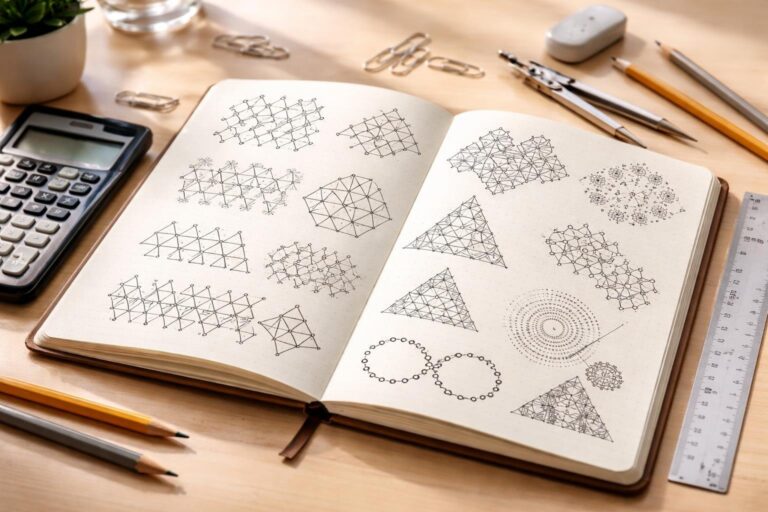
Triangular numbers (1, 3, 6, 10…) count dots that form triangles. The nth triangular number is n(n+1)/2.
Square numbers (1, 4, 9, 16…) form perfect squares; they’re just n^2. Cube numbers (1, 8, 27…) are n^3 and show up when you measure volumes with whole-number edges.
If you spot these, you’ll start seeing structure in data, layouts, or even simple design problems.
Recognizing and Analyzing Repeating Patterns
Repeating patterns show up as repeated digits, cycles, or rhythms. Try to find the smallest unit that repeats, then see if the repeat is exact or if it shifts somehow.
Clock times like 11:11 are a classic example—digits repeat. Traffic lights cycle in a fixed pattern.
Check for arithmetic patterns by looking at differences. For geometric ones, check ratios. Make a quick table:
- Constant differences? It’s arithmetic.
- Constant ratios? It’s geometric.
- If it’s neither, maybe it’s Fibonacci or something else.
Keep a list of sequences you notice and try out the formulas above to see what fits.
Applications and Examples of Number Patterns in Daily Life
You can spot number sequences in plants, buildings, music, or even on your phone. These patterns help you predict growth, fit shapes together, tune sounds, and design better systems.
Number Patterns in Nature and the Environment
Fibonacci sequences pop up in pinecones, sunflower seeds, and shells. Plants use these patterns to pack seeds tightly and grow efficiently.
If you count the spirals on a pinecone, you’ll often get consecutive Fibonacci numbers. That’s a real number pattern using whole numbers.
Exponential and geometric patterns show up in populations and how organisms spread. Bacteria multiply by a fixed factor, and so does compound interest.
Fractals appear in broccoli and coastlines—where a small piece looks a lot like the whole thing. Scientists use these repeating number sequences to model natural shapes and measure odd lengths.
Patterns in Art, Music, and Design
Artists and designers use arithmetic and geometric patterns to space things out. For example, a grid with even spacing follows an arithmetic pattern and keeps layouts balanced.
Tessellations use repeating shapes that fit together without gaps. You’ll see these in tiles and fabrics.
Music relies on number patterns too. Notes follow frequency ratios; rhythms repeat in cycles. The golden ratio and Fibonacci numbers help artists and photographers place focal points that just feel right.
Everyday Routines and Digital Contexts
Your weekly schedule follows modular arithmetic—days repeat every 7, months every 12. This helps you plan repeating tasks and figure out future dates.
Reading a clock uses angles and polar coordinates, which are just number patterns in disguise.
Apps use sequences and whole-number steps all the time. Search results, pagination, and data sampling rely on index sequences.
Even your playlist order or daily step counts create simple number patterns you can track to spot trends or set goals.
Mathematical Patterns in Technology and Structures
Engineers lean on number patterns when they design efficient shapes or build strong structures. Look at honeycomb hexagons—they use geometric packing to save material and make the most of space.
Bridges and cables? They follow catenary curves. These curves create a sequence of points that help spread out loads evenly.
Digital systems run on binary sequences and modular arithmetic. It’s what makes computing and cryptography tick.
Signal processing depends on sine-wave patterns and frequency sequences. That’s how we encode sound and images.
You probably interact with these patterns every day. Smartphones, radios, GPS—they all rely on number sequences to stay accurate and stable.