Maths in Daily Life Images: How Photos Reveal Everyday Math
You spot math every day if you know where to look — in the pattern of tiles, the labels on a receipt, or the layout of a grocery shelf.
Images make those moments obvious and easy to talk about. They turn abstract ideas into things you can actually point at and discuss.

I like to use photos to spark quick questions, build simple math problems, or even kick off creative projects.
A single real-life math photo can show an idea instantly, helping you connect classroom concepts to things you do every day.
As you look through this post, you’ll see how images highlight measurement, patterns, fractions, and budgeting. You’ll also get ideas for using them in learning or creative projects.
Understanding Maths in Daily Life Through Images

You’ll start spotting numbers, shapes, measurements, and patterns in photos of real places.
These examples help you turn a picture into a quick math task or a question for someone else.
Real-World Math Examples Captured in Photos
Photos from shops, kitchens, playgrounds, and streets show math you can use right away.
A supermarket shelf gives you prices and totals for practicing addition, subtraction, and simple budgeting.
A recipe photo lets you practice fractions and scaling when you change serving sizes.
Street signs and maps give you distances, directions, and units—perfect for measurement and estimation.
Add clear captions to show what math idea each photo covers.
For home or classroom, pair a photo with a short question like, “How much for three cans?” or “If this recipe feeds four, how much flour for two?” These prompts keep things focused.
Patterns and Shapes Found in Everyday Scenes
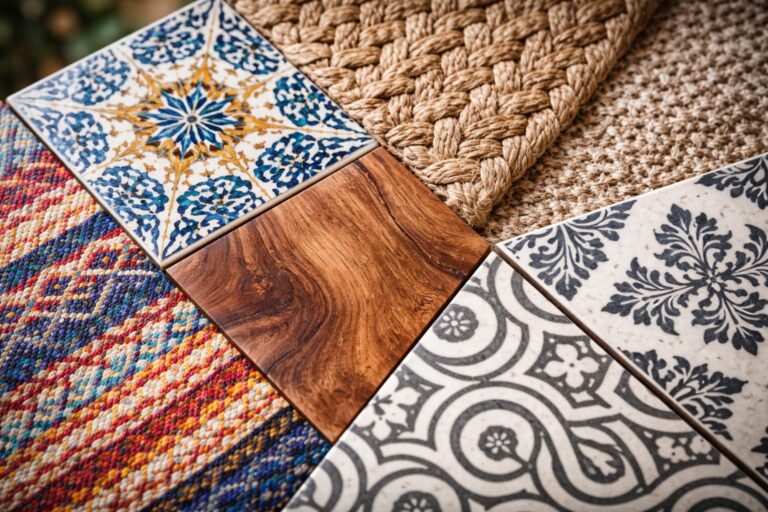
Find repeating tiles, brickwork, wallpaper, or even fruit displays to spot patterns and symmetry.
Notice shapes in windows, road signs, and packaging—good practice for naming and comparing polygons and circles.
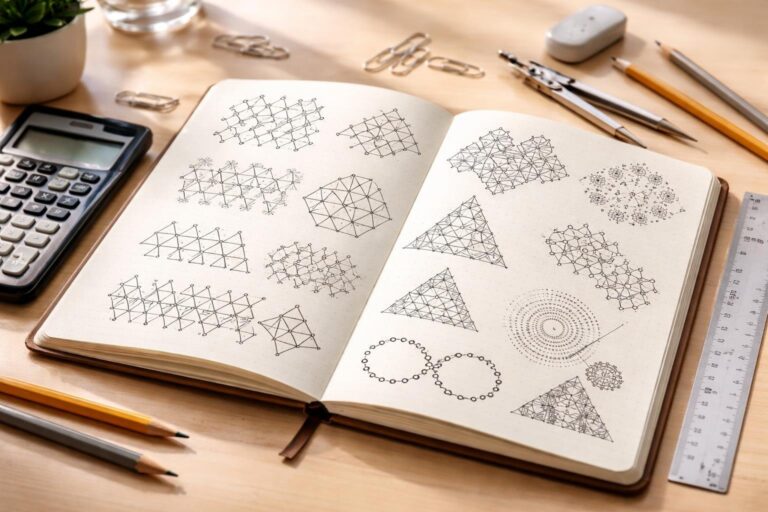
You can turn a photo into a geometry activity by asking about angles, symmetry, or the number of sides on objects.
Make a quick checklist: identify three shapes, one line of symmetry, and one repeating pattern.
This keeps the task simple and fast.
Try using close-up crops of a bigger photo to focus on patterns and avoid too much detail.
Exploring Math Talk with Visuals
Math talk is really just asking focused, open questions about what you see in a photo.
Try prompts like, “What numbers do you notice?” or “How could we measure that bench?” to get things going.
Ask for explanations—maybe have someone show their thinking with a drawing or by pointing to parts of the photo.
Keep the conversation short and specific.
If someone shares a number, ask how they figured it out. If they estimate a length, ask what tool or unit they’d use.
This way, you turn any math photo into a quick discussion that shows real reasoning and helps everyone learn.
Using Maths Images for Learning and Creative Applications
Grab real photos or simple diagrams to teach number sense, measurement, and geometry.
The right images make ideas concrete, spark questions, and give you material for hands-on activities, word problems, or photo collections you can pull from APIs.
Activities for Classrooms and Home
Try a photo scavenger hunt. Have students find things that show fractions, angles, or symmetry.
Give everyone a checklist: “find 1/2, an acute angle, and a repeated pattern.” Let them snap photos or draw quick sketches, then label the math they spot.
Use sorting tasks with printed images. Group pictures by shape, size, or whether they show measurement.
This works for mixed ages since you can make it easier or harder as needed.
Set up short projects: measure objects in photos to estimate real sizes, or use a street photo to calculate speed from distance and time.
These activities build real-world math skills and keep things hands-on.
Creating Math Word Problems from Images
Pick a clear photo and write two or three layered questions about the same scene.
For example, a supermarket shelf photo can lead to questions about totals, discounts, and unit prices.
Start with one-step problems for younger kids: “How many apples are in the basket?”
Move up to multi-step problems for older students: “If each box holds 8 cans and you need 96 cans, how many boxes and how much leftover space?”
Add captions with data like scale, time, or cost.
That way, problems stay solvable without guessing. Save your templates so you can swap in new photos and make worksheets quickly.
APIs for Accessing High-Quality Math Photos
You can use image APIs to build your own curated library of math-in-life photos. Try searching by keywords like “measure,” “money,” or “shapes,” and definitely filter by license if you want to use them in the classroom.
Some popular sources? Pexels and Pixabay come to mind—they both offer free images and their APIs are pretty straightforward. If you want higher resolution or more consistent tagging, paid stock services might be worth checking out.
Always read each API’s docs for things like rate limits or attribution rules. You don’t want surprises later.
If you’re building a tool, it’s smart to cache thumbnails and metadata locally so you don’t hit those rate limits. Developers trust many of these APIs, and most include SDKs that make integration a lot faster.