
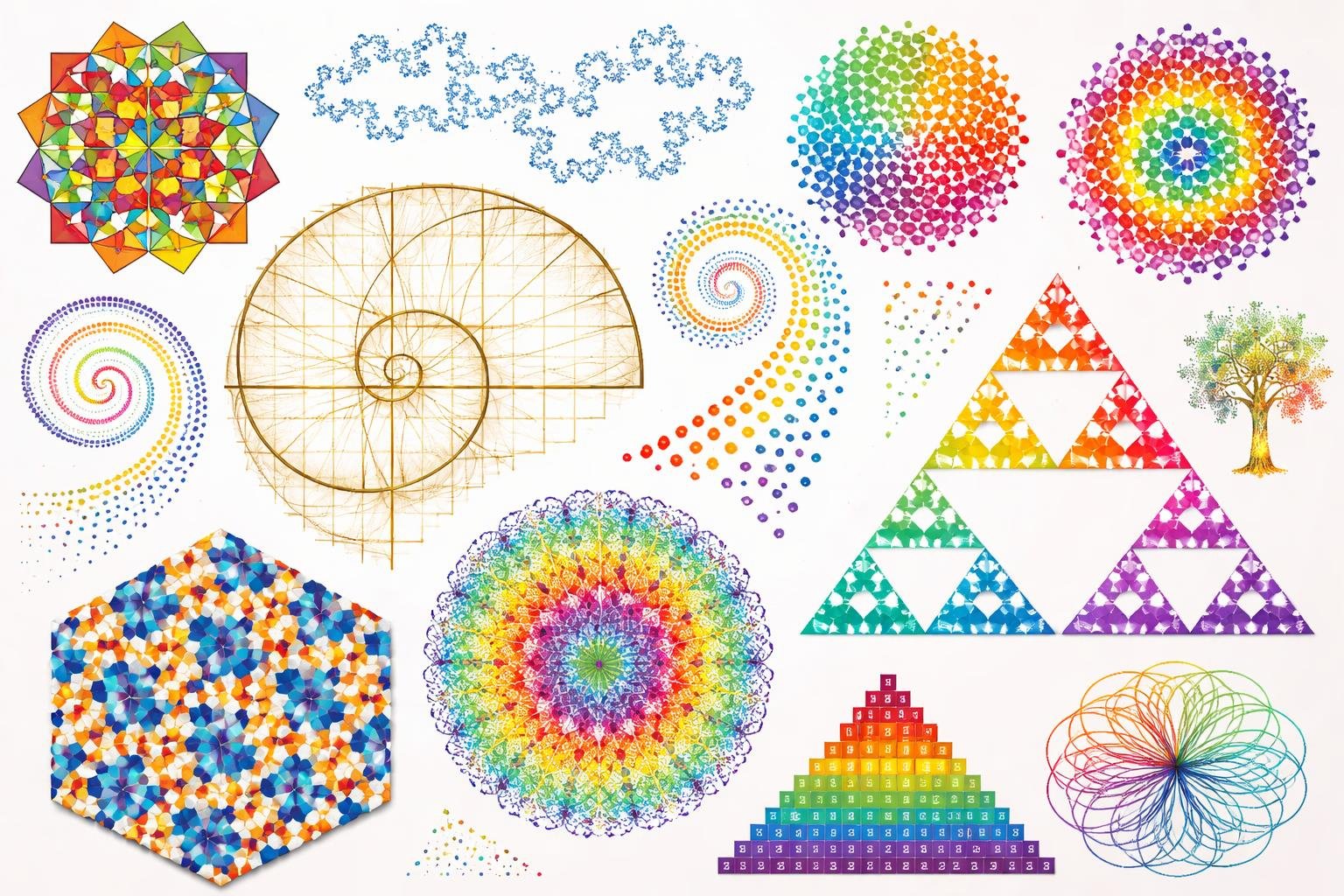
Different Kinds of Patterns in Math: A Complete Guide
You probably notice patterns everywhere—numbers, shapes, even the way some problems seem to repeat themselves. So, let’s talk about the main kinds of patterns in math and the rules that make them both predictable and surprisingly useful.
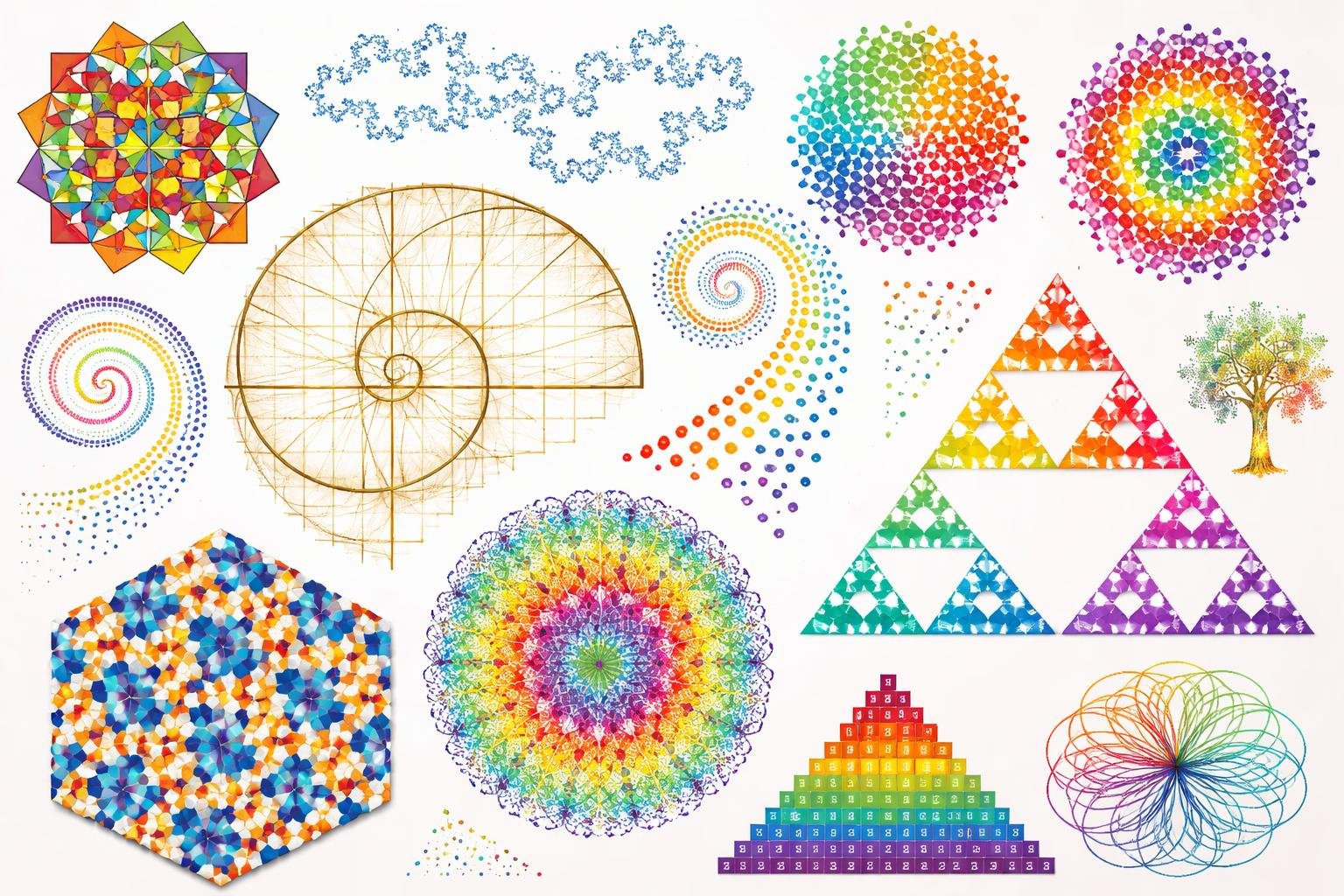
You’ll get a look at arithmetic, geometric, Fibonacci, and a few other pattern types. I’ll show you how to spot the rule that links each term, so you can keep a sequence going or solve for a missing piece. Expect quick examples and simple steps—no need for anything fancy.
Core Types of Patterns in Mathematics
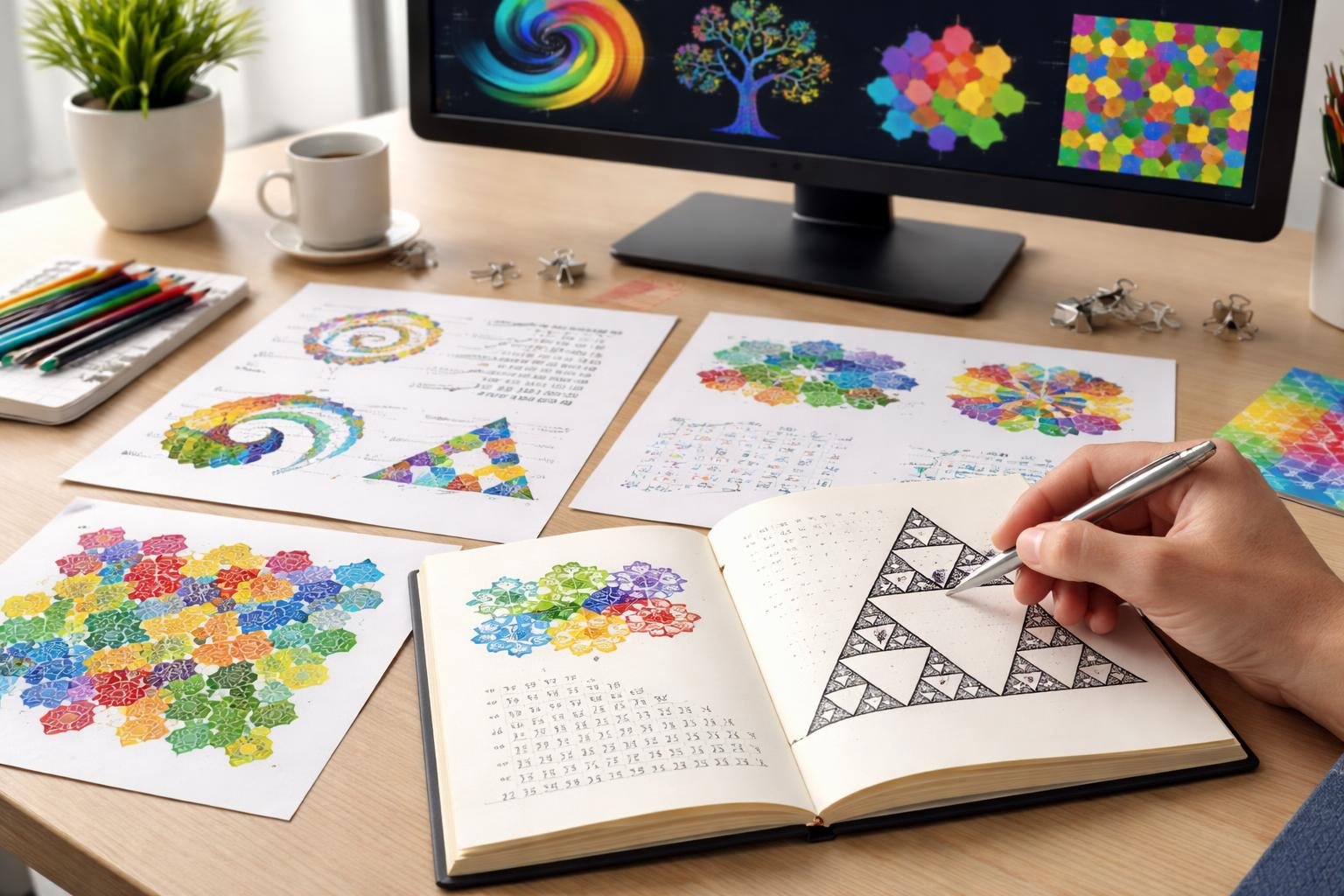
You’ll run into three main kinds of patterns in math problems. Some repeat a fixed block, some grow by a constant or a factor, and others shrink by a steady amount or ratio.
Each type follows rules that let you predict what comes next or fill in a blank.
Repeating Patterns
A repeating pattern just cycles through the same block of numbers, shapes, or symbols.
You can spot the block, then copy it to keep the sequence going. For example: 2, 4, 6, 2, 4, 6 uses (2, 4, 6) over and over.
Try to find the smallest repeating unit, then match each position to that unit.
This works for both number sequences and visual patterns.
Repeating patterns make it easy to check your work fast.
Teachers like to use them for helping students recognize cycles in sequences.
You don’t need to add or multiply here—just pick out the block and place it.
Growing Patterns
Growing patterns use a rule to make each term bigger.
You’ll usually see arithmetic sequences (add the same number each time) or geometric ones (multiply by the same factor).
Take this arithmetic example: 5, 8, 11, 14 (add 3 every step).
Or this geometric one: 3, 6, 12, 24 (keep doubling).
You can write out the rule if you want: arithmetic is xn = x1 + (n-1)d; geometric is xn = x1 * r^(n-1).
Fibonacci-style growth looks different: you add the two previous terms, like 1, 1, 2, 3, 5, 8.
Use these rules to fill in missing terms or check if a sequence matches a certain type.
Shrinking Patterns
Shrinking patterns drop by a set rule.
They’re kind of like growing patterns, just in reverse: subtract a fixed amount (arithmetic decrease) or divide by a factor (geometric decay).
Here’s an arithmetic shrinking pattern: 20, 17, 14, 11 (subtract 3).
A geometric shrink: 81, 27, 9, 3 (divide by 3 each time).
Look for a steady difference or a steady ratio to figure out the type.
Some shrinking sequences use fractions or decimals, so it helps to keep things exact if you can.
Knowing the rule lets you guess smaller future terms or fill in blanks in the sequence.
Major Forms and Rules of Mathematical Patterns
You’ll find rules that help you predict what comes next and tools for spotting links between terms, shapes, and symmetries.
Check out these short guides to see which rules fit, how to test them, and when it makes sense to use visuals instead of numbers.
Number Patterns and Sequences
Number patterns and sequences always follow some rule that links one term to the next.
You’ll see arithmetic sequences (add or subtract a constant), geometric sequences (multiply or divide by a constant), and special ones like Fibonacci (each term is the sum of the two before it).
To find the next number, start by checking for a common difference or ratio.
If those don’t fit, try looking at second differences or formulas like n^2 or n(n+1)/2.
Here’s a quick checklist:
- Check differences between terms.
- If that fails, check ratios.
- Watch for alternating or repeating changes.
- Test simple formulas like n^2, n^3, or Fibonacci.
When you answer a “find the next number” question, write down your rule, show a sample check, and then give the next term.
That way, your reasoning stays clear.
Shape and Geometric Patterns
Shape and geometric patterns use repeated or transformed figures in ways you can predict.
You’ll see transformations like translation (slide), rotation (turn), reflection (flip), and scaling (resize).
Geometric patterns often start from a base shape.
Tiles that grow by adding similar copies follow geometric growth.
Look for repeated angles, equal side ratios, or a steady scale factor.
Try these checks:
- Match up edges and angles to spot rotations or flips.
- Measure scale changes between repeated shapes.
- Track how the number of shapes grows—linear or exponential?
You can describe most geometric patterns with a simple formula or a drawing sequence.
That makes it easier to guess how many shapes you’ll get after k steps.
Symmetry and Tessellations
Symmetry is all about balanced repetition across a line or a point.
You’ll see reflectional symmetry (mirror), rotational symmetry (turning around a center), and translational symmetry (repeating in a direction).
Tessellations cover a plane with no gaps or overlaps, using one or more shapes.
Regular tessellations use identical regular polygons, while semi-regular ones mix a few polygons in a repeating setup.
To break down symmetry and tessellations:
- Find axes or centers of symmetry.
- Count how many turns map the figure onto itself (order of rotational symmetry).
- For tessellations, check that angles meeting at a point add up to 360°.
These quick checks tell you if a pattern can tile forever and whether it has mirror or rotational balance.
Pattern Recognition Strategies
Pattern recognition really boils down to a few steps that help you test and confirm rules fast.
First, try to describe the pattern in plain words—maybe it’s “add 3,” “multiply by 2,” or even “flip every other shape.”
Then, jump into some quick numeric or visual tests.
You can use tables to jot down term positions, values, and differences.
If you’re working with shapes, sketch out a couple of repeats and actually mark the changes you notice.
Here are a few strategies I like:
- Work forward from what you know, but don’t be afraid to backtrack if you get stuck.
- Use formulas based on position, like term n = rule(n).
- Watch out for alternating or nested patterns; sometimes letters sneak in with numbers.
- For visuals that seem complicated, just count things—sides, angles, whatever repeats.
And hey, keep your notes from failed tries; a wrong guess sometimes nudges you toward the answer.
These steps really help when you’re faced with those “find the next number” puzzles or trying to spot patterns in math problems.