Math Pattern Activities: Creative Ideas for Engaged Learning
You’ll find easy, hands-on pattern activities here, perfect for building number sense and thinking skills without losing kids’ interest.
These activities let students spot, extend, and make patterns using colors, shapes, sounds, and movement—so they actually remember how patterns work.
Try out games, manipulatives, books, or even quick printables to fit all kinds of skill levels and group sizes.
This post breaks down the main types of activities and shares practical teaching tips, so you can pick what fits your classroom or home.
Core Types of Math Pattern Activities
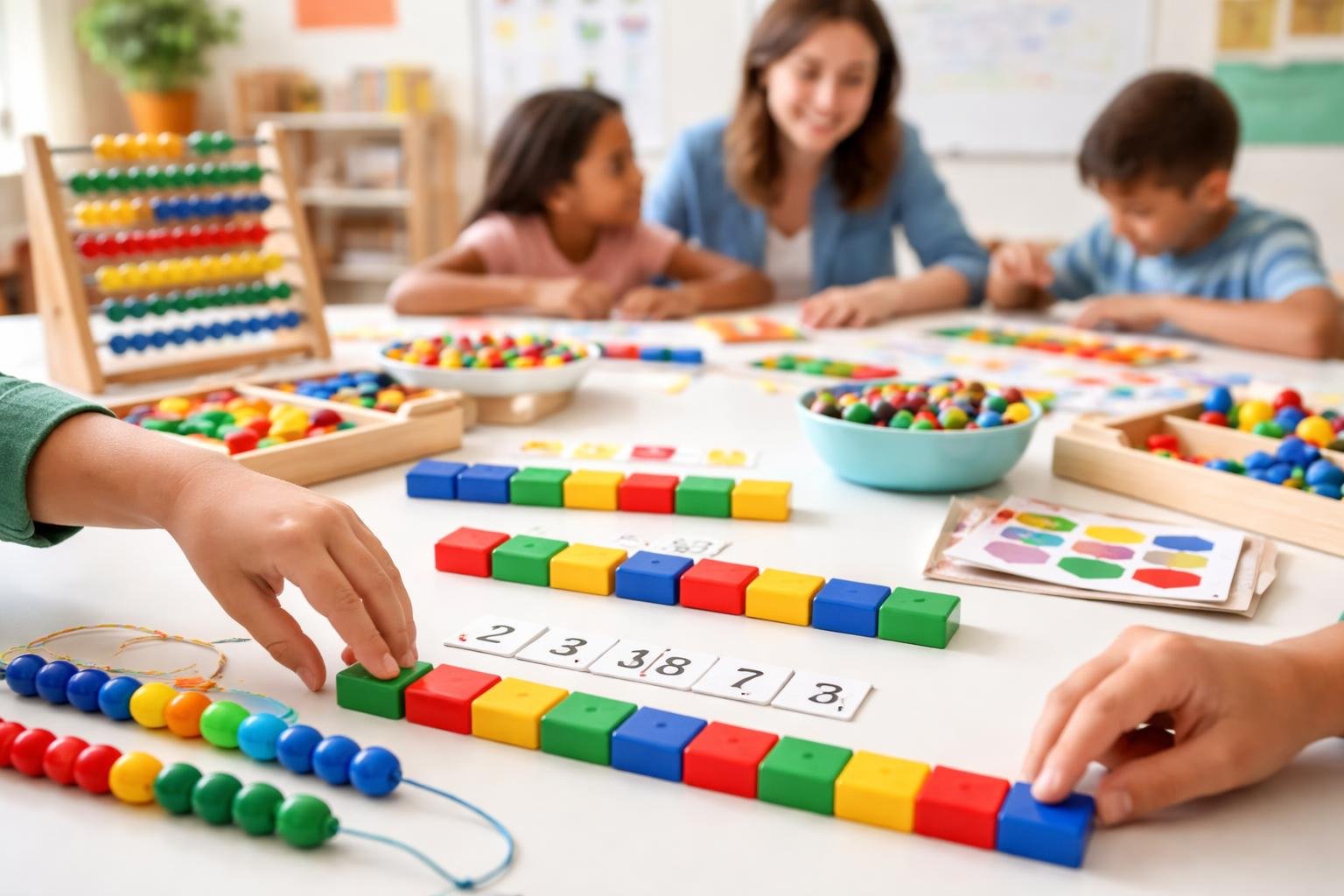
You’ll get to work with patterns that repeat, change by number rules, grow in size or value, and form with shapes.
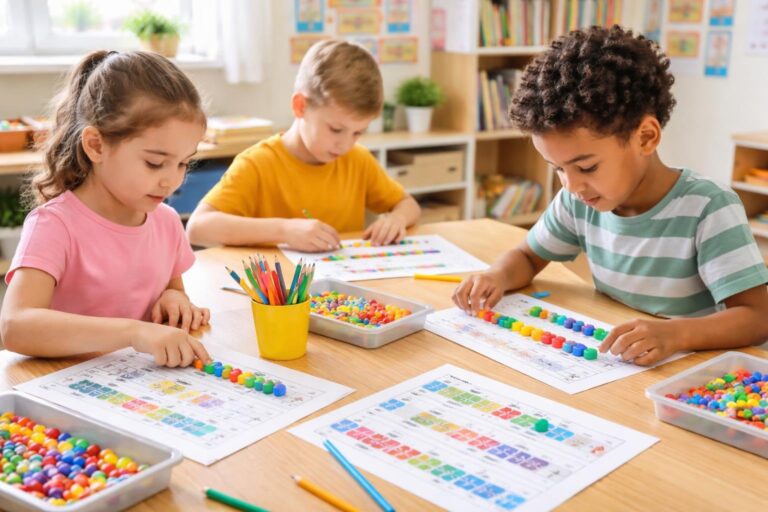
Each activity uses simple stuff like pattern blocks, counters, stickers, or paper to help your child spot patterns and finish them.
Repeating Patterns for Early Learners
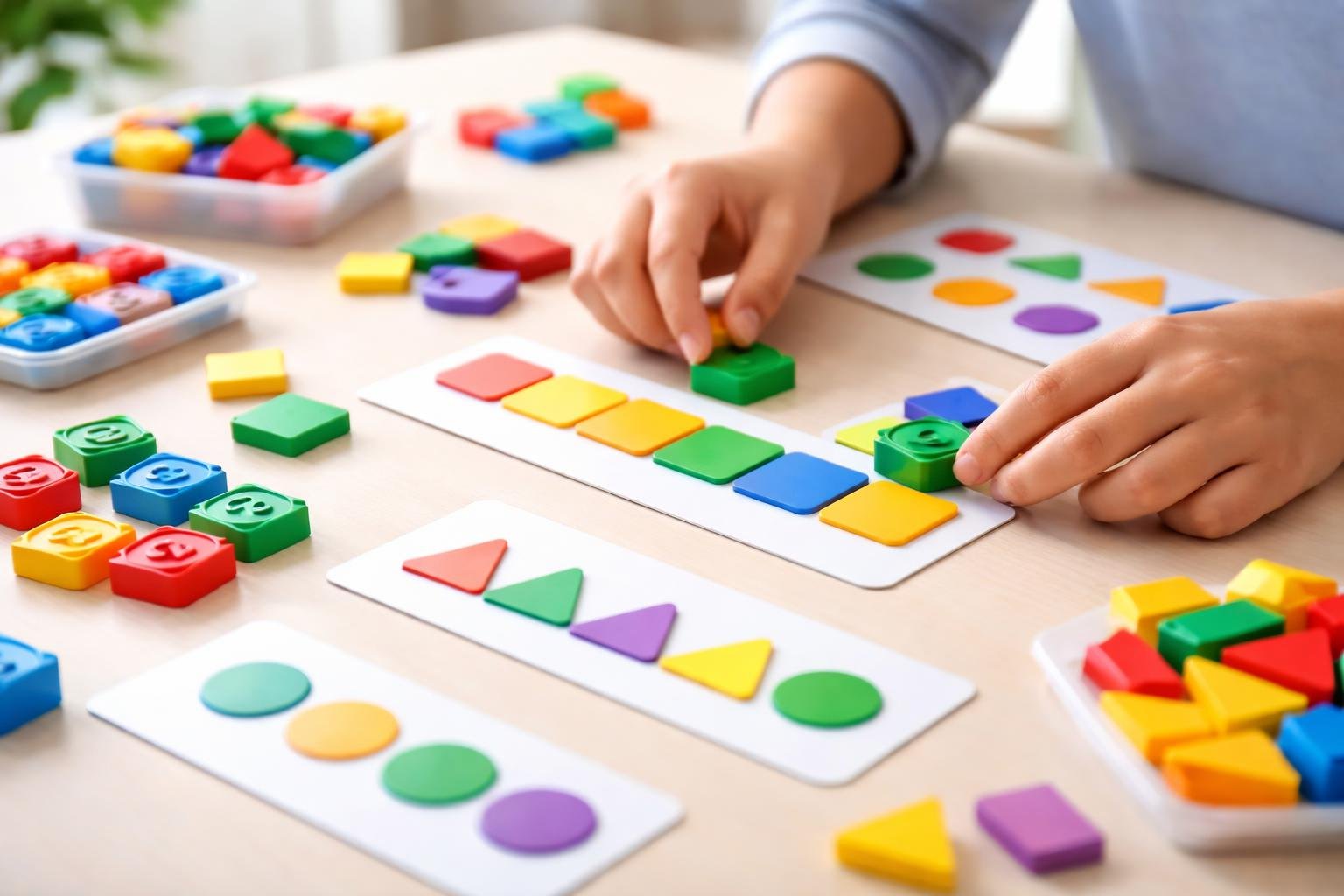
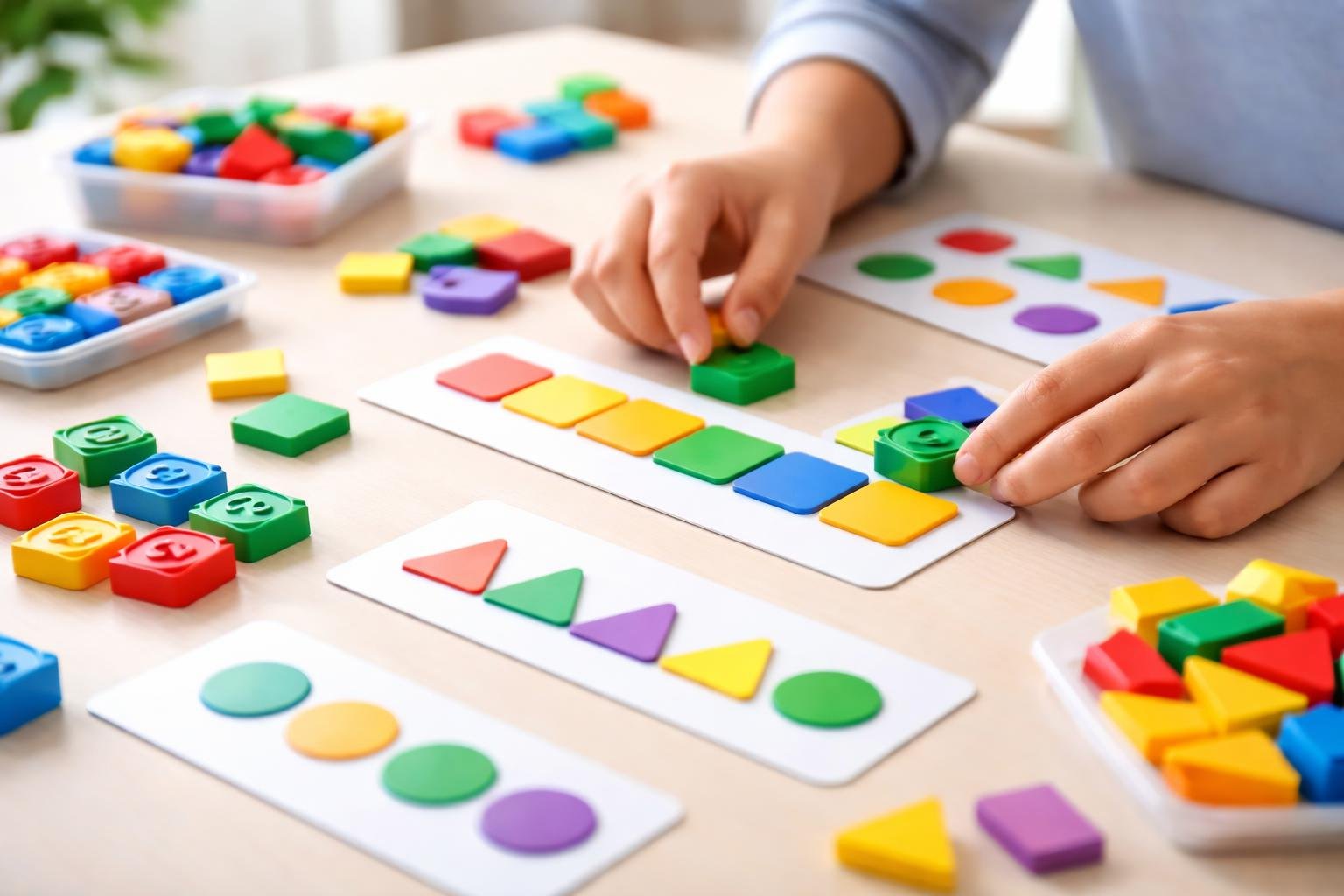
Repeating patterns show a short sequence that just keeps cycling, like red-blue-red-blue or circle-square-circle-square.
Use manipulatives—colored counters, stickers, or pattern blocks—so learners can move pieces around with their hands.
Ask your child to copy a pattern first, then leave a blank and let them “complete the pattern.” That really helps with visual memory and sequencing.
Keep tasks short—4 to 8 items is plenty. Start with AB or AAB patterns.
Turn it into a game: hide the next piece, or use movement (clap-stomp-clap). Show a few examples, then let kids make their own repeating patterns. It’s fun, and it really sticks.
Exploring Number Patterns
Number patterns follow arithmetic rules like +2, ×3, or switching between adding and subtracting.
Start with small sequences: 2, 4, 6 (add 2) or 5, 10, 15 (add 5). Use counters or tens-frames so kids can see how each step changes.
Ask them to guess the next two numbers and explain the rule in their own words.
Try mixed rules too—like alternating adding and subtracting, or simple multiplication patterns.
Set up tasks where they fill in missing numbers, extend sequences, or make their own number patterns. This builds number sense and gets them ready for algebra later on.
Working with Growing Patterns
Growing patterns increase each step—maybe one star, then two, then three, or shapes that add a side every turn.
Use pattern blocks, dot stickers, or drawing prompts to show how a figure changes step by step.
Let learners build the first three steps with their hands, then ask them to predict or draw step five or six.
Focus on finding the rule that makes the pattern grow (add one, double, add a shape). Ask them to “complete the pattern” with a bigger step number and describe how it expands.
These activities connect counting, geometry, and logical thinking in a way that feels natural.
Shape Patterns and Visual Sequencing
Shape patterns use forms and order—like triangle-square-circle, or mirror-image sequences.
Try pattern blocks, cut-out shapes, or printable cards to arrange patterns. Let kids sort by shape, color, or direction, then copy and extend sequences.
Visual sequencing helps build spatial skills and early geometry.
Add challenges: rotate a shape each step, change the size gradually, or mix shape and number rules.
Ask kids why a sequence “looks right” or have them fix a broken pattern. These tasks help students spot patterns in art, nature, or even classroom layouts.
Hands-On Methods and Teaching Strategies
These methods use tools and routines so students can see, touch, and make patterns themselves.
You’ll use manipulatives, centers, worksheets, and creative tasks to build pattern recognition, extension, and problem-solving skills.
Using Manipulatives and Pattern Blocks
Give students real items—pattern blocks, counters, colored tiles—to build and test patterns.
Let them copy a shown pattern, then tweak one piece and see how the rule changes. Use manipulatives to model AB, AAB, ABB, and growing patterns so students can really feel the pattern.
Ask them to explain the rule out loud as they arrange pieces. That builds language and reasoning, too.
Switch up the manipulatives—shape blocks one day, counters or stickers another—to help them transfer what they know between visual and number patterns.
Keep a few pattern books or picture cards nearby for quick examples. Students can use these to recreate patterns with blocks and connect math to reading.
Interactive Math Centers
Set up centers with clear tasks and materials for independent or small-group work.
Maybe one center focuses on extending patterns with linking cubes, while another uses stickers or stamps. Label each center with a short task card and expected time.
Give students a checklist or recording sheet so they can track how they extend or finish patterns. It helps you check their worksheets alongside hands-on work.
Change up the prompts each week—copy, extend, create, or explain—to keep things fresh and build flexible thinking.
Teach students to rotate roles: builder, recorder, explainer. These roles keep centers running smoothly and encourage peer discussions about pattern rules.
Pattern Worksheets for Practice
Pick patterning worksheets that match what students do with manipulatives.
Include tasks to spot, extend, and finish patterns in both pictures and numbers. Start with simple repeating patterns and add more complex ones as kids improve.
Use worksheets for quick, focused practice after hands-on lessons.
Break worksheets into sections: “copy the pattern,” “extend the pattern,” and “create your own pattern.” That way, students move from recognizing to making patterns.
When you mark worksheets, show where the rule went wrong—not just the final answer. Ask students to fix one mistake and explain it. That goes deeper than just drilling for the right answer.
Encouraging Students to Create Patterns
Let students dive in and design patterns with art supplies, manipulatives, or even a bit of movement. Toss out challenges—can you make a new ABBA pattern? What about a pattern that adds one shape each time? Try using four colors and talk through the rule.
Ask students to pair up and share their patterns. Each person writes a quick sentence about their pattern’s rule.
Next, have them swap patterns. Now, their partner has to extend or finish the design. It’s a fun way to practice problem-solving and use clear math language.
Put up a pattern wall or display strips students have made. When kids see lots of different patterns, they start spotting new structures and get to try more advanced ideas.