
Maths in Everyday Life Examples: Practical Uses Explained
You probably use maths way more than you realize—cooking, shopping, planning a trip, or just keeping track of time. Maths sneaks into your choices, helps you stretch your budget, and honestly, it solves problems with tricks you already know.
You’ll spot useful maths in stuff like budgeting, measuring for recipes, planning a route, or tracking workouts. It’s there to save you time and money, even if you don’t notice it.

This post gives you down-to-earth examples from daily life, then jumps into how maths pops up in technology, travel, and health. Stick around—you might find a few quick tricks to turn numbers into smarter choices.
Everyday Applications of Maths
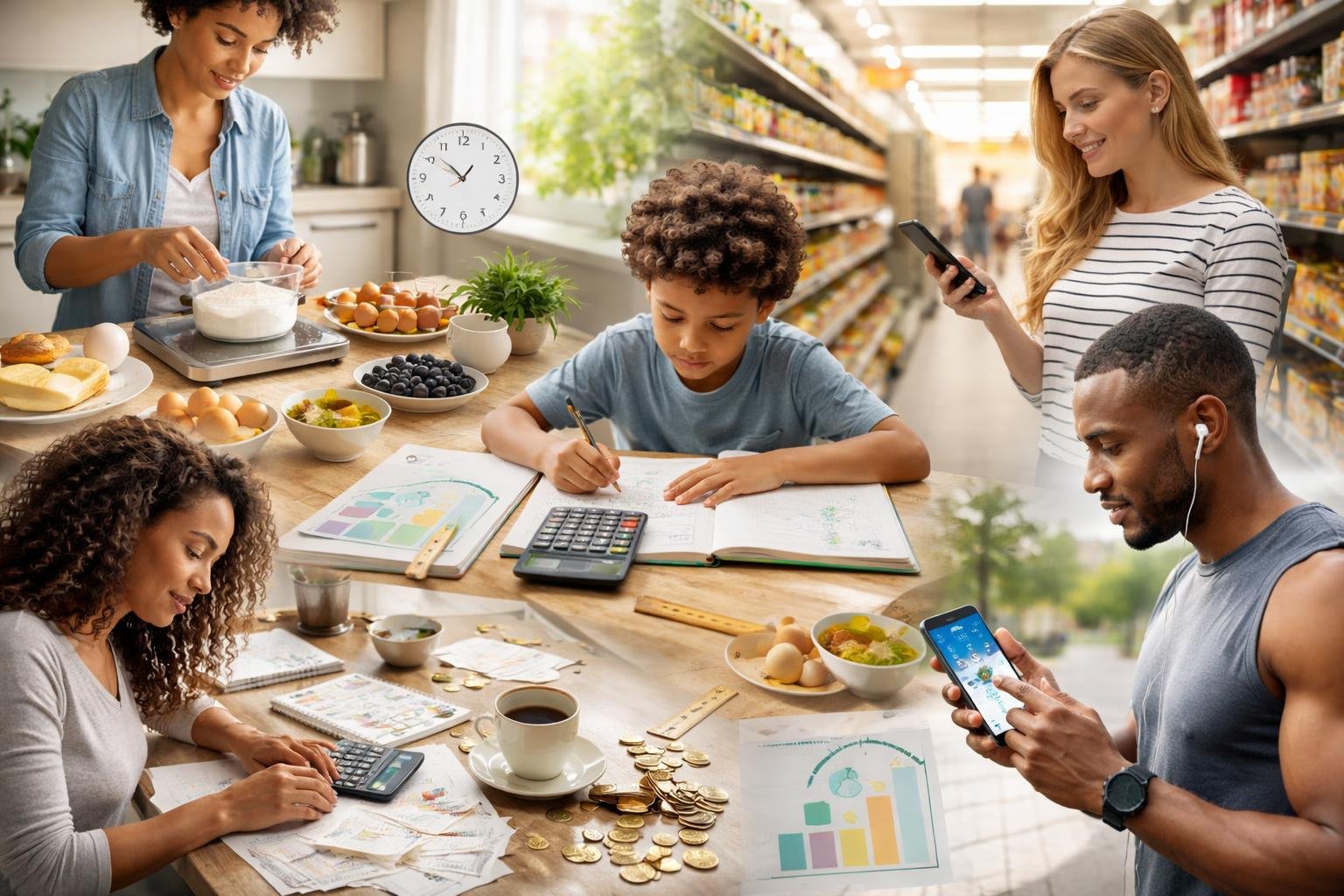
You use simple maths every day to make sense of money, time, and even what’s in your fridge. The examples below show how you calculate, compare, and adjust using basic maths skills.
Budgeting and Personal Finance
You start by adding up your monthly income and subtracting your expenses. List your wages and any other income, then subtract rent, bills, food, and transport to see what’s left.
Set savings goals using percentages—maybe you want to save 10% of your pay each month. Track spending with a table or spreadsheet: jot down categories, planned amounts, and what you actually spent.
Spot overspending quickly that way. If you want to see yearly costs from monthly bills, just multiply. Divide to split shared expenses with roommates or friends. These maths habits help you avoid overdrafts and slowly build up an emergency fund.
Shopping: Discounts and Special Offers
When you see a sale, figure out the real price before you toss it in your cart. For a 25% discount, multiply the price by 0.75.
For deals like “buy one, get one half price,” add up the total and divide by two for the unit price. Check unit prices (cost per gram or litre) to see which size actually saves you money.
Sometimes, a discounted item isn’t cheaper after tax. Subtract fixed coupons first, then apply any percentage discounts left. Doing the maths can save you from falling for fake deals.
Cooking and Following Recipes
Recipes use fractions and ratios all the time. If a recipe serves four and you only need two, just halve each ingredient.
Want to feed six? Multiply the ingredients by 1.5. Grab your measuring cups and convert units when you need to—grams to cups, millilitres to tablespoons.
A small mistake in proportions can mess up texture or cooking time. For baking, weighing ingredients instead of just scooping gives you better results. Multiply or divide when scaling recipes to keep everything in balance.
Temperature and timing matter too. If a recipe says 180°C but your oven is in Fahrenheit, you’ll need to convert. Don’t guess—maths saves dinner.
Time Management and Scheduling
You break your day into chunks to plan tasks. Guess how long each one takes, then add them up to make a schedule that actually works.
Subtract to see where you have free time. Divide big projects into smaller sessions—for example, split a two-hour project into four half-hour blocks.
If you’re juggling deadlines, calculate how much you need to do each day to stay on track. Use percentages to track progress, like marking 40% done after two out of five steps. Simple maths here can make your day way less stressful.
Maths Beyond the Basics: Technology, Travel, and Health
You’ll find maths in tech, travel, and health too. Geometry and rates help you plan routes. Algorithms and data analysis run your apps. Ratios and unit conversions pop up when you track fitness or calculate doses.
Travel Planning and Transportation
When you plan a trip, you compare routes, times, and costs using maths. Figure out distance and travel time with speed = distance ÷ time.
That helps you pick between driving, flying, or taking the train. Convert miles to kilometers or hours to minutes so you’re not comparing apples to oranges.
Check ticket prices by finding cost per hour or per mile. Public transit and ride-share apps use timetable maths and wait-time estimates to suggest the best departures.
When you pack, estimate luggage volume (length × width × height) and weight to dodge extra fees. For trips with layovers, add buffer time for transfers and delays—nobody likes missing a connection.
Technology and Algorithms
Apps and devices run on algorithms powered by maths. You interact with sorting, filtering, and recommendation systems every time you shop or stream.
These algorithms crunch data using averages, percentages, and weighted scores to show you what’s most relevant. Network speed, data caps, and battery life all rely on rate calculations. For example, estimate download time by dividing file size by connection speed.
Encryption and security use number theory and modular arithmetic behind the scenes. You don’t need to know the proofs, but it’s kind of cool that maths keeps your data safe.
When you check app analytics or device stats, you read charts built from statistics. Look for means, medians, and trends to judge performance. Small changes in your settings or data can shift recommendations, so understanding basic probability and averages helps you use tech smarter.
Health, Fitness, and Dosage Calculations
Math really keeps your health routines on track. When you’re working out, you crunch numbers to figure out calories burned, your pace, or which heart-rate zone you’re in.
You use formulas based on time and distance, or maybe percentages of your maximum heart rate. These numbers can help you set goals—or at least give you a way to see if you’re actually making progress.
For medications, you often need to do weight-based or concentration-based math. You’ll multiply the patient’s weight by the dose per kilogram to get the total dose.
If you’re dealing with liquids, you might have to convert milliliters to teaspoons, or use mg/mL to figure out how much to give. It’s not always straightforward, is it?
Lab results and risk percentages rely on data analysis to spot trends. You’ll read values against reference ranges, and sometimes you just need a simple ratio to compare changes over time.
Getting those unit conversions right—and paying attention to decimals—can really make a difference. It can help you avoid dosing mistakes and actually improve the way you track your fitness.