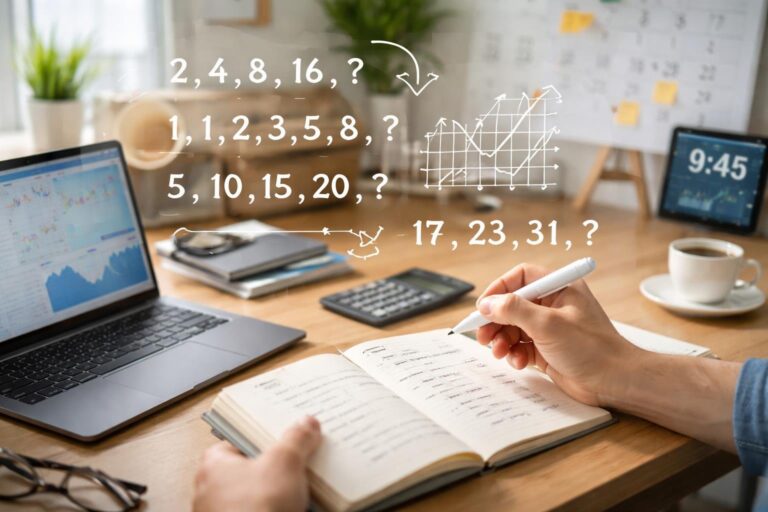
Maths in Everyday Life: Practical Applications and Impact
You probably use maths way more than you realize. When you’re shopping, cooking, planning a trip, checking the time, or even just looking at the weather, simple calculations shape your next move. Maths helps you make better choices, save time and money, and understand the world around you.

Let’s look at practical, everyday ways maths shows up—from budgeting and cooking to tech and forecasting. Maybe you’ll spot a few shortcuts or tools you can use right away.
Essential Uses of Maths in Daily Life

You make simple calculations every day—whether you’re managing money, prepping food, or keeping track of time. Arithmetic and basic fractions help you plan budgets, check prices, adjust recipes, and set up schedules that actually work.
Budgeting and Personal Finance
You track income and expenses with basic maths and sometimes spreadsheets. List out fixed bills like rent and utilities, then add in things like groceries and transport, and subtract all of that from your income to see what’s left for savings.
Set saving goals using percentages. For instance, try putting 10% of each paycheck into an emergency fund.
When you compare loans or credit cards, break down interest rates to monthly numbers and figure out the real cost. Even small differences in rates can add up, so use a calculator or the simple interest formula to estimate payments.
Keep your budget updated and check your actual spending against your plan to get better at managing money. Rounding numbers and working with fractions helps when you’re splitting bills or dividing up monthly costs. These habits cut down on mistakes and make planning less stressful.
Shopping: Discounts, Percentages, and Sales Tax
You figure out discounts by turning percent-off into a decimal, then multiplying by the price. If something is 25% off and costs $60, multiply 0.25 by 60 to get $15 off, so you pay $45.
Always add sales tax to the discounted price to find the real total. If the tax is 8%, multiply the sale price by 1.08.
Unit price (cost per ounce or per item) makes it easier to compare different sizes or bundles. For bundled deals, divide the total price by how many items you get.
Quick mental math helps at the store. Round prices, estimate the percent saved, and double-check with a calculator if you need to.
Meal Preparation and Recipe Calculations
You use fractions and ratios to scale recipes up or down. Doubling a recipe? Multiply each ingredient by 2. Making half? Use 1/2.
Before mixing, convert between units—like tablespoons to cups or grams to ounces—so you don’t mess up the recipe. Timing matters, too. Add up prep and cook times to know when your dish will be ready.
If a roast needs 90 minutes and you want to eat at 6:30 p.m., start at 5:00 p.m. Sometimes, recipes have steps that overlap, so plan the order so everything finishes together.
Measuring accurately really changes the results. Use measuring cups for liquids and a scale for dry ingredients if you want things to turn out right. Adjusting seasoning and portion sizes with simple maths helps you waste less food and serve the right amount.
Time Management and Scheduling
You break your day into blocks and give yourself realistic time for each task. Add in travel, buffer time, and breaks to keep things running smoothly.
If you have a two-hour slot for homework and five subjects, you might spend 30 minutes on the hardest one and divide the rest up as needed. Use clocks and calendars to switch between minutes and hours.
For meetings across time zones, add or subtract hours to get the right start time. Track deadlines by counting days left and planning backward from the due date.
Paying attention to how long tasks actually take helps with future planning. Try keeping a quick log for a week, then use those averages to tweak your schedule.
Modern Applications of Mathematics
You use maths in practical ways all the time—choosing routes, setting up schedules, checking costs, or making sure a project fits. The examples below show how geometry, algorithms, and simple decision maths help you avoid mistakes.
Travel Planning and Transport
When you plan a trip, you use arithmetic and a bit of algebra to compare routes and costs. To figure out fuel needs, divide the distance by your car’s miles per gallon, then multiply by the price of fuel.
For time estimates, use speed equals distance divided by time to decide between a faster toll road or a longer free one. Public transport and ride apps rely on averages and probability to predict wait times.
You split costs and convert currencies using percentages and proportions. For flights, simple scheduling maths helps you avoid missed connections by adding boarding buffers and adjusting for time zones.
You weigh time versus cost and pick the best trade-off for your needs. These are the maths skills you probably learned in school—and honestly, you use them all the time without even thinking about it.
Technology and Algorithms
Algorithms power search engines, maps, and recommendations you see every day. They sort through millions of things using probability and statistics so the most useful results show up first.
When you search for directions, routing algorithms figure out the shortest or fastest path using graph maths. Apps estimate arrival times, predict traffic, or suggest cheaper travel dates using applied maths.
Encryption for secure payments relies on number theory and modular arithmetic. Even simple features like auto-suggest use pattern counts and weighted scores to rank options.
Understanding these ideas helps you trust and use technology better. Algorithms juggle speed, accuracy, and data limits to make practical decisions, whether you notice or not.
Home Improvement and Geometry
Geometry really comes in handy when you’re measuring rooms, cutting materials, or planning layouts. You want to buy just the right amount, right?
You figure out the area by multiplying length and width, especially for things like flooring or paint. That way, you won’t end up with extra you don’t need.
Got an odd-shaped room? Just break it into rectangles and triangles, then add up the areas. It’s not as tricky as it sounds.
You’ll need to think about volume and proportions for things like concrete or soil. Those calculations help you order the right amount of materials.
Angles get important when you’re putting up trim or designing a roof. If you use some basic trigonometry, your cuts end up a lot more precise.
Honestly, planning with these math skills can save you both money and time before you even pick up a tool.
Lists and quick tables help you compare material sizes and costs without a headache. Using math like this just makes DIY projects smoother and less stressful.