
Use of Mathematics in Daily Life: Practical Applications Explained
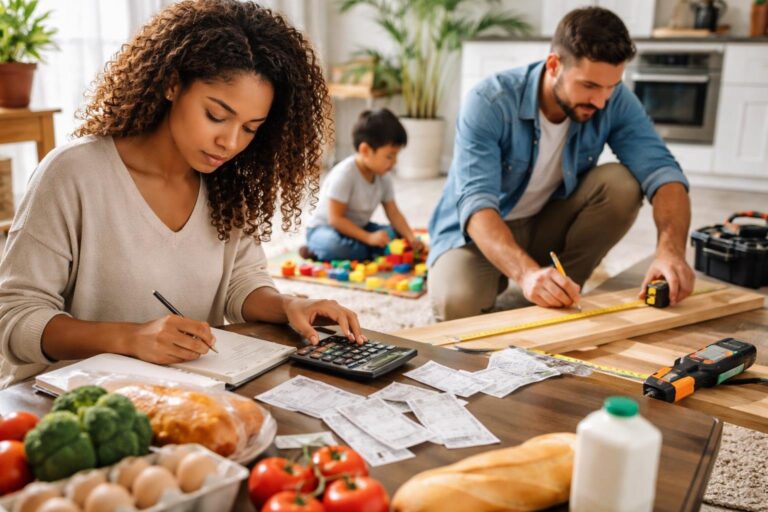
You probably use math way more than you realize—budgeting, scaling a recipe, or just figuring out the quickest way across town. Math sneaks into nearly every decision, big or small, and honestly, knowing a few basics just makes life smoother. It’s about saving time, avoiding mistakes, and turning chaos into something you can actually handle with numbers.

Let’s go through how math shapes your daily routines and, yeah, even some of the more modern uses—think budgeting, cooking, tech, and data. You’ll start spotting math all over your day, and maybe even put it to work for you.
Essential Ways Mathematics Impacts Daily Activities

Math really helps you make smarter choices about your money, time, meals, and shopping. You’ll use addition, subtraction, multiplication, division, and percentages for things like saving money, planning meals, and sticking to your schedule.
Managing Personal Finances and Budgeting
Every month, you track income and expenses using basic math. List your fixed bills, jot down the variable stuff, then subtract those totals from your income to see what’s left to stash away. Multiplication and division come in handy for turning hourly pay into monthly numbers or breaking yearly bills into bite-sized chunks.
Percentages matter when you figure out interest on savings or loans. Use them to compare bank offers and estimate how much a debt might grow. Addition and subtraction help you build an emergency fund or double-check if your spending matches your budget goals.
Logical thinking and a bit of problem-solving let you adjust spending when your income changes. That’s just real life.
Shopping and Calculating Discounts
At the store, percentages help you spot real sale prices fast. If there’s a 25% discount, just turn that into a decimal (0.25), multiply by the price, and boom—you’ve got your discount amount. Subtract that from the sticker price, and you know what you’ll actually pay.
Compare unit prices to get the best deals on bulk stuff. Addition and multiplication make it easy to total your cart and stay under budget. Keep an eye on sales tax and promotions; sometimes a bigger discount on a pricier item isn’t as good as a smaller one on something cheaper. A little estimating goes a long way when you’re deciding if a coupon or sale is really worth it.
Cooking and Measuring Ingredients
Recipes need accurate measuring and some quick math. You’ll use fractions to halve or double recipes, and you’ll convert units (cups to tablespoons) with multiplication or division. Keeping the right proportions means your food actually tastes good.
When you cook for more people, you have to estimate ingredient amounts. Logical thinking helps you pick substitutes or tweak seasonings without messing up the dish. Measuring tools, timers, all of it relies on numbers—so a bit of math keeps your cooking on point.
Time Management and Planning
You use math to plan travel, work, and daily routines. Add up travel time, buffer time, and tasks to make a schedule that actually works. Division helps break big tasks into chunks, and subtraction shows how much free time you’ve got left.
Estimating arrival times uses average speed and distance—so, more multiplication and division. Percentages help you track how much of a project you’ve finished. These skills just help keep your day organized and your stress levels down.
Modern Applications and Broader Uses of Mathematics
Math runs behind the scenes in your devices, helps with home repairs, and explains the science around you. You’ll see it in app algorithms, project measurements, and even in models that describe nature.
Mathematics in Technology and Digital Tools
Math pops up everywhere in the digital world. Algorithms sort your search results, recommend what to watch next, and pick the fastest delivery route. Linear algebra and calculus make graphics and camera filters work, while statistics and probability drive machine learning models that predict behavior from data.
Data analysis relies on statistics to clean up, sample, and summarize huge datasets. Cryptography uses number theory and modular arithmetic to protect your passwords and payments. Even your GPS? That’s geometry and systems of equations figuring out your location from satellites.
When you install apps, you benefit from mathematically designed compression (so downloads don’t drag) and error-correcting codes (so your messages don’t get scrambled). Knowing the basics helps you judge privacy settings, pick apps, and understand what automated recommendations can and can’t do.
Role in Home Improvement and Everyday Problem Solving
You use math when you measure, plan, or compare costs for home projects. Geometry helps you figure out how much paint or tile you need. Ratios and proportions make scaling a recipe or mixing concrete easier. Basic algebra solves layout puzzles, like finding the right board length when two pieces meet at an angle.
Percentages and simple interest let you compare loan options or track savings. You’ll convert measurements and units when following appliance instructions or building from a kit. Sometimes, sketching a quick scale drawing helps you test furniture placement—symmetry and perspective keep everything balanced.
A few quick math checks can save you from expensive mistakes. Double-check measurements, calculate total material needs (and add a margin for waste), and use a spreadsheet or calculator to compare prices per unit. That’s just being smart about your time and money.
Mathematical Thinking in Science and Engineering
You lean on mathematical models to predict and test ideas in science and engineering. Calculus and differential equations help describe motion, heat flow, or even changing populations.
Engineers turn to linear algebra and statistics when they design bridges, circuits, or control systems. They want to hit safety margins, and these tools make that possible.
Statistical analysis takes experimental data and turns it into conclusions you can trust. Spotting patterns or symmetry makes complicated systems a bit less intimidating and cuts down on the heavy math.
Physicists use algebra and calculus to connect theory with real-world measurements. Computational models let you simulate situations that, honestly, you just can’t test in a lab.
If you think mathematically, you’ll read reports more critically, judge risks, and see how models rely on certain assumptions. That skill comes in handy for education, research, and even the everyday choices where science plays a role.