Symmetrical Objects at Home: Everyday Examples & Key Insights
You see symmetry all over your home, probably without even noticing most of the time. A clock face, your dining table, a pair of glasses, or even a door—they can all split into matching halves. That makes them easier to use and, honestly, just more pleasant to look at.
When you know which objects are symmetrical, you can spot balance in design more easily. It even makes things like arranging your furniture or picking out decor a little less stressful.
Let’s look at some symmetrical objects around the house and figure out how to spot symmetry in everyday things. You’ll get a few practical tips for using symmetry when you’re organizing rooms, hanging pictures, or choosing items that help a space feel calm and put-together.
Essential Symmetrical Objects at Home
You’ll find symmetry in pretty much every room. Doors often show a mirror image, and round objects usually have a central point that everything else circles around.
Let’s check out some examples, and see how to spot the line of symmetry in different objects.
Common Examples of Symmetrical Household Items
Find pairs and centered shapes. Some of the classic examples include:
- Doors and windows — the panels and frames usually mirror each other from left to right.
- Clocks and plates — circles almost always have a central axis, so you get rotational symmetry.
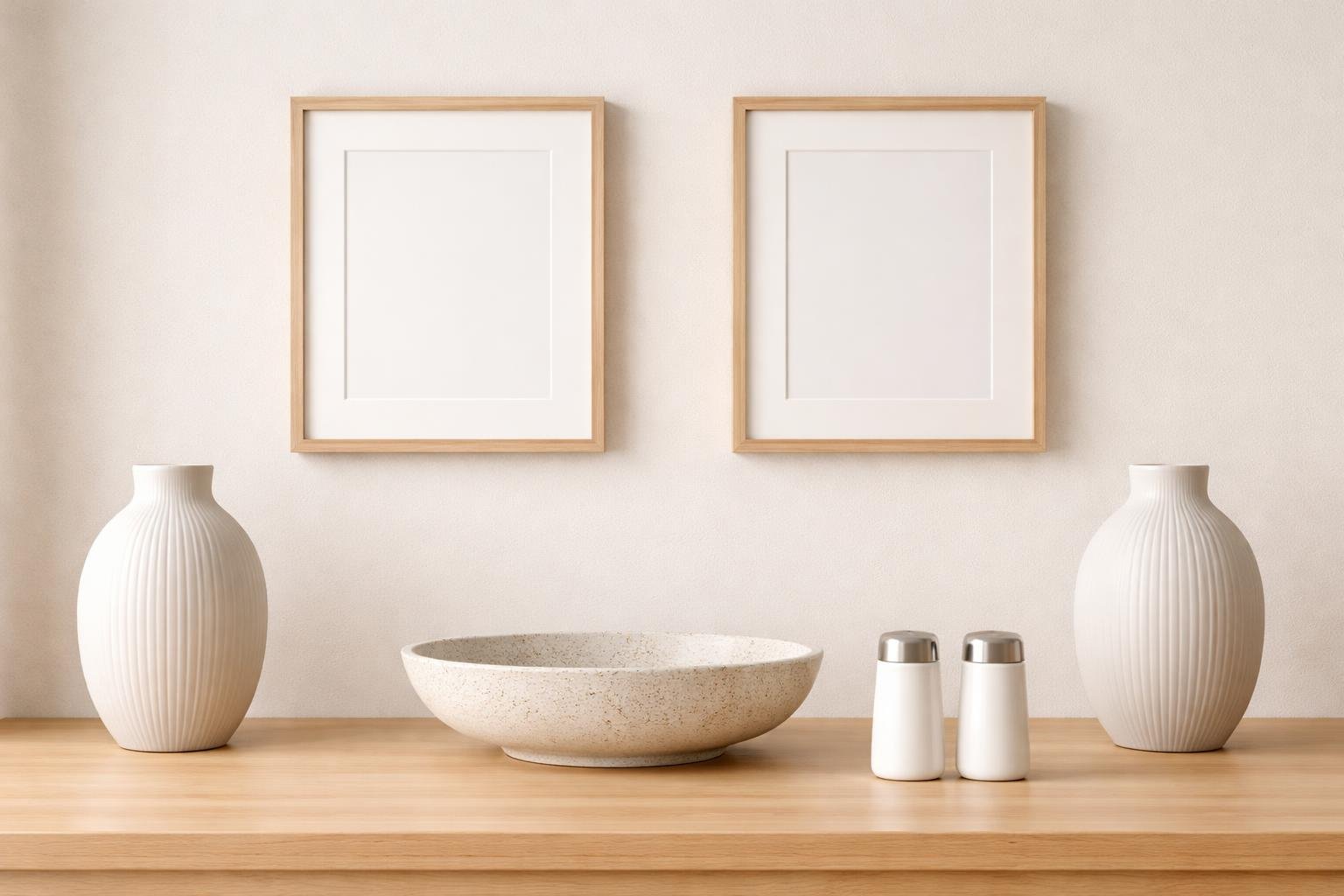
- Mirrors and picture frames — these rectangles often have a vertical line of symmetry down the middle.
- Glasses, bowls, and plates — lots of these are radially symmetrical right around the center.
You can test this pretty easily. Fold a picture of the item or hold it up to a mirror; if one half matches the other, you’ve got symmetry. This trick makes it easier to describe shapes, whether you’re drawing or putting together a school project.
Understanding the Line of Symmetry in Daily Objects
A line of symmetry is just an imaginary line that splits something into two matching halves. Most household items use either a vertical or horizontal line.
- Vertical line example: Think about a cupboard door—the left side mirrors the right.
- Horizontal line example: A rectangular cushion with the same pattern on top and bottom.
To find the line, try placing a ruler or drawing a light line down the center of a photo of the object. If both sides match in shape and pattern, you’ve found the line of symmetry. For round objects, rotate them to see if the parts repeat around the center—that’s radial symmetry.
Variations in Symmetry: Single vs. Multiple Lines
Some things have just one line of symmetry, but others have several. When only one cut gives you two matching halves, that’s single-line symmetry. A regular spoon is a good example—it’s only got one vertical line.
Objects like squares or patterned plates can have multiple lines, though. If a plate’s design repeats every quarter, you might get four lines of symmetry. That’s pretty cool, right?
Knowing this difference helps you sort things quickly. If you can fold or rotate a picture and it matches up in more than one way, it’s got multiple lines or maybe even rotational symmetry. You can use this trick for art projects, math homework, or just to make your home look more balanced.
Recognizing and Applying Symmetry in Household Settings
Symmetry really helps a room feel calm and organized. You can match shapes, sizes, or just the “visual weight” of things. If you spot symmetry in pairs, repeated patterns, or mirror-image layouts, you can use those to balance a room or draw attention to a certain spot.
Identifying Symmetry in Furnishings and Decor
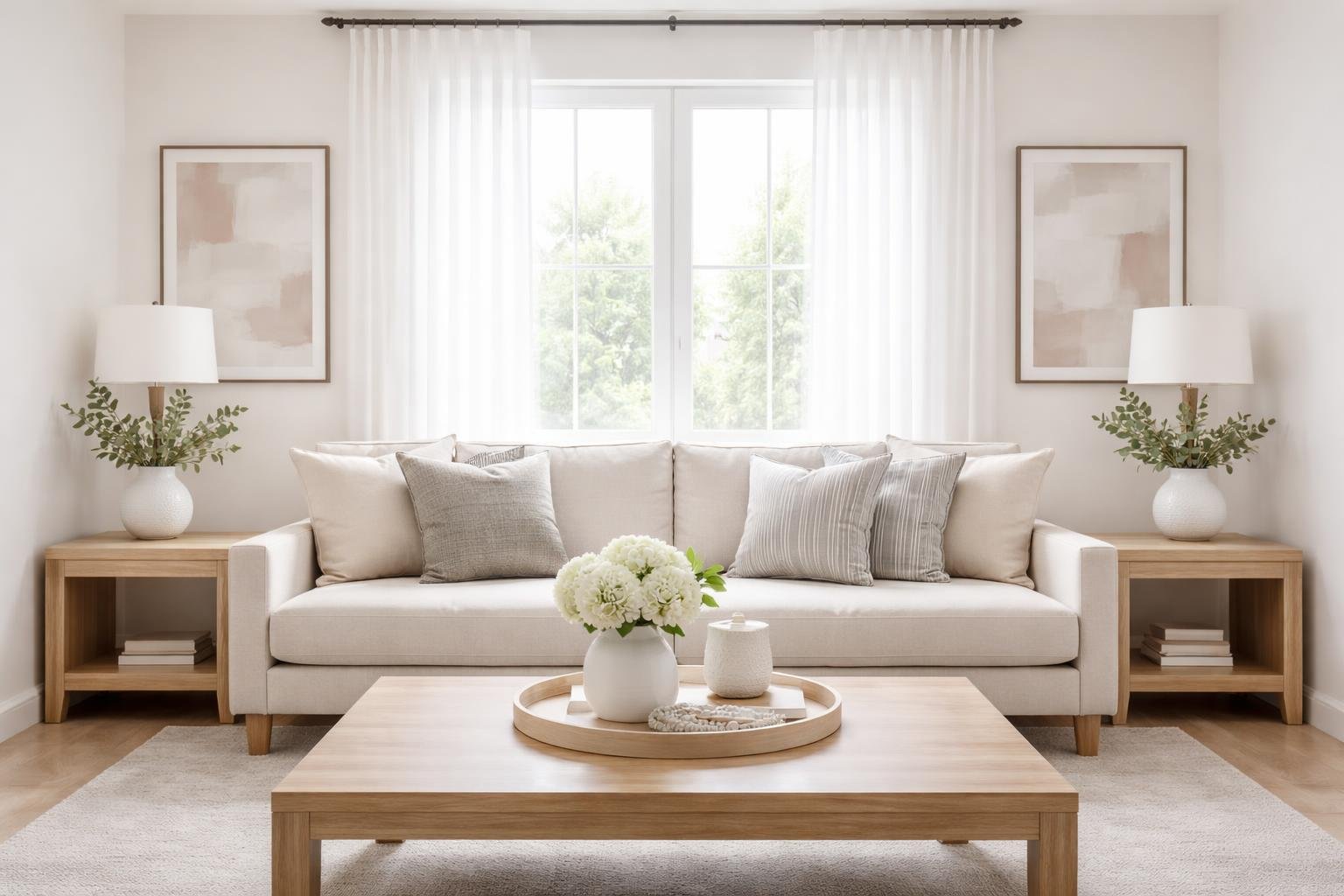
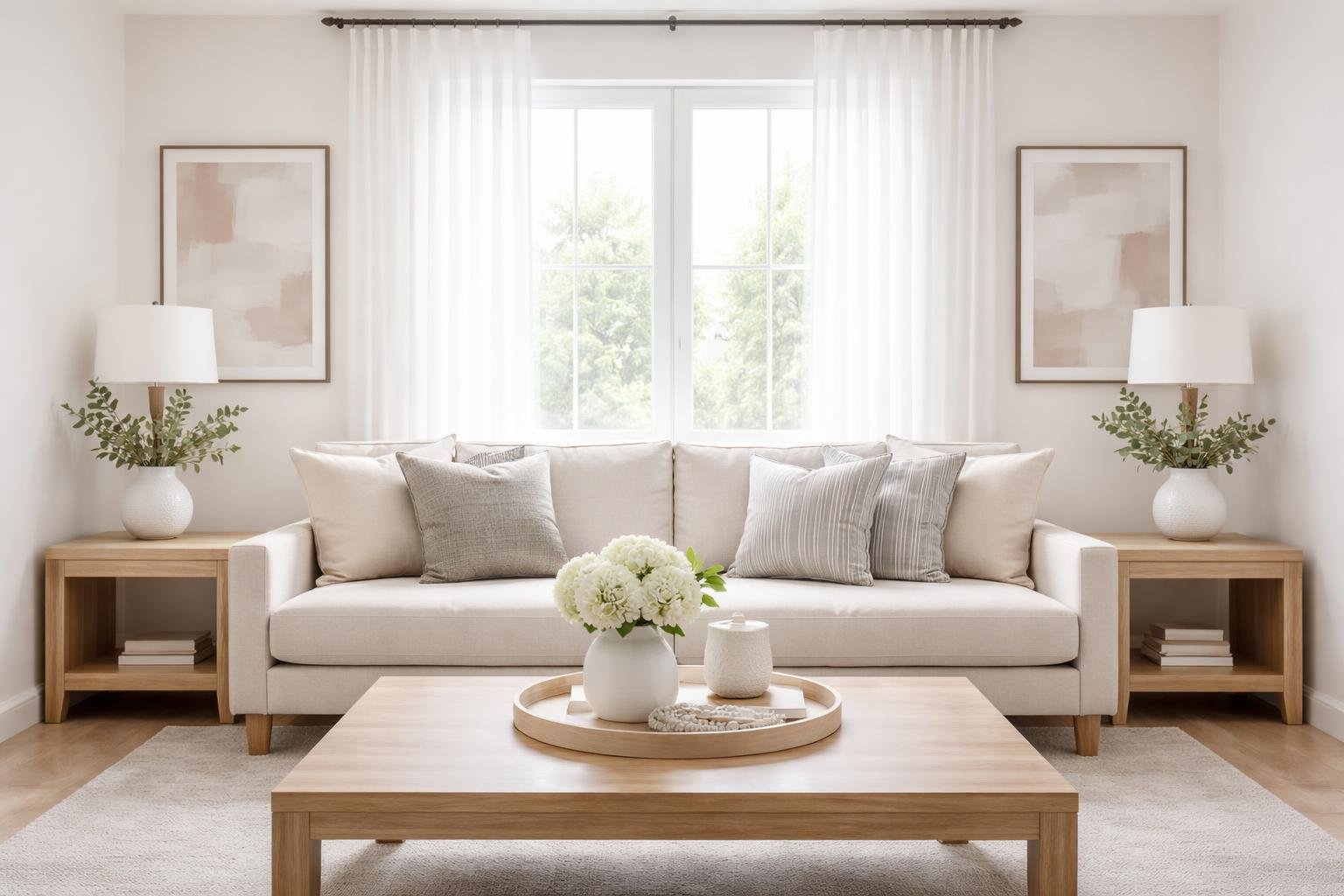
Start by looking for matching pairs—think twin lamps, two identical chairs, or a couple of rugs that are the same size. That’s clear bilateral symmetry.
Check the height and size, too. If things line up vertically or look like they weigh the same visually, they’ll feel more symmetrical.
Repeated patterns matter as well. A row of framed photos, a shelf full of uniform books, or pendant lights lined up over a kitchen island all show translational symmetry. These lines or repeats help guide your eye across the room.
Radial symmetry pops up with round items. A circular dining table with chairs spaced evenly, or a sunburst mirror with balanced spokes, can really center a space.
If you don’t have perfect pairs, you can fake it with small accents. Try grouping three things so you get a central piece with two similar items on either side—it still feels balanced, even if it’s not textbook symmetry.
Practical Uses of Symmetrical Objects at Home
You can place symmetrical objects to define a room’s function or draw attention where you want it. Try flanking your fireplace with matching chairs and side tables—suddenly, the seating area just makes sense.
Put twin lamps on a console table to light up the entryway. It gives guests a polished first impression, and honestly, it just looks good.
Balance out a room by using symmetry to fix visual imbalances. If you’ve got a tall bookcase on one wall, hang a big piece of art or set a couple of tall plants on the other side.
Want a formal room to feel calm? Repeat shapes and colors—match up your throw pillows, mirror frames, or curtain panels. It ties the living or dining room together without much fuss.
If your space is casual or a bit eclectic, you don’t have to go full matchy-matchy. Pair similar shapes, but mix up the textures or colors. That way, the room feels organized, but not stiff or boring.