
Mathematics Behind Lottery: How Probability Shapes Your Odds
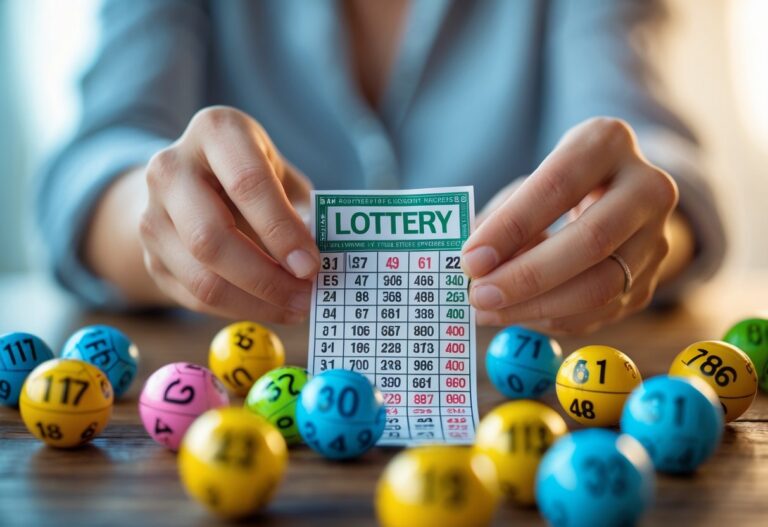
Ever wondered what’s really going on behind all those lottery numbers? If you look past luck, you’ll find some simple but surprisingly powerful math running the show. It all comes down to probability. Lotteries use combinations of numbers, and your odds depend on how many possible combinations exist in the game you’re playing.

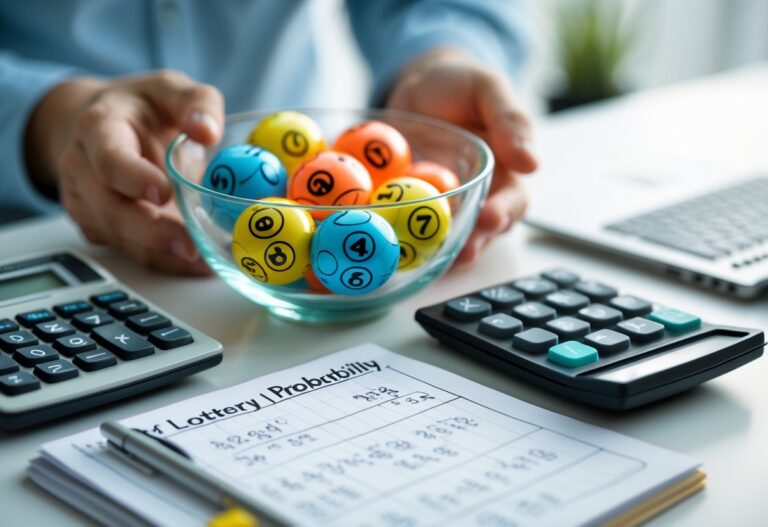
When you buy a ticket, you pick a group of numbers from a big pool. Math can show you exactly how many ways those numbers might come up and what your odds are for matching some—or all—of them.
This math doesn’t just apply to the main numbers. If the lottery uses bonus or power balls, that’s another layer of calculation. Once you get the rules, you’ll see why winning is so rare and what those odds really mean for you.
If you learn about combinations and probability, you’ll notice why certain strategies might help you win smaller prizes or match more numbers. It’s not about guaranteeing a jackpot. But it does help you see the real math behind every lottery game.
Core Mathematics of Lottery Odds
Your odds of winning the lottery come down to how you choose and match combinations, how likely different outcomes are, and how math predicts your average returns over time.
If you understand these basics, you’ll see why the odds are so low. You’ll also get how playing over and over affects your results.
Combinatorics and Lottery Draws
The main math behind lotteries is combinatorics. That’s just counting how many ways you can pick numbers, and it doesn’t care about the order.
When you fill out a ticket, you’re creating a combination from all the numbers available.
Take a classic 6/49 lottery. You pick 6 numbers out of 49, and repeats aren’t allowed.
The total possible combinations are calculated with a factorial formula:
[
binom{49}{6} = frac{49!}{6!(49-6)!} = 13,983,816
]
So, there are almost 14 million unique ways to pick 6 numbers. That means your odds of matching all the winning numbers are 1 in 13,983,816.
Combinations matter because the lottery doesn’t care about the order the balls come out—just which numbers show up.
This rule holds for pretty much every standard lottery.
Understanding Probability Theory

Probability theory helps you figure out how likely it is to match the winning numbers. The theoretical probability for any prize is the number of winning combinations divided by all possible combinations.
Say you want to match exactly 3 numbers in a 6/49 game. You’d calculate how many ways you could pick 3 correct and 3 incorrect numbers, then divide by the total combinations.
Each lottery draw is random and independent. Your odds don’t improve just because you lost last week.
You can use probability formulas to check your chances for different matches—like 0, 1, or several winning numbers. This gives you a sense of the odds for every prize level.
Calculating Expected Value
Expected value is just a way to see how much you’ll win or lose on average per ticket if you play a lot. You multiply each prize by its probability and add up all the results.
Most lottery tickets end up with a negative expected value. That’s because the odds of hitting big prizes are tiny.
Small prizes might help a little, but not enough to make up for the ticket cost.
For example:
| Prize Amount | Probability | Expected Value Contribution |
|---|---|---|
| Jackpot | 1 in 13,983,816 | Jackpot × (1/13,983,816) |
| Smaller prize | Higher probability | Prize × Probability |
| No prize | Most tickets | 0 × Probability = 0 |
When you add it all up, you usually end up losing money in the long run. This is the real cost of playing.
The Law of Large Numbers in Lottery
The law of large numbers says that if you play enough times, your results will start to match the expected probabilities.
If you buy thousands or even millions of tickets, you’ll see the number of wins for each prize get closer to what the math predicts.
This doesn’t mean you’ll win anything in just a few tries. In fact, luck can feel pretty random or streaky in the short run.
But over time, the outcomes balance out. That’s how you get a clearer picture of risk and reward—not from a quick win, but from the long haul.
Application in Popular Lottery Games
Knowing how odds work and how to pick your tickets can help you play a little smarter. If you understand the chances in big games, you can make better choices about which tickets to buy.
It also helps to weigh the ticket cost against potential payouts. That way, you can manage your spending and avoid going overboard.
Odds in Powerball and Mega Millions
Powerball and Mega Millions offer massive jackpots, but their odds aren’t quite the same.
- Powerball gives you about a 1 in 292 million shot at the jackpot.
- Mega Millions odds are roughly 1 in 302 million.
The difference comes down to the number of balls and the range of numbers in each game.
Powerball uses five numbers from 1 to 69 and a Powerball from 1 to 26. Mega Millions uses five from 1 to 70 and a Mega Ball from 1 to 25.
Since the odds are so tiny, your chances of winning smaller prizes (like matching a few numbers) are a little better, but still not great.
It’s best to know these odds before you spend a bunch of money on tickets.
Ticket Selection Strategies
You don’t have to pick numbers totally at random. Some strategies might help you win smaller or mid-tier prizes.
- Wheel systems let you cover more combinations, which can boost your chances of hitting multiple prizes.
- Try to avoid obvious patterns like 1-2-3-4-5. Sure, they’re possible, but they almost never win.
- Choose a balanced mix of odd and even numbers, or low and high numbers. Past results show these combos are more common.
- Don’t get too caught up in “hot” or “cold” numbers. Every number has an equal shot in the long run.
- Buying more tickets does improve your odds, but it gets expensive fast. Only spend what you’re comfortable losing.
These strategies won’t guarantee a jackpot. But they can help you lose less and maybe snag a smaller win along the way.
Evaluating Lottery Tickets and Payouts
Every lottery ticket comes with something called an expected value (EV). That’s just a way to estimate how much you might win on average for each ticket you buy.
Take Powerball and Mega Millions, for example. Their EV usually sits in the negative, so you’re more likely to lose money over time than win.
Prize tiers get pretty varied. You could get a free ticket for matching just one number, or—if you’re incredibly lucky—millions for hitting the jackpot.
Odds favor the smaller prizes, but those payouts aren’t exactly life-changing. The big wins? They’re rare.
It’s smart to think about the ticket price compared to what you might actually win. Sometimes, it makes more sense to buy fewer tickets with better odds than to just grab a bunch with slim chances.
Jackpot resets and rollover rules can change things up, too. They affect both the payouts and the odds, so your ticket’s value isn’t always the same.
If you look at tickets this way, you’ll probably play more responsibly. It’s easy to get carried away with a low-probability game, but a little perspective helps.
Editor’s notes
One of the surprising things I’ve learned while analysing different topics is how inconsistent data can be when people are involved. I’ve seen patterns appear, disappear, and then reappear months later. At first, it felt confusing, but after seeing it happen repeatedly, I started recognising the rhythm behind the changes. These observations shaped how I write and think about numbers. It’s less about finding a perfect rule and more about understanding how behaviour influences outcomes. This piece comes from those experiences where the data taught me something practical about how people react over time.