
Lottery Formula Free: Proven Math Methods for Better Odds
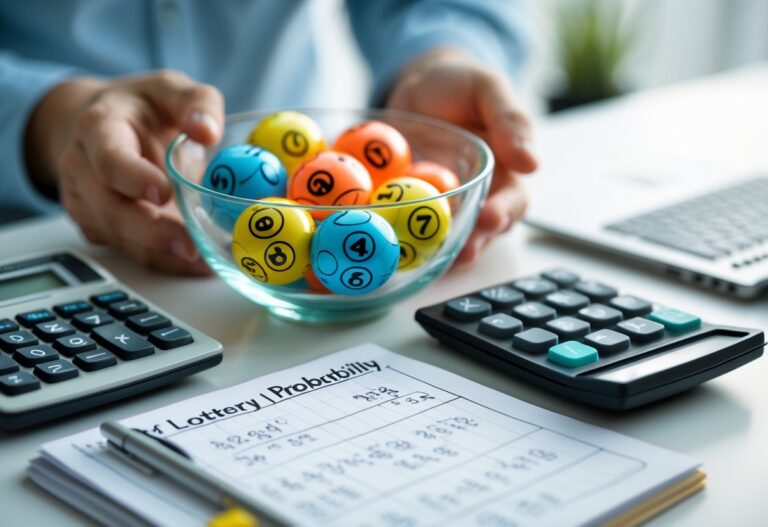
If you’re hunting for a lottery formula that’s free, you should know upfront—no method can promise a jackpot. The best lottery formula leans on math, like probability and combinatorics, to help you make smarter picks, but honestly, it won’t magically change those tough odds. Keeping this in mind can spare you a lot of disappointment and keep your expectations in check.
Playing the lottery is pure chance. Every number technically has the same shot at being drawn.
Still, some folks like to look at certain sets that pop up more often, hoping for a slight edge. Instead of just picking random numbers or your lucky numbers, you might focus on patterns and number groups.
Plenty of mathematical tools and free lottery formulas are out there online. If you use them, you might boost your odds for small wins, though the jackpot remains wildly unlikely.
Learning how these formulas work can help you play with a clearer sense of your chances.
Understanding the Lottery Formula

You can sharpen your lottery game if you get how these formulas use math to figure out your chances. The main ideas are about combining numbers, understanding probability, and noticing how patterns even out over time in games like Powerball or Lotto 6/49.
How Lottery Formulas Work
Lottery formulas dig into how numbers come together to make a ticket. You’re not just picking single numbers—each ticket is a mix.
Take Lotto 6/49, for example. You pick six numbers from 1 to 49, which creates millions of possible combos.
The formula works out the odds for these specific combos. Even though every combination technically has the same chance, some number patterns show up more often due to the way combinations work in math.
If you know which combos are more common, you can pick tickets that maybe—just maybe—give you a slightly better shot. Of course, no formula can promise a jackpot, but it might nudge your odds for any prize upward.
Combinatorial Math and Probability Theory
Combinatorial math counts up all the ways you can group numbers. It basically tells you how many unique tickets you could make for a certain game.
Say you’re playing US Powerball. You pick five main numbers and a Powerball number. Combinatorics spits out the total number of possible tickets.
Probability theory jumps in to measure the odds for any one ticket. You get a ratio: winning combos over all possible combos.
Jackpot odds? They’re brutal—usually one in hundreds of millions. Knowing this can help you steer clear of chasing “hot” or “cold” numbers, since those don’t actually tilt the odds in your favor.
The Law of Large Numbers in Lottery Games
The law of large numbers says that, over time, lottery results balance out. All numbers get about the same chance in the long run.
For instance, in EuroMillions, you might notice some numbers popping up more in the beginning. But after thousands of draws, things really do even out.
This law helps you dodge the trap of chasing patterns or “streaks.” It’s proof that randomness rules the lottery.
Any number combo—no matter how weird—has the same shot as the rest over the long haul.
Special Considerations for Popular Lotteries
 Every lottery has its quirks, and those affect your odds. Powerball and Mega Millions throw out massive jackpots but make you face nearly impossible odds because of so many combinations.
Games like Lotto 6/49 or Irish Lotto offer better odds, but the prizes shrink a bit.
Some lotteries, like EuroJackpot, use fewer numbers or toss in bonus balls, which shifts the probabilities. When you use a lottery formula, you really should tweak it for the game you’re playing.
For example:
| Lottery | Numbers to Choose | Total Combinations (approx.) | Odds of Jackpot |
|---|---|---|---|
| Powerball | 5 + Powerball (1) | 292 million | 1 in 292,201,338 |
| Mega Millions | 5 + Mega Ball (1) | 302 million | 1 in 302,575,350 |
| Lotto 6/49 | 6 from 49 | 13.98 million | 1 in 13,983,816 |
| EuroMillions | 5 + 2 Lucky Stars | 139 million | 1 in 139,838,160 |
| Irish Lotto | 6 from 47 | 10.7 million | 1 in 10,737,573 |
If you know these details, you can pick lotteries that fit your goals—maybe you want better odds at smaller prizes, or maybe you’re just chasing that giant jackpot.
Free Tools and Strategies for Selecting Lottery Numbers
You can up your chances at picking winning numbers by using free online tools and a few clever strategies. These include calculators, filters, and formulas tailored for different lottery types.
If you know how to use these resources, you’ll make better choices when buying tickets and managing your lotto odds.
Using Lottery Calculators and Online Optimizers
Lottery calculators spit out random or optimized number sets based on past draws and stats. You just pick your game, and the tool hands you combos that follow common patterns or avoid repeats.
Some calculators track how often each number has shown up or missed draws. That way, you can focus on “hot” or “cold” numbers if that’s your thing.
Online optimizers take it further. You can set rules—like number ranges, odd/even splits, or sum limits—to narrow down your tickets.
This cuts down the total combinations you play and makes your picks more focused, all without spending more. Many free tools even show recent winning numbers so you can keep your strategy fresh.
Patterns and Filters for Better Number Selection
Patterns and filters let you skip the pure guesswork when picking numbers. Popular filters include skipping consecutive numbers or balancing odd and even picks.
You can also leave out repeats from the last draw or stick to groups like low or high numbers based on what’s happened before.
Some tools let you mix and match filters to fit your style. Maybe you set rules about ranges and avoid last week’s winners.
This kind of smart filtering helps you build balanced, reasonable combos that might—just might—give you an edge next time you play.
How to Apply Formulas in Different Lottery Types
Every lottery has its own quirks, so you’ll want to tweak your formulas for each one. Take the 6/49 lotto—it asks you to pick six numbers between 1 and 49.
Other games? They might throw in a bonus or power number, or maybe you just pick five numbers. Your formula really needs to match the total numbers and the range that the lottery allows.
People use all sorts of formulas—some focus on the sum of your picks, making sure it lands in a range that’s popped up often in the past. Others? They look at odd and even numbers, or track how frequently certain numbers show up.
If you apply these formulas the right way, you can shape your picks to fit the odds and rules of whatever lottery you’re playing.
Editor’s notes
Throughout my work with NumInsight, I’ve come across many moments where a simple statistic changed the entire way I interpreted a situation. Sometimes the numbers confirmed what I expected, but many times they challenged my assumptions. Those experiences pushed me to look deeper instead of relying on quick conclusions. Over time, I learned to treat patterns as clues rather than final answers. This article is based on those little discoveries—the ones that only make sense when you step back and connect the dots.