4 in Chinese: Meaning, Characters, Usage, and Cultural Context
The Chinese Character for 4
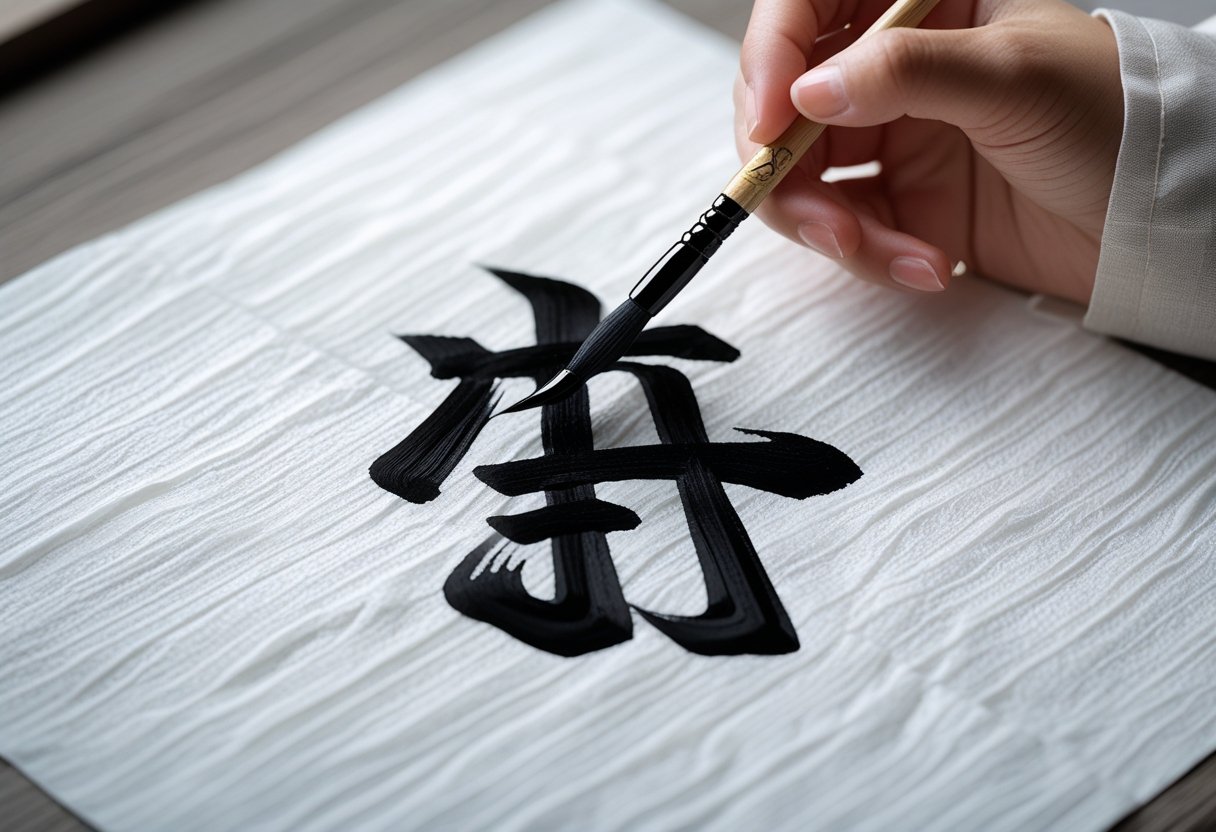
The character for 4 in Chinese is rich in history, structure, and variations. You will find clear distinctions between its written forms, pronunciation in Mandarin and other dialects, and its related characters that show its evolution and use.
Simplified and Traditional Forms
The character 四 represents the number 4 in both simplified and traditional Chinese. Unlike many characters, 四 looks the same in both writing systems, which makes it straightforward for learners. This consistency means you will not need to learn a separate form, whether you study Mainland Chinese or Cantonese-speaking areas like Hong Kong.
Historically, the character evolved from an earlier form 亖, where four horizontal lines symbolized the number directly. Later, it changed to 四 to avoid confusion with other numbers written vertically, such as 二 (2) and 三 (3). The modern character combines a rectangular enclosure 口 with internal strokes representing division or separation.
Stroke Order and Structure
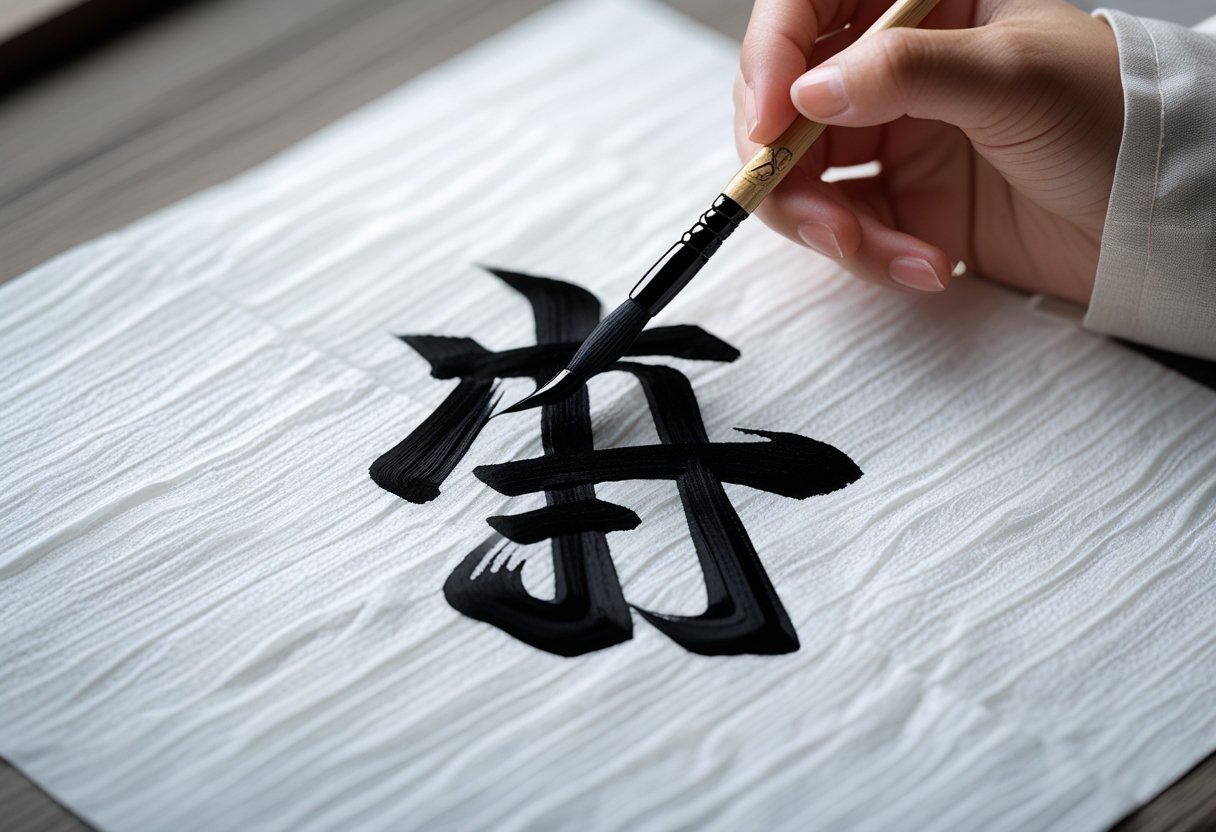
The character 四 is composed of 5 strokes. Learning the correct stroke order is important to ensure your writing is legible and follows traditional standards.
The general stroke order is:
- The enclosing box (口) is drawn first with three strokes: top horizontal, left vertical, and bottom horizontal.
- Inside the box, the strokes representing the internal element (similar to 八) follow. These two inward strokes complete the character.
Mastering this stroke order helps when writing by hand or practicing stroke order animations, which are widely available online. The character’s structure, with its enclosing box and internal elements, is balanced and shows the relationship between the number and its symbolic meaning.
Pronunciation in Mandarin and Regional Variations
The Mandarin pronunciation of 四 is sì, with a falling tone (fourth tone). The pinyin spelling is sì, pronounced roughly like “suh” with a sharp, falling pitch. This tonal mark is essential to distinguish 四 from other words with similar sounds.
In Cantonese, the pronunciation is often romanized as sei3 in Jyutping, which sounds different but still represents the number four.
You should be aware that the number 4 is culturally linked to the word 死 (sǐ), meaning “death,” because of their similar pronunciation. This has affected usage and cultural attitudes, especially in certain regions of China and nearby countries.
Related Characters and Alternate Forms
You may encounter older or alternate forms of 四 in historical texts or calligraphy. The character 亖 is an ancient version composed of four horizontal strokes. It reflected a direct visual representation of the number but was replaced for clarity.
A related character, 死 (sǐ), bears phonetic similarity but completely different meaning (“to die”). This connection influences superstitions around the number 4 in Chinese culture.
Other compound words include:
- 四季 (sì jì) – four seasons
- 四方 (sì fāng) – four directions
- 四合院 (sì hé yuàn) – traditional courtyard house
These compounds demonstrate how 四 is foundational in many Chinese phrases and concepts involving groups of four or completeness within a set.
Common Uses, Compounds, and Cultural Significance
The number four in Chinese plays a vital role in daily language, cultural practices, and symbolism. You will encounter it in many words, idioms, and traditions, each carrying specific meanings shaped by regional usage and historical context.
Frequently Used Words and Phrases
You will find the number four featured in numerous common terms describing time, space, and groups. For example:
- 四月 (sì yuè): April, the fourth month of the year.
- 一年四季 (yī nián sì jì): The four seasons of the year.
- 四肢 (sì zhī): The four limbs of the body, important in medical and everyday speech.
- 四周 (sì zhōu): Refers to surroundings or all around.
- 四方 (sì fāng): Denotes the four directions (north, south, east, west), often symbolizing completeness.
The number is also in compound phrases relevant to travel and geography such as 四通八达 (sì tōng bā dá), meaning a place is accessible from all directions, common in describing regions like Sichuan Province (四川盆地, Sìchuān Péndì).
Idioms, Cultural References, and Symbolism
The number four is sometimes viewed as unlucky because its pronunciation (sì) resembles the word for death (死, sǐ). This affects cultural attitudes, especially in naming conventions or events. However, it also appears in idioms expressing complexity and diversity:
- 朝三暮四 (zhāo sān mù sì): Literally “three in the morning, four in the evening,” meaning inconsistency or changing one’s mind.
- 四面八方 (sì miàn bā fāng): From all four corners or directions, used to describe widespread reach.
- 危机四伏 (wēi jī sì fú): Danger lurking in all directions, highlighting threat or tension.
Historically, negative idioms like 挑三拣四 (tiāo sān jiǎn sì), meaning to be picky, coexist with references to important historical events such as the 五四运动 (Wǔsì Yùndòng), the May Fourth Movement, showing complex cultural layers involving numerical expressions.
Historical Context and Regional Relevance
In regions like Sichuan (四川), the number four connects with local culture and geography. The 四川盆地 (Sìchuān Péndì) or Sichuan Basin is a historic agricultural hub surrounded by mountains on four sides. This regional aspect emphasizes the significance of 四方 (four directions) in describing natural landscapes.
Historically, groups labeled by “four” such as 四人帮 (Sì Rén Bāng), the “Gang of Four,” relate to political history. The number four also appears in describing social structures or stories, e.g., 三妻四妾 (sān qī sì qiè), referring to polygamous households with three wives and four concubines.
The number four also marks phases or divisions such as 四重奏 (sì chóng zòu), a quartet in music, or 四十 (sì shí), indicating age or time periods, like four years or the forties.
Number 4 Across Chinese Dialects
Different Chinese dialects pronounce the number four similarly but with regional tonal variation. In Mandarin, it is pronounced as sì with a falling tone, closely linked to the word for death, influencing cultural taboos.
In Sichuan dialect, the pronunciation remains similar, but the superstitions differ slightly, often balanced by local traditions valuing completeness and stability symbolized by the number four.
In Cantonese, sei carries the same phonetic overlap with death but is used in idioms and routines without dramatic avoidance. Across all dialects, the number maintains its practical and symbolic weight, whether in vernacular or formal speech.
You should be aware that context and region may alter how the number four is used or perceived, but its presence across Chinese languages is consistent and meaningful.
I’ve always been fascinated by how numbers quietly guide the choices we make, even when we don’t notice it. Running NumInsight made me realise that most people aren’t actually afraid of numbers—they’re afraid of what they think the numbers might say about them. Over time, I’ve noticed that patterns show up in the most unexpected places: customer behaviour, daily routines, even small habits like how often someone checks a statistic before making a decision. This article comes from those moments where I’ve seen numbers explain things better than words. They don’t tell the full story, but they offer hints that help you think more clearly. What I’m sharing here is based on situations I’ve come across while observing trends and trying to make sense of them in the simplest way possible.
Frequently Asked Questions
You will find answers about the pronunciation, cultural meanings, and superstitions tied to the number four in Chinese. It also covers common idioms, its role in festivals, and its significance in numerology.
How is the number four pronounced in Mandarin?
The number four is pronounced as “sì” in Mandarin. It has a falling tone, known as the fourth tone.
What is the cultural significance of the number four in China?
The number four is often linked to bad luck in Chinese culture because its pronunciation sounds similar to the word for “death.” This association affects many customs and choices in daily life.
Can you explain the superstition regarding the number four in Chinese culture?
Many people avoid using the number four in phone numbers, addresses, and floors of buildings. It is often skipped or replaced due to its negative connotation.
What are some Chinese idioms or phrases that include the number four?
Chinese idioms with four often express ideas of completeness or stability, such as “四海” (sì hǎi), meaning “all four seas,” which refers to the whole world.
How is the concept of ‘four’ represented in Chinese traditional festivals?
In some festivals, four can symbolize the four seasons or directions. These natural cycles are important in traditional celebrations like the Lunar New Year.
What are the implications of the number four in Chinese numerology?
In numerology, four is often viewed as unstable because of its association with death. However, it can also represent structure and balance in certain contexts, depending on its use.